




In Stock
Block for Tubes or Microplates
₹11,205.00
Quick Answer: The Block for Tubes or Microplates is an interchangeable metal insert for a dry bath heater, supplied in a tube format or a microplate format, that lets one heater hold different containers by swapping the block.
Choosing the Right Block
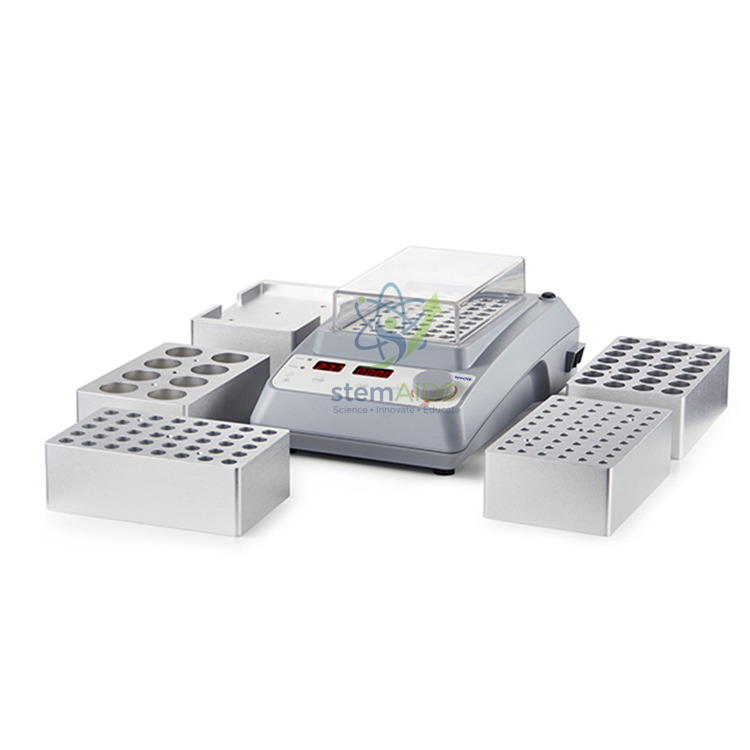
The photo shows a dry bath surrounded by several silver blocks, some drilled with rows of wells for tubes and one with a shallow, plate-shaped face. A dry bath is only as useful as its blocks, because heat moves from metal to container only where they touch. A block made for the exact container, whether microtubes, larger tubes or a microplate, gives full contact and an even temperature.
The word or in the title matters. This listing covers a block for tubes or a block for microplates, not one block that does both, so the format has to be chosen when ordering: tube diameter and well depth for tube blocks, plate type (flat-bottom, round-bottom or PCR) for plate blocks. The block must also fit the heater’s own block size.
For conical-bottom tubes, the Block for Conical Tube shapes each well to the tube’s taper; for a plate with its own cover and frame, the Thermal Block for Microplate is the listing to compare. Aluminium, the usual metal for blocks of this kind, spreads heat quickly and weighs little.
Specifications
| Type | Interchangeable heating block for a dry bath |
| Formats | Tube block or microplate block, as titled |
| Material | Metal, silver finish as pictured |
| Use with | Dry bath heaters that accept interchangeable blocks |
| Well pattern and heater fit | Confirm at enquiry |
Why Labs Add Blocks
- Running microplate incubations on a heater normally used for tubes
- Adding a block for a new tube size without buying another heater
- Keeping a second block pre-loaded to speed up batch work
- Replacing a block with damaged or corroded wells
Care & Handling
- Match the block to the heater’s block size before heating, since a poorly seated block heats unevenly.
- Clean wells with a soft brush and mild detergent, and keep alkaline cleaners off aluminium.
- Store spare blocks dry and covered so the wells stay free of dust.
Why Choose LabEquip
Labs that own a dry bath buy extra blocks to widen what it can hold, from single tubes to full plates. Blocks and heaters are listed together in General Lab Products; share your heater model through the contact page to choose a fitting block.
Frequently Asked Questions
Does one block hold both tubes and microplates?
No. The title offers a block for tubes or a block for microplates, so choose the format you need. Tube blocks have drilled wells, while plate blocks are shaped to the plate footprint.
How is the right tube block chosen?
Measure the outside diameter and the length of your tubes and match them to the well size and depth. A snug fit transfers heat most efficiently.
Which microplates suit a plate block?
Plate blocks are made for a particular plate type, such as flat-bottom assay plates or skirted and non-skirted PCR plates. Tell us the plate type so the block matches its wells.
Will a block fit any dry bath?
No. Blocks must match the heater’s block size and depth. Give the heater model when ordering to avoid a block that sits loosely or does not seat.
Why do some wells heat more slowly than others?
An air gap or residue in a well slows heat transfer. Clean the wells, check that tubes are fully seated, and add a drop of water to loose wells if needed.
How are aluminium blocks cleaned?
Let the block cool, brush the wells with a mild detergent, rinse and dry. Avoid strong alkalis and bleach, which pit aluminium.
Last Updated: September 2026
You must be logged in to post a review.
Bestsellers





Reviews
There are no reviews yet.