












In Stock
Polished Rocks
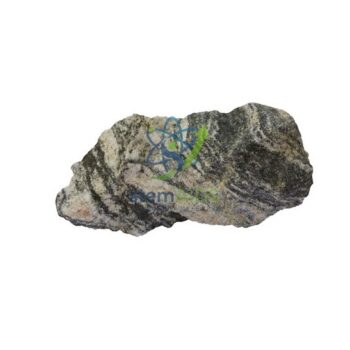
Roches polies, Micro-Crystalline Clarity enables students to evaluate crystallization sequences and paragenesis without the optical interference of surface weathering or fracture planes.
Multi-Lithology Reference Set supports the synthesis of geological cycle theories by allowing students to compare cooling rates and pressure-dependent mineral growth across different rock families.
Specimen Uniformity Facilitates reproducible laboratory data sets for large student cohorts, ensuring consistent assessment of rock density and porosity metrics.
₹320.00
Quick Answer: These polished rock specimens have a smooth, cut and polished surface that reveals internal crystal boundaries, banding, and mineral associations far more clearly than a rough natural surface.
Product Description
Polishing a rock surface removes surface roughness and weathering rind, exposing the true internal texture: individual mineral grains, crystal boundaries, banding, and colour variation that are often obscured on an unpolished specimen. This makes polished rocks particularly useful for macroscopic textural study, where students examine grain size, shape, and arrangement with the naked eye or a hand lens, without needing thin-section microscopy.
Polished specimens work well alongside rough, unpolished samples of the same rock type, letting students compare how much detail a polished surface reveals versus a natural or broken surface, reinforcing the value of sample preparation in petrographic study.
Specimen Details
| Detail | Description |
|---|---|
| Surface Finish | Cut and polished, smooth surface |
| Subject Focus | Rock texture, mineral association, macroscopic petrography |
| Recommended Level | Secondary and introductory university earth science |
| Storage | Padded tray to protect the polished surface from scratches |
Applications
- Macroscopic study of mineral texture and crystal boundaries
- Comparing polished versus rough specimen surfaces
- Identifying banding, grain size, and mineral associations
- Supporting petrography and rock identification coursework
Care & Handling
Store polished specimens in a padded tray or case to prevent scratching the polished surface. Handle with clean, dry hands and avoid stacking specimens directly against one another.
Why Choose LabEquip
LabEquip supplies both rough and polished rock and mineral specimens to support a full range of teaching approaches. Explore more specimens in our Educational Rock and Minerals category, learn more About Us, or Contact Us for institutional and bulk orders.
Frequently Asked Questions
1. Why are these rocks polished?
Polishing removes surface roughness and reveals internal texture, such as crystal boundaries, banding, and mineral associations, more clearly than a rough natural surface.
2. Can students study texture without a microscope?
Yes, the polished surface makes many textural features visible to the naked eye or with a simple hand lens, without needing thin-section microscopy.
3. Should polished specimens be compared with rough ones?
Yes, comparing a polished specimen with a rough sample of the same rock type is a useful exercise for showing how much detail surface preparation reveals.
4. How should polished specimens be stored?
Store them in a padded tray or case to protect the polished surface from scratches, and avoid stacking specimens directly on top of one another.
5. What level of course is this specimen suited to?
It suits secondary school and introductory university earth science courses covering rock texture and petrography.
6. What features can students identify on a polished surface?
Students can typically identify individual mineral grains, crystal boundaries, colour banding, and overall mineral associations within the rock.
Last Updated: September 2026
You must be logged in to post a review.
Bestsellers





Reviews
There are no reviews yet.