


In Stock
Stirrer
High-Density Polypropylene (PP) Construction: Fabricated from medical-grade, autoclavable polymers that offer exceptional resistance to high-molar acids, alkalis, and organic solvents without leaching or surface degradation.
Precision-Molded Rounded Geometry: Features a specialized smooth-radius finish at both distal ends to prevent mechanical scarring of glassware while optimizing fluid dynamics during high-velocity manual mixing.
$2.20
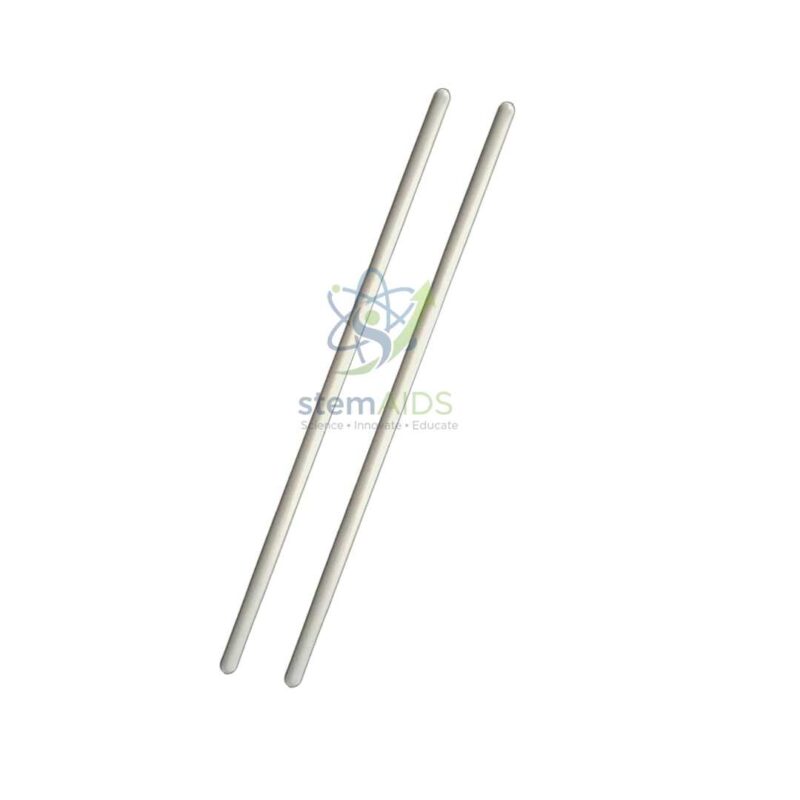
Quick Answer: This stirrer is a plain, straight rod for mixing solutions by hand, shown in the listing photo as a plastic rod with no paddle or scraper tip. A plastic stirrer does the everyday work of a glass stirring rod without the risk of snapping in a student’s hand.
A Plain Rod Compared with Glass and Policeman Types
The listing carries the one-word title Stirrer, and the photo shows smooth, straight plastic rods with both ends plain. That makes it a general mixing tool: dissolving a salt in a beaker, keeping a suspension from settling while it is sampled, or stirring indicator through a flask during a titration.
Glass stirring rods are traditional, but thin ones snap when pressed against the bottom of a beaker and leave sharp ends. A plastic rod flexes slightly instead and will not chip a glass vessel or scratch a plastic one. The trade-off is heat and chemistry: plastics soften near flames and on hot plates, and some are attacked by strong oxidising acids or organic solvents, so a laboratory glass stirrer is kept for hot or aggressive mixtures.
For recovering precipitate from the walls of a beaker, the related stirring rod with policeman tip has a flattened end that scrapes where a round rod only slides. Diameter and length are not given in the title.
Care & Handling
- Rinse the stirrer straight after use so residues do not dry on and carry over into the next solution.
- Keep separate rods for acids, alkalis and biological media where cross-contamination matters.
- Do not leave it standing in hot liquid or resting on a hot plate.
- Replace rods that have become scratched, stained or bent.
Specifications
| Item | Plain straight stirring rod |
| Material | Plastic, as shown in the listing photo |
| Ends | Both ends plain, with no paddle or scraper tip |
| Heat | Not for flames or hot plates (general property of plastics) |
| Diameter and length | Confirm at enquiry |
Applications
- Dissolving solids when preparing salt or sugar solutions in school practicals
- Stirring during manual titrations or while a reagent is added drop by drop
- Guiding liquid down the rod when decanting from a beaker, so it does not run down the outside
- Transferring a drop of solution to pH or indicator paper
Why Choose LabEquip
Primary and secondary school labs buy plain stirrers in quantity, because every group needs several and broken glass rods add up over a term. LabEquip offers this stirrer as part of its chemistry lab equipment; tell us the quantity and preferred length on the contact page.
Frequently Asked Questions
Is a plastic stirrer better than a glass rod?
It is safer for young students because it does not snap into sharp pieces, and it will not chip glassware. A glass rod is still needed for hot liquids, strong oxidising acids and many organic solvents, which plastics tolerate poorly.
Can the stirrer be used in hot solutions?
Brief stirring of warm aqueous solutions is usually fine, but plastics soften as they approach their heat limit. Do not use it in boiling liquids, near a Bunsen flame or on a hot plate.
Which chemicals may damage a plastic stirring rod?
Concentrated oxidising acids such as nitric acid, and organic solvents such as acetone, chloroform or toluene, can attack or swell many plastics. Dilute acids, alkalis and salt solutions are generally safe.
How is the stirrer cleaned?
Rinse it with tap water straight after use, wash with a mild detergent and a soft brush, then rinse with distilled water and let it air dry. Avoid abrasive powders, which roughen the surface.
Why stir with a rod instead of swirling?
Swirling works well in conical flasks, but in a beaker it does little to lift settled solid. A rod reaches the bottom, breaks up lumps against the base and helps solids dissolve faster.
How do I avoid splashing while stirring?
Stir gently in circles without striking the walls, keep the liquid level well below the rim, and do not tap the rod on the beaker edge to shake off drops.
Last Updated: September 2026
You must be logged in to post a review.
Bestsellers





Reviews
There are no reviews yet.