







In Stock
Density Cube Set of 10
$11.30
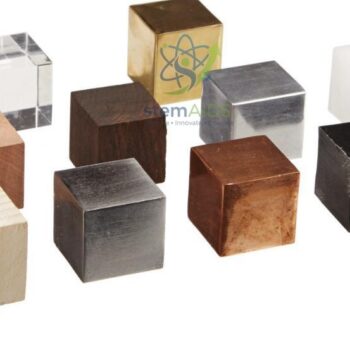
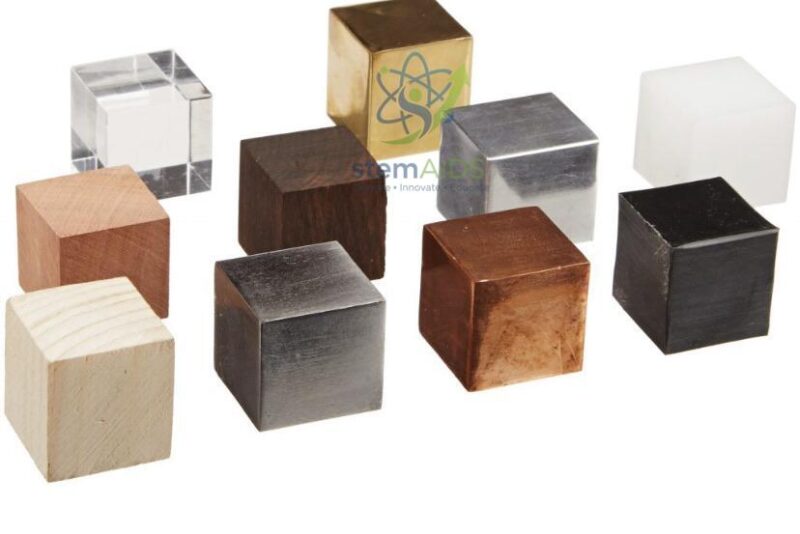
Quick Answer: The density cube set is a collection of 10 cubes of the same size, each made from a different material. The listing photo shows metals, woods and plastics side by side, so students can weigh equal volumes and see that mass, and therefore density, depends on the material.
Same Size, Different Mass
Because every cube has the same dimensions, volume drops out of the comparison. Pick up two cubes and the difference in weight is the difference in density. Measure one edge, cube it to get the volume, weigh each cube on a balance and divide mass by volume: the class then has ten densities to rank and compare with published values.
In the listing photo the ten cubes include three woods of different colours, a clear plastic cube, a white plastic cube and several metals, among them what look like brass, copper and aluminium. The listing does not name the materials, which makes a useful puzzle: students calculate each density and use a data table to identify the unknowns.
Having woods and plastics alongside metals also brings floating and sinking into the lesson. Cubes less dense than water, about 1 g/cm³, float and the rest sink. For a comparison of metals only, using cylinders of equal volume, see the equal volume metal cylinders.
Specifications
| Item | Set of 10 equal-size density cubes |
| Quantity | 10 cubes, as stated in the title |
| Materials shown | Three woods, clear and white plastics, and several metals (photo) |
| Shape | Cubes of one common size, so every cube has the same volume |
| Edge length and material list | Confirm at enquiry |
Applications
- Calculating density from mass and measured edge length, then ranking the materials
- Identifying unknown materials by comparing calculated densities with a data table
- Predicting which cubes float in water, then testing and explaining the result
- Challenging the idea that bigger means heavier, using equal-size cubes of wood and metal
Care & Handling
- Measure the edges of the density cube set with vernier calipers where possible; a small error in the edge becomes about three times larger in the volume.
- Dry the cubes straight after float tests, especially the wooden ones, which absorb water and gain mass.
- Keep the metal cubes low over the bench while handling them; a dropped cube can chip a floor tile or injure a foot.
- Store the set in its tray or a labelled box so that similar-looking metals are not mixed up.
Why Choose LabEquip
Teachers introducing density at lower-secondary level like cube sets because the comparison can be felt before any calculation is done. LabEquip lists the set among its chemistry lab equipment; for the material list or several sets, ask on the contact page.
Frequently Asked Questions
Why are all the cubes the same size?
Equal size means equal volume, so any difference in mass comes only from the material. Students can feel and then measure that density depends on what an object is made of, not on how big it is.
How do students calculate the density of a cube?
Measure one edge, multiply it by itself three times to get the volume, and weigh the cube. Density is mass divided by volume, usually given in grams per cubic centimetre.
Which cubes will float in water?
Any cube with a density lower than water, about 1 gram per cubic centimetre, floats. Most dry woods and some plastics float, while metals and denser plastics sink.
Why might a calculated density differ from the textbook value?
Edge measurement errors are magnified in the volume, wood varies with species and moisture, and alloys such as brass vary with composition. A difference of a few percent is normal.
What materials are in the set?
The listing photo shows three woods, a clear plastic, a white plastic and several metals, including what appear to be brass, copper and aluminium. Ask for the exact list when you enquire if you need it for a worksheet.
Can the cubes be used with an overflow can?
Yes, for the cubes that sink. Lowering one into a full overflow can and measuring the water displaced gives its volume independently, which is a good check on the value calculated from the edge length.
Last Updated: September 2026
You must be logged in to post a review.
Bestsellers





Reviews
There are no reviews yet.