


In Stock
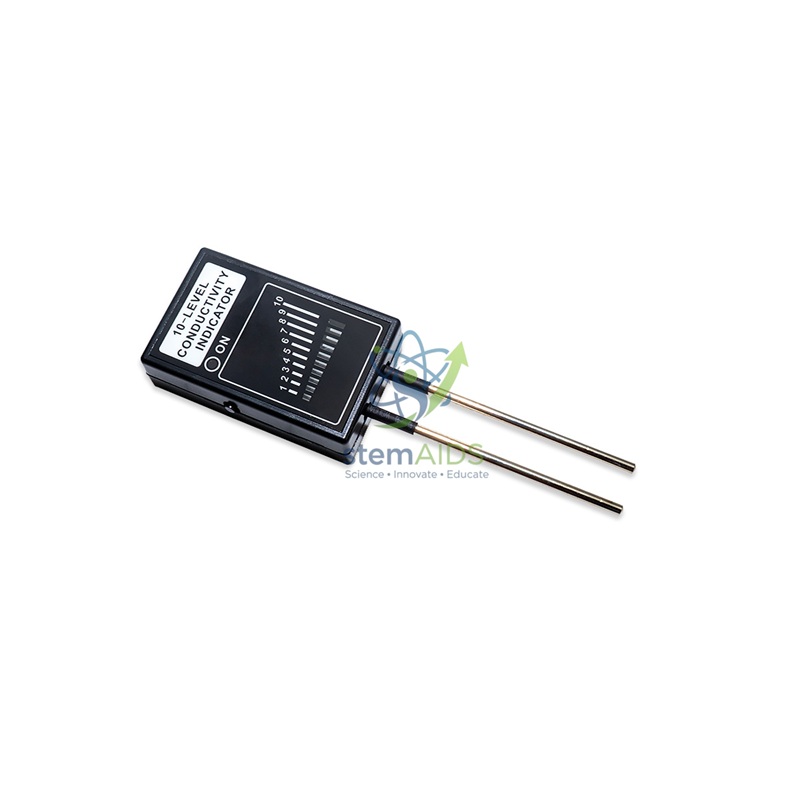
Conductivity Tester
₹520.00
StemAids Conductivity Tester is an educational science laboratory instrument designed to test whether a material or solution can conduct electricity. It is suitable for school chemistry laboratories, physics classrooms, general science practicals, STEM labs, and teacher-led demonstrations on electrical conductivity, circuits, electrolytes, conductors, and insulators.
The conductivity tester helps students compare the conducting ability of different samples such as metals, graphite, salt solution, tap water, distilled water, sugar solution, and other approved classroom materials. It provides a simple visual indication through a bulb, LED, meter, buzzer, or indicator system depending on the supplied model.
Product Highlights
- Educational conductivity tester for science and STEM practicals
- Useful for testing conductors, insulators, electrolytes, and non-electrolytes
- Suitable for chemistry, physics, electrochemistry, and general science lessons
- Helps students compare conductivity of solids and liquids
- Supports classroom demonstrations of circuits, ions, and current flow
- Recommended for teacher-supervised educational laboratory use
Product Description
The StemAids Conductivity Tester is designed to demonstrate the basic principle of electrical conduction. When the tester probes are placed in contact with a conducting material or dipped into a conducting solution, the circuit is completed and the indicator responds. If the sample does not conduct electricity, the indicator remains off or shows little response.
This tester is useful for explaining why metals conduct electricity, why ionic solutions such as salt water conduct current, and why substances such as sugar solution or distilled water may show weak or no conductivity. It helps students understand the difference between conductors, insulators, electrolytes, and non-electrolytes through direct observation.
StemAids provides educational laboratory instruments that support hands-on science learning, safe classroom demonstrations, and concept-based teaching. The StemAids Conductivity Tester is suitable for school science labs, college practical rooms, STEM activity centers, and institutional laboratory procurement.
Product Specifications
| Product Name | Conductivity Tester |
|---|---|
| Brand | StemAids |
| Product Type | Educational conductivity testing instrument |
| Function | Tests whether a solid material or liquid solution conducts electricity |
| Application | Conductivity testing, conductor-insulator comparison, electrolyte testing, circuit demonstrations, and classroom science practicals |
| Concept Covered | Electrical conductivity, current flow, conductors, insulators, electrolytes, non-electrolytes, ions, and simple circuits |
| Indicator Type | Bulb, LED, buzzer, meter, or visual indicator as per supplied model |
| Power Requirement | Battery or suitable low-voltage power source as per supplied model |
| Suitable Samples | Approved classroom solids, metals, graphite, water samples, salt solution, sugar solution, acid/alkali solutions, and other safe test materials under supervision |
| Recommended Use | School science labs, college chemistry labs, physics labs, STEM classrooms, and training laboratories |
| Subject Area | Chemistry, physics, electrochemistry, general science, physical science, and STEM education |
| Suitable For | Students, teachers, lab assistants, chemistry instructors, physics educators, STEM trainers, and educational institutions |
| Usage Type | Educational laboratory demonstration and classroom practical use under supervision |
| Cleaning Instruction | Wipe probes after use, rinse if used with solutions, and dry properly before storage |
| Storage Instruction | Store in a clean, dry laboratory cabinet away from moisture, chemicals, heat, and rough handling |
How to Use
- Place the StemAids Conductivity Tester on a clean, dry, and stable laboratory table.
- Check the probes, wires, battery or power connection, and indicator before use.
- Wear suitable safety equipment such as gloves and eye protection when testing liquids or laboratory solutions.
- Select the material or solution to be tested as instructed by the teacher.
- For solid samples, touch the tester probes to the material surface.
- For liquid samples, dip the probes into the solution without allowing them to touch each other.
- Observe the indicator response such as bulb glow, LED light, buzzer sound, or meter movement.
- Record whether the sample is a good conductor, weak conductor, or non-conductor.
- Rinse and dry the probes between liquid samples to avoid contamination.
- After the experiment, switch off the tester if applicable, clean the probes, and store the instrument safely.
Safety and Care Instructions
- Use only under teacher, laboratory supervisor, or trained instructor guidance.
- Use only battery or low-voltage power as recommended for the supplied model.
- Do not test mains electricity, wall sockets, live wires, or high-voltage circuits.
- Do not touch probes, terminals, or wet electrical parts while the tester is operating.
- Use only approved classroom-safe samples and avoid unknown or hazardous chemicals.
- Do not allow probes to touch each other inside a solution, as this may short the circuit.
- Clean and dry probes after use to prevent corrosion and inaccurate results.
- Keep the tester away from excessive moisture, spills, heat, and rough handling.
- This product is intended for educational laboratory demonstrations only and not for certified electrical, industrial, or analytical testing.
Applications
- Testing conductivity of solids and liquids
- Conductor and insulator demonstrations
- Electrolyte and non-electrolyte comparison
- Simple circuit practicals
- Salt solution and sugar solution comparison
- Water sample conductivity demonstrations
- Chemistry and physics classroom experiments
- STEM science project activities
- Electrical properties of materials study
- School and college laboratory procurement
Why Choose StemAids Conductivity Tester?
StemAids offers educational science instruments designed to support practical learning, safe laboratory demonstrations, and clear concept understanding. The StemAids Conductivity Tester helps students observe electrical conduction directly and compare materials or solutions through simple classroom experiments.
- Useful teaching aid for electricity and conductivity lessons
- Helps students compare conductors, insulators, and electrolytes visually
- Supports hands-on learning in chemistry, physics, and STEM education
- Suitable for school, college, and training laboratory use
- Convenient product for science labs, educational institutions, and laboratory suppliers
SEO Title
StemAids Conductivity Tester for Chemistry Lab, Physics Practical and STEM Conductivity Experiments
Meta Description
Buy StemAids Conductivity Tester for school science labs, chemistry practicals, physics experiments, electrolyte testing, conductor-insulator demonstrations, and STEM learning.
SEO Keywords
StemAids Conductivity Tester, Conductivity Tester for Chemistry Lab, Electrical Conductivity Tester, Electrolyte Tester, Conductor Insulator Tester, Physics Lab Conductivity Tester, School Science Lab Equipment, STEM Conductivity Apparatus, Solution Conductivity Tester, Educational Electricity Kit.
Frequently Asked Questions
1. What is the StemAids Conductivity Tester used for?
The StemAids Conductivity Tester is used to check whether a material or solution conducts electricity during chemistry, physics, general science, and STEM practicals.
2. Is this conductivity tester suitable for school laboratories?
Yes, it is suitable for school science labs, college chemistry labs, physics classrooms, STEM labs, and teacher-supervised practical demonstrations.
3. What samples can be tested with this instrument?
Approved classroom samples such as metals, graphite, salt solution, tap water, distilled water, sugar solution, and selected acid or alkali solutions can be tested under supervision.
4. How does a conductivity tester show that a sample conducts electricity?
The tester completes a circuit through the sample. If the sample conducts electricity, the indicator such as a bulb, LED, buzzer, or meter responds according to the supplied model.
5. Why does salt solution conduct electricity?
Salt solution conducts electricity because it contains mobile ions that allow current to pass through the liquid between the tester probes.
6. Does sugar solution conduct electricity?
Sugar solution usually shows little or no conductivity because sugar dissolves as neutral molecules and does not produce mobile ions in water.
7. Can students use the Conductivity Tester independently?
Students should use the tester under teacher or laboratory supervisor guidance, especially when testing liquid samples, acid/alkali solutions, or electrical circuits.
8. Can this tester be used on wall sockets or live electrical wiring?
No, this tester is intended only for educational low-voltage conductivity demonstrations. It must not be used on mains electricity, wall sockets, live wiring, or high-voltage circuits.
9. How should the tester be cleaned after use?
After use, wipe the probes clean, rinse and dry them if used with solutions, switch off the tester if applicable, and store it in a clean, dry place.
10. Is this product suitable for certified electrical testing?
No, StemAids Conductivity Tester is intended for educational laboratory and classroom learning. For certified electrical or analytical testing, use calibrated professional instruments and approved standards.
You must be logged in to post a review.
Bestsellers





Reviews
There are no reviews yet.