













In Stock
Stethoscope, Dual Earpiece Teaching
₹1,540.00
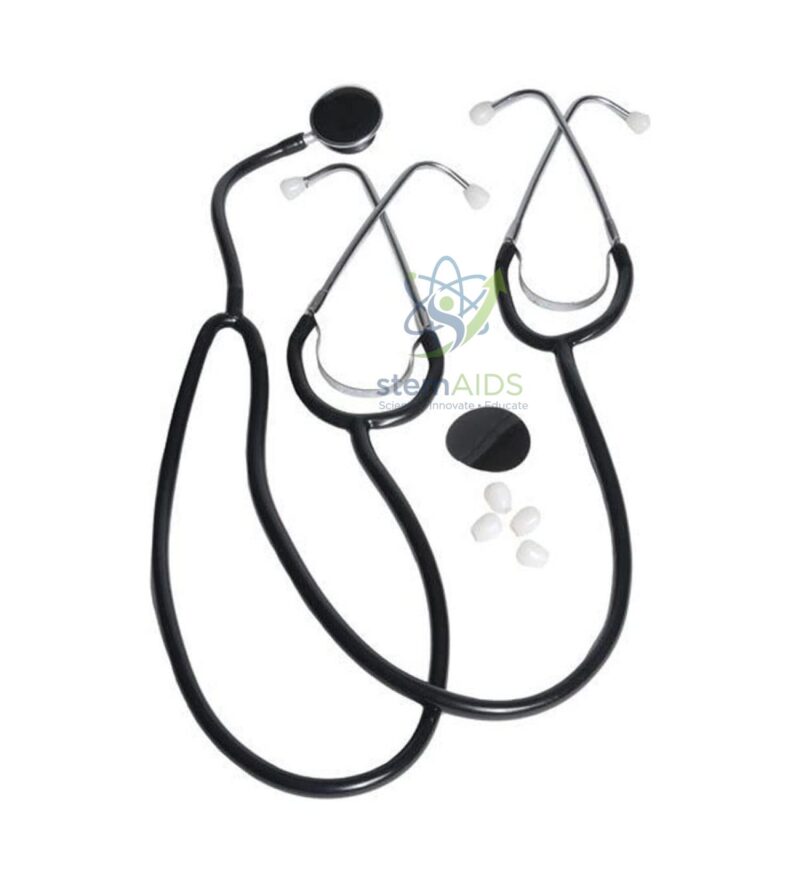
Quick Answer: The Stethoscope, Dual Earpiece Teaching is a dual earpiece teaching stethoscope with two sets of ear tubes joined to one chest piece, so a teacher and a student can listen to the same heart or breath sounds at the same moment. The listing photograph shows two black headsets leading to a single chest piece.
Two Listeners, One Chest Piece
With an ordinary stethoscope, a teacher can only describe what the student should be hearing. A teaching stethoscope removes the guesswork: sound picked up by one chest piece travels up a shared tube and splits into two headsets, so the teacher can say ‘that is the second heart sound’ at the very moment the student hears it. The same design lets an examiner check that a student has placed the chest piece correctly, and lets pairs of students share one instrument in a busy practical.
In a school biology lab the stethoscope is used for the classic exercise investigation. Students listen to a partner’s heart at rest, count beats for a timed interval, exercise, then listen again and time how long the rate takes to return to normal. The two heart sounds are the main landmarks: the first, often described as ‘lub’, is made as the valves between atria and ventricles close; the second, ‘dub’, as the valves at the exits of the ventricles close.
Because the sound from one chest piece is shared between two headsets, it can seem fainter than through a single-user stethoscope, so a quiet room helps. The title does not say whether the chest piece is single or dual-headed, or give tube length or materials; confirm these points if they matter for your course.
Applications
- Heart-rate and recovery investigations before and after exercise
- Teaching the two heart sounds and what causes them
- Nursing and first-aid training where an instructor confirms what the trainee hears
- Listening for breath sounds over different parts of the chest
Hygiene and Care
- Wipe ear tips and the chest piece with an alcohol wipe between users.
- Hang the stethoscope or lay it loosely coiled; tight folding kinks the tubing and dulls sound.
- Keep the tubing away from oils, solvents and direct heat, which can stiffen or crack it.
Specifications
| Item | Teaching stethoscope with two headsets |
| Configuration | Two binaural headsets joined to one chest piece (listing photograph) |
| Purpose | Shared listening for teaching, demonstration and assessment |
| Typical sounds | Heart sounds, breath sounds, bowel sounds |
| Chest piece type, tube length and materials | Confirm at enquiry |
Why Choose LabEquip
Biology departments and nursing schools buy teaching stethoscopes so that listening skills can be checked, not just described. LabEquip lists this one in Biology Lab Products alongside heart models such as the human heart model, which shows the valves behind each sound. Use the LabEquip contact page to confirm chest piece type and quantities.
Frequently Asked Questions
How should the ear tips be worn?
Angle the ear tubes forward, towards the nose, so the tips follow the ear canals. Worn backwards they press against the canal wall and block most of the sound.
What causes the two heart sounds?
The first sound comes from the closing of the valves between the atria and ventricles as the ventricles start to contract. The second comes from the closing of the valves at the exits to the aorta and pulmonary artery as the ventricles relax.
Where should the chest piece be placed to hear the heart?
A good starting point is just left of the lower breastbone, or below the left nipple where the heartbeat is strongest. Listen on bare skin or thin clothing and ask the person to breathe quietly.
Why does the sound seem quieter than with an ordinary stethoscope?
The sound collected by one chest piece is divided between two headsets, so each listener receives part of it. A quiet room and firm, flat contact of the chest piece make a clear difference.
Can this stethoscope be used to teach blood pressure measurement?
Yes, together with a cuff and gauge. The teacher and student can both listen for the sounds that appear and disappear as the cuff pressure falls, and agree on the readings.
How should the stethoscope be cleaned between students?
Wipe the ear tips and chest piece with alcohol wipes and let them dry. Clean the tubing with a damp cloth and mild soap, never by soaking the whole instrument.
Last Updated: September 2026
You must be logged in to post a review.
Bestsellers




Reviews
There are no reviews yet.