









In Stock
Biodegradable Pot
Pot biodégradable Engineered from a high-density blend of sustainably sourced wood fibers and peat, providing a structurally rigid housing that maintains integrity during the nursery phase while facilitating rapid microbial decomposition upon soil immersion.
Porous Root-Permeable Architecture features a precision-calibrated wall thickness that optimizes gas exchange and moisture retention, specifically designed to prevent root circling by encouraging natural air-pruning and seamless transition into the surrounding substrate.
$11.67
Quick Answer: The Biodegradable Pot is a plant pot that breaks down in the soil, so a seedling can be planted without being taken out of it. Biology classes and school gardens use it for sowing and transplanting, and for comparing how different materials decompose.
From Pot to Soil
A pot of this kind is made of a material that soil organisms can digest. Plant fibres such as coconut coir, wood pulp or peat are the usual choices; bacteria and fungi break down the cellulose, and within a season or so the pot becomes part of the soil. The seedling is planted pot and all, its roots grow out through the softened walls, and there is no plastic container to wash, store or throw away.
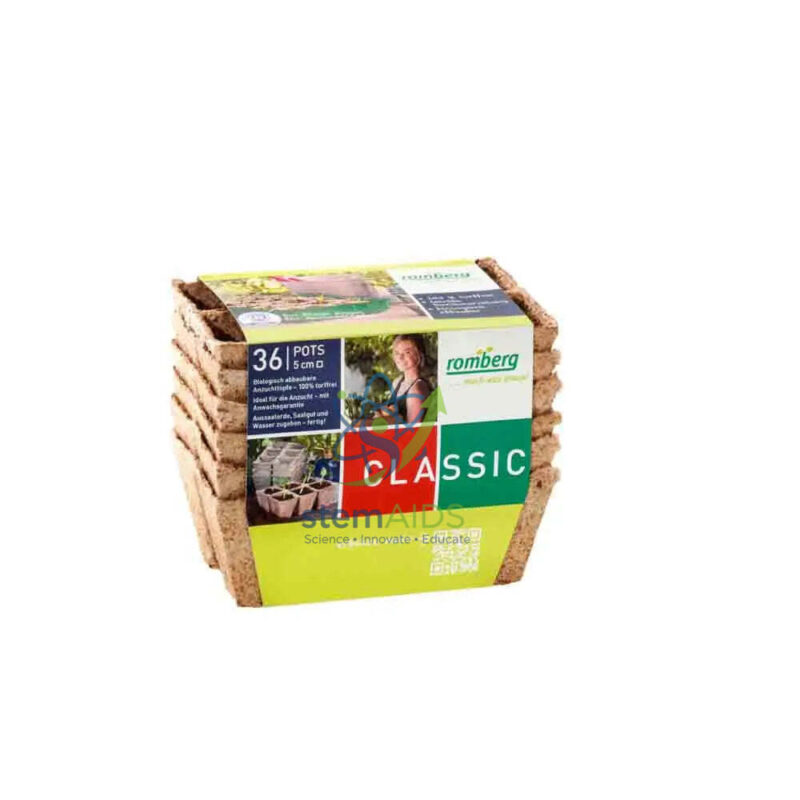
The product photo shows a pack of square fibre pots. Square pots sit together in a tray without gaps, which saves windowsill space and lets the pots support one another. The fibre used, the pot size and the number per pack are not given in the listing, so confirm them before ordering for a class.
Because the pot itself decomposes, it doubles as a science object. Burying one and digging it up after a few weeks shows decomposition in progress, and setting it beside a plastic pot and a peat pot under the same conditions turns into a simple investigation of what biodegradable really means.
Specifications
| Type | Plant pot designed to break down in soil after planting |
| Shape shown in the product photo | Square pots in a pack |
| Typical materials for such pots | Coconut coir, wood pulp or peat fibre |
| Uses | Seed sowing, transplanting, decomposition investigations |
| Fibre, size and pots per pack | Confirm at enquiry |
Classroom and Garden Uses
- Raising seedlings indoors for planting out in a school garden
- Decomposition experiments comparing biodegradable and plastic containers in soil
- Lessons on plastic waste, composting and the carbon cycle
- Growing plants that dislike root disturbance, such as beans and squash
Care & Handling
- Keep unused pots dry, since they soften and can grow mould once wet.
- Water from below where possible and group the pots in a tray so the fibre walls do not dry out.
- Soak each pot well before planting and set its rim below the soil surface.
Why Choose LabEquip
Schools running seed-sowing projects or sustainability lessons tend to order pots in class quantities, often with cultivation hand tools for the garden. The pot is part of LabEquip’s biology lab products; for pack sizes, ask through the contact page.
Frequently Asked Questions
How long does a biodegradable pot take to break down?
It depends on the material, soil temperature and moisture, and the organisms in the soil. Thin plant-fibre pots in warm, moist soil soften within weeks and largely disappear over a growing season; in dry or cold soil the process is much slower.
Why use a biodegradable pot instead of a plastic one?
It is planted with the seedling, so roots are not disturbed and there is no plastic to clean or discard. Plastic pots, on the other hand, can be reused for years, and comparing the two honestly is a good discussion for a class.
Can the pots go in a compost bin?
Plant-fibre pots can generally be composted at home or at school. Pots made from bioplastics may need the higher temperatures of industrial composting, so check the material before adding them to a school compost bin.
How can students test that the pot is biodegradable?
Bury the pot and a piece of plastic in damp soil at marked positions, then dig them up every week or two, photograph them and note changes in strength, colour and fungal growth.
Do roots grow through the walls?
Yes. Once the pot is wet and in contact with soil, roots push through the softened fibre. Tearing the base or sides slightly at planting helps when the soil is dry.
Why do seedlings in fibre pots sometimes turn yellow?
Microbes breaking down the fibre use nitrogen, which can leave less for the seedling, and fibre pots dry out quickly. Feeding lightly once the true leaves appear and keeping the pots evenly moist usually helps.
Last Updated: September 2026
You must be logged in to post a review.
Bestsellers




Reviews
There are no reviews yet.