




In Stock
Atherosclerosis Model
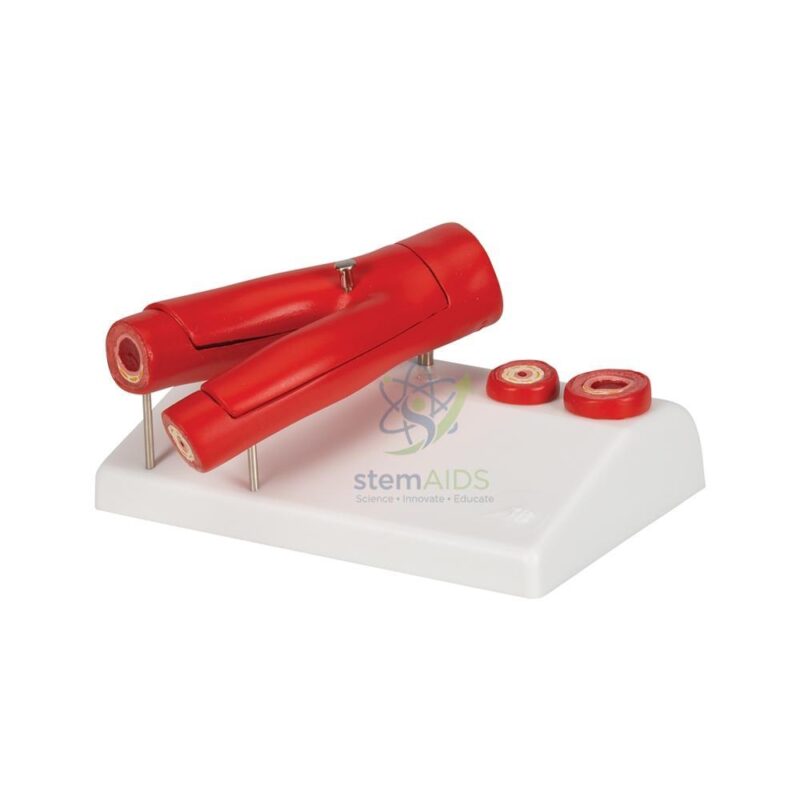
Modèle d'athérosclérose features a tiered anatomical display showing the transition from a healthy arterial wall to advanced calcification, illustrating the progressive reduction in blood flow area caused by fibrous plaque and lipid deposits.
Medical-Grade Tactile Materials Constructed using specialized high-durability polymers that replicate the varying textures of soft fatty streaks and hardened calcified lesions, providing a realistic sensory experience for clinical diagnostic demonstrations.
$13.99
Quick Answer: The Atherosclerosis Model is a teaching model of an artery that shows how fatty plaque builds up in the vessel wall and narrows the channel through which blood flows. It is used in biology, nursing and patient-education sessions to explain coronary heart disease, stroke and the risk factors behind them.
What the Atherosclerosis Model Shows
Atherosclerosis is the slow build-up of plaque inside the wall of an artery. It starts as a fatty streak when LDL cholesterol enters the inner lining, the intima, and is taken up by white blood cells; over years the streak grows into a mound of fat, cholesterol, cell debris and calcium covered by a fibrous cap. The Atherosclerosis Model turns this hidden process into something a class can hold: an artery segment in which the thickened wall and the narrowed lumen can be seen and compared with a healthy vessel.
Models of this type are usually presented as an artery segment with cross-sections, so that the lumen can be viewed end-on at different degrees of narrowing. The listing does not say how many stages or sections are included, which artery the model represents, or its scale and material, so check these points before matching it to a lesson plan.
The model is also the starting point for the two outcomes that matter most. A plaque that narrows a coronary artery restricts the oxygen supply to heart muscle and can cause chest pain on exertion, known as angina. A plaque whose cap tears exposes its contents to the blood; a clot forms on the spot and may block the vessel completely, which is the usual mechanism of a heart attack, or of an ischaemic stroke when it happens in an artery supplying the brain.
Specifications
| Model of | Artery affected by atherosclerosis (plaque within the vessel wall) |
| Features to identify | Vessel wall, plaque, fibrous cap and narrowed lumen |
| Topics | Coronary heart disease, stroke, peripheral arterial disease, risk factors |
| Users | Secondary biology, nursing, pharmacy and patient-education settings |
| Number of sections, scale and material | Confirm at enquiry |
Teaching Uses
- Biology lessons on the circulatory system, contrasting a healthy artery with one narrowed by plaque
- Nursing and allied-health training on the causes of angina, heart attack and ischaemic stroke
- Health talks on smoking, blood pressure, cholesterol, diabetes and inactivity as risk factors
- Pharmacy and patient counselling, to explain why cholesterol-lowering and blood-pressure medicines are prescribed
Care & Handling
- Hold this artery model by its base or stand rather than by the artery segment, where small sections can loosen.
- Wipe it with a soft cloth dampened with water; solvent cleaners can lift the paint that separates plaque from vessel wall.
- Keep any separate cross-sections in a labelled bag or box so none go missing between lessons.
Why Choose LabEquip
Biology departments, nursing schools and health educators use this artery model alongside a whole-heart model such as the human heart model, so learners can link a narrowed coronary artery to the heart muscle it supplies. It sits in LabEquip’s biology lab products range; send quantities and questions about the sections shown through the contact page.
Frequently Asked Questions
What is the difference between atherosclerosis and arteriosclerosis?
Arteriosclerosis is the broad term for thickening and stiffening of the artery walls. Atherosclerosis is its most common form, in which fatty plaque builds up inside the wall. The two words are often used interchangeably, and both appear on models of this kind.
How does plaque cause a heart attack?
Plaque narrows a coronary artery, but the sudden event usually happens when the fibrous cap over the plaque cracks. Blood clots on the exposed material and can block the artery, so the heart muscle beyond it is starved of oxygen and begins to die.
Which risk factors can be explained with this model?
The main modifiable ones are smoking, high blood pressure, raised LDL cholesterol, diabetes, obesity and lack of exercise. Age, male sex and family history also raise the risk. Each can be linked to damage or fat deposition in the artery wall shown on the model.
Is atherosclerosis reversible?
Established plaque does not simply disappear, but its growth can be slowed and it can become more stable. Stopping smoking, controlling blood pressure and cholesterol, and regular activity lower the chance of a clot forming, which is a useful message to end a lesson with.
Where in the body does atherosclerosis cause problems?
In the coronary arteries it causes angina and heart attacks; in the carotid and brain arteries, strokes and transient ischaemic attacks; in the leg arteries, peripheral arterial disease with pain on walking; and in the aorta it can contribute to an aneurysm.
Who uses an atherosclerosis model?
Biology teachers use it for circulation and disease topics, nursing and pharmacy tutors use it to explain cardiovascular conditions, and doctors and health educators use it to explain a diagnosis to patients in plain terms.
Last Updated: September 2026
You must be logged in to post a review.
Bestsellers




Reviews
There are no reviews yet.