


In Stock
Stoplight 3D Kit
₹1,104.00
Quick Answer: The Stoplight 3D Kit is a micro:bit project for building a vehicle stop light, the brake light at the back of a bicycle or car, in a 3D-printable housing and programming it to brighten or change when the vehicle slows. It is a brake-light project, not a road traffic light.
From Position Light to Brake Light
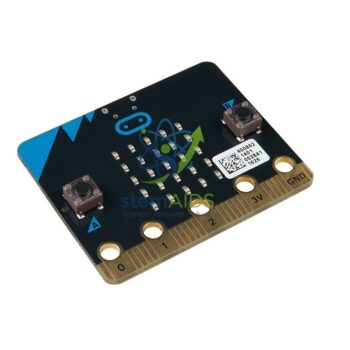
A bicycle rear light normally just glows or flashes. A brake light does more: it brightens when the rider slows down, warning traffic behind. The Stoplight 3D Kit asks students to program that change. The micro:bit’s accelerometer measures acceleration along three axes, so when the bike or model slows sharply the reading along the direction of travel changes, and the program can switch from a dim position light to a bright stop signal.
Getting this right is a genuine engineering problem. Bumps and vibration also change the accelerometer reading, so a simple threshold makes the light flicker. Students try smoothing, for example averaging several readings, or insisting that the deceleration lasts a moment before the light reacts. Pushing a trolley along a corridor and stopping it suddenly gives data they can plot and use to set their threshold.
The 3D in the name refers to a housing designed to be 3D-printed; in this kit family printed parts are generally not supplied. Kits of this type light the housing with a ring of RGB LEDs, and assembly may include soldering. The title does not say whether a micro:bit board is included, so confirm that, and the parts list, when ordering.
Specifications
| Item | Brake-light (stop light) project kit for micro:bit |
| Sensing | micro:bit accelerometer detects slowing down |
| Light | LED ring, typically RGB, controlled from code |
| Housing | 3D-printable design |
| Skills | Assembly, soldering practice and smoothing sensor data in code |
| micro:bit board and printed parts | Confirm at enquiry |
Investigations
- Programming a rear light that switches to bright red on braking
- Measuring deceleration on a trolley and choosing a trigger threshold from the data
- Comparing flashing, steady and brightening warnings for how noticeable they are
- Road-safety discussion of why vehicles carry brake lights
Care & Handling
- Students should solder only after training and under supervision, with eye protection and a heat-proof mat.
- Do not fit the project to a bicycle ridden on public roads; it is a teaching model, not an approved vehicle light.
- Keep LED brightness moderate in code during indoor testing.
- Secure the micro:bit and battery inside the housing so vibration cannot loosen them.
Why Choose LabEquip
Design-and-technology teachers use this kit to join coding, sensing and road safety in one project. LabEquip lists it in the STEM kits range; for a signalling project that stays on the ground, see the Connected Plot kit. Ask about class quantities on the contact page.
Frequently Asked Questions
Is the Stoplight 3D Kit a traffic light?
No. A stop light here means the brake light at the back of a vehicle, which brightens when the vehicle slows. Traffic-light projects teach timed sequences, whereas this kit teaches sensing deceleration.
How does the micro:bit know the vehicle is braking?
Its accelerometer measures acceleration along three axes. When the vehicle slows, the reading along the direction of travel changes, and the program switches the light once it passes a threshold.
Why does the light flicker on a bumpy surface?
Vibration changes the accelerometer reading as well. Average several readings, or require the braking signal to last for a short time, before switching the light.
Does the Stoplight 3D Kit include a micro:bit?
The listing title does not say. Confirm at enquiry whether a board is supplied or whether you should use your own.
What does 3D mean in the kit name?
It refers to the housing, which is designed to be made on a 3D printer. In this family of kits the printed parts are generally not supplied, so schools print them or source them separately.
Can students fit it to their own bike?
It is a classroom model and should not replace an approved bicycle light on public roads. Test it on a stationary bike stand or a trolley inside school.
Last Updated: September 2026
You must be logged in to post a review.
Bestsellers
Sale
Sale
Sale

Sale


Reviews
There are no reviews yet.