


In Stock
Connected 3D Carpet Kit
₹240.00
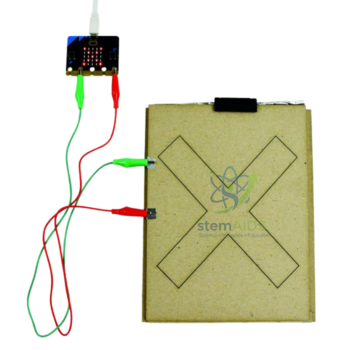
The 3D Connected Carpet Kit Without micro:bit Card by StemAids is an educational STEM kit designed to introduce students to block programming, circuit connection, assembly, soldering, fault identification, and repair-based learning. It is suitable for schools and training institutions that want to teach practical technology concepts through a hands-on micro:bit-compatible project.
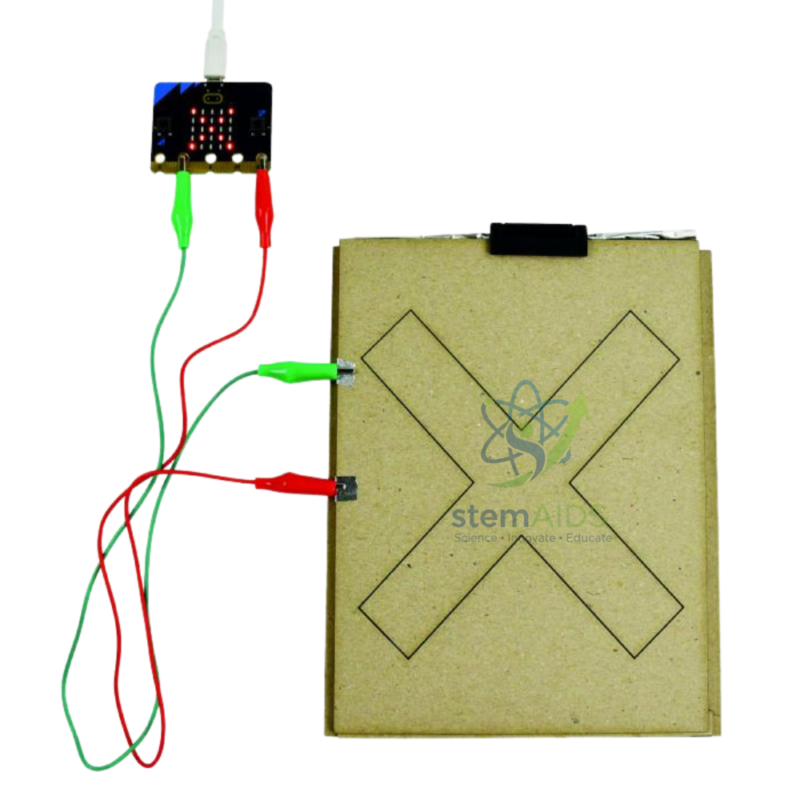
This kit helps learners understand how simple conductive materials, connection cords, and programmed input logic can be used to create an interactive connected mat or carpet-based learning model. Students can connect the assembled mat system with a separately available micro:bit board and use block programming to test input response, identify connection faults, and improve the project design.
The product is supplied without the micro:bit card, making it suitable for institutions that already have micro:bit boards in their STEM lab. The kit is delivered ready to assemble and solder, while the 3D printed parts are not included and may need to be printed or purchased separately.
Key Features
- Educational connected carpet or connected mat kit for micro:bit-compatible learning
- Designed for block programming activities and practical STEM projects
- Helps students learn fault identification, troubleshooting, and repair methods
- Useful for understanding basic circuit connection and conductive contact concepts
- Supplied without micro:bit card, suitable for labs that already have micro:bit boards
- Delivered ready to assemble and solder for hands-on classroom learning
- 3D printed parts are not included and may need to be printed separately
- Suitable for technology education, coding classes, innovation labs, and STEM workshops
Product Specifications
| Product Name | 3D Connected Carpet Kit Without micro:bit Card |
|---|---|
| Brand | StemAids |
| Product Type | Educational Connected Mat / Carpet STEM Kit |
| Compatibility | micro:bit-compatible learning platform |
| micro:bit Board | Not included |
| 3D Printed Parts | Not included; required 3D parts may need to be printed or purchased separately |
| Assembly Requirement | Ready to assemble and solder |
| Programming Method | Block programming using a compatible micro:bit programming platform |
| Included Materials | Crocodile-clip cords, grey cardboard machining parts, aluminum sheets |
| Learning Concepts | Block Programming, Circuit Connection, Conductive Contact, Assembly, Soldering, Fault Identification, Repair |
| Recommended Use | School STEM Labs, Technology Classes, Coding Workshops, Robotics Labs, Project-Based Learning |
| User Level | Beginner to Intermediate, with teacher supervision for soldering |
Kit Contents
- One set of cords with crocodile clips
- One set of grey cardboard machining parts
- One set of aluminum sheets
- Assembly materials as supplied with the kit
- Note: micro:bit board is not included
- Note: 3D printed parts are not included
How to Use 3D Connected Carpet Kit Without micro:bit Card
- Check the Components: Verify the crocodile-clip cords, grey cardboard parts, aluminum sheets, and any required assembly material before starting.
- Prepare the micro:bit Board Separately: Since this version is supplied without a micro:bit card, use a compatible micro:bit board already available in your lab.
- Prepare 3D Printed Parts: Print the required 3D parts separately or use compatible printed parts if available.
- Assemble the Connected Carpet: Arrange and assemble the cardboard and aluminum sheet sections according to the supplied project instructions.
- Make the Connections: Use crocodile-clip cords to connect the conductive sections of the carpet to the micro:bit input pins or compatible interface setup.
- Open the Programming Platform: Use a micro:bit-compatible block programming platform such as MakeCode.
- Create the Program: Write a simple program to detect input signals from the connected mat and display or trigger an output response.
- Test the Model: Press or activate different sections of the connected carpet and observe whether the micro:bit responds correctly.
- Identify Faults: Check loose clips, incorrect contact points, weak solder joints, or programming errors if the model does not respond.
- Repair and Improve: Correct the wiring, improve the conductive contact, adjust the program, and retest the connected carpet model.
Educational Benefits
The StemAids 3D Connected Carpet Kit Without micro:bit Card supports practical learning by helping students understand how programming, materials, circuits, and troubleshooting work together in a real project. It is useful for teaching block coding, input detection, conductive pathways, project assembly, and repair skills.
This kit encourages learners to observe problems, test possible causes, identify faults, and repair the system. It supports experiential learning and helps students develop logical thinking, technical confidence, teamwork, and basic engineering design skills.
Applications
- micro:bit block programming activity
- Connected carpet or connected mat classroom model
- Conductive material and input detection experiment
- Fault identification and troubleshooting practice
- Soldering and assembly training activity
- STEM technology lab project
- Interactive input-based learning model
- Innovation lab and project-based learning activity
Why Choose StemAids 3D Connected Carpet Kit Without micro:bit Card?
StemAids provides practical STEM learning products for schools, technology labs, robotics classrooms, and innovation-based education. The 3D Connected Carpet Kit Without micro:bit Card by StemAids is useful for institutions that already use micro:bit boards and want an additional hands-on project for coding, assembly, circuit connection, and troubleshooting.
This kit gives students a practical understanding of how physical input systems can be connected to programmable boards. It is valuable for teaching not only coding, but also fault diagnosis, repair, material testing, and engineering improvement. For schools focusing on activity-based learning, this kit provides a simple yet effective classroom project.
SEO Keywords
3D Connected Carpet Kit Without micro:bit Card, StemAids Connected Carpet Kit, micro:bit Connected Mat Kit, STEM Programming Kit, micro:bit Educational Kit, Conductive Carpet Project, Block Programming Kit for Schools, Fault Finding STEM Kit, 3D Assembly Kit, Educational Technology Kit.
FAQ
1. What is the 3D Connected Carpet Kit Without micro:bit Card?
It is an educational STEM kit used to build a connected carpet or connected mat model for learning block programming, circuit connection, assembly, fault identification, and repair.
2. Which brand offers this product?
This product is offered under the StemAids brand for STEM education, coding, technology learning, and project-based classroom activities.
3. Is the micro:bit board included?
No, this version is supplied without the micro:bit card. A compatible micro:bit board must be arranged separately.
4. Are 3D printed parts included?
No, the 3D printed parts are not included. Required parts may need to be printed separately or purchased as compatible printed components.
5. What components are included in the kit?
The kit includes a set of cords with crocodile clips, grey cardboard machining parts, and aluminum sheets.
6. Is soldering required?
Yes, the kit is delivered ready to assemble and solder. Teacher or trainer supervision is recommended during soldering activities.
7. What can students learn from this kit?
Students can learn block programming, conductive contact principles, circuit connection, assembly, soldering, troubleshooting, repair, and project improvement.
8. Is this kit suitable for school STEM labs?
Yes, it is suitable for school STEM labs, technology classes, coding workshops, robotics labs, innovation labs, and hands-on project-based learning.
9. Which programming platform can be used?
Students can use a micro:bit-compatible block programming platform such as MakeCode, depending on the classroom setup and project requirement.
10. Can this kit be used by beginners?
Yes, beginners can use it for basic block programming and circuit connection activities. Soldering and assembly should be done under supervision.
You must be logged in to post a review.
Bestsellers
Sale
Sale
Sale


Reviews
There are no reviews yet.