
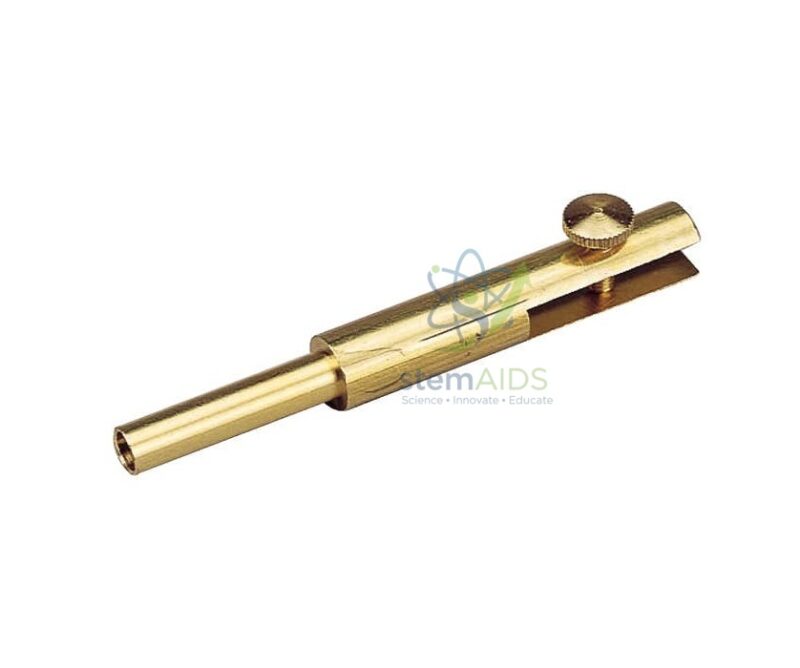
Quick Answer: This item is a terminal clamp for plate electrodes: a brass body with a slot and a tightening screw that grips the top edge of a metal plate, and a socket at the other end for a connecting lead, as pictured. Fitting a terminal clamp turns any bare metal plate into an electrode that can be plugged into a circuit.
What the Clamp Does
Metal plates used in cells and plating are often plain strips with no connection point. Crocodile clips can grip them, but their teeth scratch the surface, they slip, and their springs corrode when splashed with electrolyte. A terminal clamp gives a firm, low-resistance contact instead: the plate edge slides into the slot, the screw is tightened, and the lead plugs into the socket at the end of the brass body.
Because the contact area is larger and the pressure firm, the connection adds very little resistance, which matters when students measure the small voltages of simple cells or record the current during copper plating.
Using It Correctly
Fix the clamp to the top edge of the plate and set the plate so the clamp stays well above the liquid. Brass is a copper-zinc alloy, so if the clamp dips into the electrolyte it becomes part of the electrode and can react, plate or change the voltage. Leave enough dry plate between the liquid surface and the clamp for any splashes or creeping solution.
Specifications
| Product | Terminal clamp for plate electrodes |
| Shown in photograph | Brass body with slot and tightening screw, socket at one end |
| Grips | The edge of a thin metal plate |
| Connection | Socket for a banana-type lead plug, as pictured |
| Maximum plate thickness and socket size | Confirm at enquiry |
Where It Is Used
- Connecting zinc and copper plates in simple cell experiments
- Attaching the cathode and anode plates in copper plating and refining
- Making electrodes from offcuts of metal sheet for reactivity comparisons
- Connecting the plates of a home-made capacitor or conductivity cell
Care & Handling
- Keep the clamp above the electrolyte at all times
- Wipe off any splashes promptly and dry the screw thread after use
- Tighten the screw firmly but do not crush thin or soft plates
- Clean tarnish from the slot occasionally so the contact stays good
Why Choose LabEquip
Teachers buy terminal clamps so that bare plates and offcuts can be connected neatly, without clips that slip or corrode. LabEquip supplies them with single plate electrodes and other physics lab equipment; contact LabEquip to check the socket size against your leads.
Frequently Asked Questions
Why not just use crocodile clips on the plates?
Crocodile clips grip at a few points, scratch the plate, slip easily and corrode when splashed. A screw clamp gives a firm, larger contact and a proper socket for the lead.
Can the clamp go into the solution?
No. The brass would become part of the electrode and could react or be plated. Keep the clamp clear of the liquid.
What thickness of plate does it hold?
It is made for thin metal plates and strips used as electrodes. The largest thickness the slot accepts can be confirmed at enquiry.
Why does a good contact matter in cell experiments?
Simple cells give small voltages and currents. A poor contact adds resistance and makes readings unsteady or too low.
Does the clamp work with any metal?
Yes, it simply grips the plate. Choose the plate metal for the experiment and keep the brass clamp out of the electrolyte.
How do I keep the clamp in good condition?
Dry it after use, keep the screw thread free of salt deposits and lightly clean the slot if it tarnishes.
Last Updated: October 2026




Reviews
There are no reviews yet.