
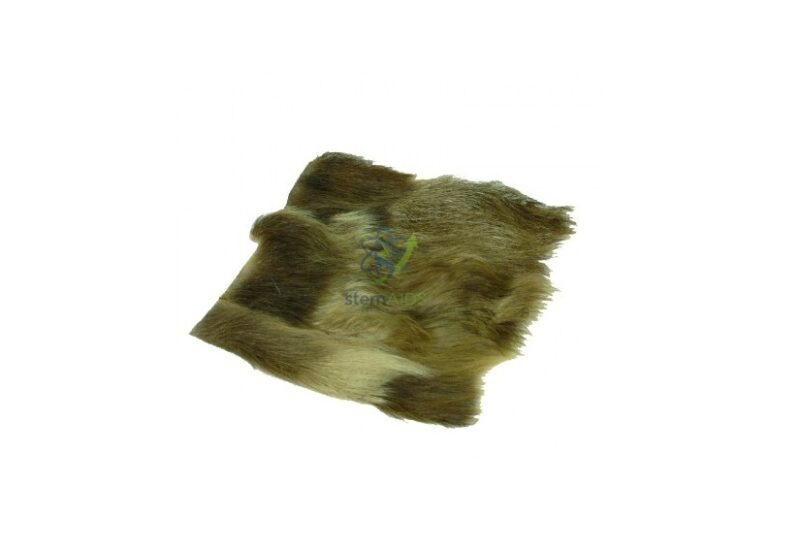
Quick Answer: Kid Leather is a soft, fine-grained leather made from the skin of a young goat, supplied here as a rubbing piece for charging rods by friction in electrostatics. Its smooth, flexible surface wraps closely around a rod, giving good contact over a large area.
Why Leather Is Used as a Rubber
Charging by friction depends on close contact between two different surfaces followed by separation. The leather is thin and supple, so it moulds to the curve of a rod and touches far more of its surface than a stiff material would. Leather rubbers have a long history in electrostatics: early glass-plate friction machines pressed leather pads against the spinning glass, sometimes coated with a metallic paste to improve charge transfer.
In the classroom this soft goatskin is a useful third rubbing material alongside silk and wool. Comparing the charge it gives a rod with the charge from silk or wool is an easy way to show that the result depends on the pair of materials, not on the rod alone.
Checking the Sign of the Charge
Where leather sits in the triboelectric series varies with its tanning, finish and moisture, so the sign a rod gains from it should be found by experiment rather than assumed. Charge an electroscope with a known sign, for example from a glass rod rubbed with silk, then bring the leather-rubbed rod slowly toward the cap. A growing deflection means the rod carries the same sign as the reference charge; a deflection that first collapses as the rod approaches points to the opposite sign.
Applications
- Charging glass, acrylic or plastic rods by rubbing for electrostatics demonstrations
- Comparing rubbing materials to build a class triboelectric series
- Charging a rod for use on an electrostatic pivot or with an electroscope
- Wiping rods clean and dry just before a demonstration
Care & Handling
- Keep the leather in a dry bag; leather absorbs moisture from the air, which weakens charging.
- Do not wash it in water or detergent, which stiffens leather and strips its finish; brush off dust instead.
- Keep oils and hand creams away from the leather and the rods.
- Warm the leather gently before a lesson on a damp day, but keep it away from direct heat, which cracks it.
Specifications
| Material | Kid leather (young goatskin) |
| Form | Soft, flexible rubbing piece, as pictured |
| Purpose | Charging rods by friction |
| Used with | Glass, acrylic, ebonite and plastic rods |
| Piece size and finish | Confirm at enquiry |
Why Choose LabEquip
Teachers buy a leather rubbing piece when they want more than one rubbing material in their electrostatics kit, so students can compare results. LabEquip lists it alongside friction textiles, rods and electroscopes in the Physics Equipments category.
Frequently Asked Questions
What is kid leather?
It is leather made from young goatskin. It is thin, soft and fine-grained, which makes it comfortable to handle and good at making close contact with a rod when rubbing.
Does kid leather give a rod a positive or negative charge?
It depends on the rod material and on the leather’s finish and moisture, so there is no single answer. Test the rod with an electroscope charged to a known sign to find out which charge it has gained.
How should the leather be used to rub a rod?
Wrap the leather around one end of the rod, squeeze lightly and draw it along the rod several times in the same direction, then lift it away. Hold the rod by the other end so your hand does not discharge the rubbed section.
Why does the leather work less well over time?
Leather absorbs moisture and picks up grease from hands and rods, both of which reduce charge transfer. Storing it dry and handling it with clean, dry hands keeps it effective for longer.
Can the leather be cleaned?
Brush or shake off dust and wipe gently with a dry cloth. Avoid soaking it, detergents and solvents, which stiffen leather and change its surface.
Is the leather an alternative to silk or wool?
It is a complement rather than a replacement. Silk and wool give the familiar textbook results with glass and ebonite, while leather adds a third material for comparison and is pleasant and durable to use.
Last Updated: October 2026





Reviews
There are no reviews yet.