





In Stock
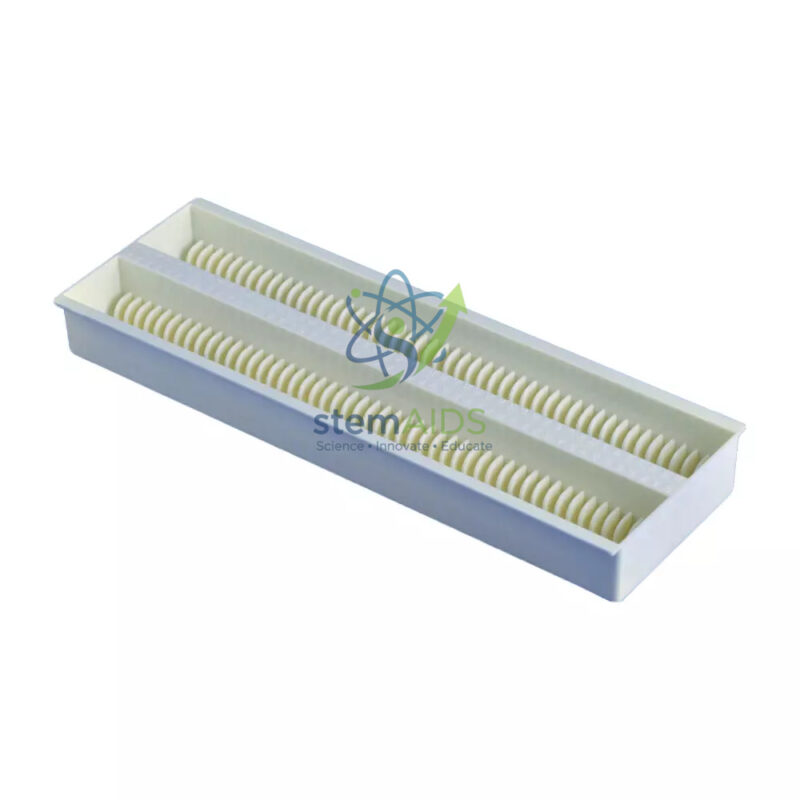
Slide Draining Tray
High-Density Polypropylene (PP) Architecture: Engineered from medical-grade, autoclavable polymers that offer exceptional resistance to common histological solvents, stains, and aggressive cleaning agents while maintaining structural rigidity during 121°C sterilization cycles.
Sloped Gravity-Drain Matrix: Features a precision-molded internal incline and integrated drainage ports that facilitate maximum laminar airflow and rapid liquid runoff, preventing water spots and capillary entrapment across twenty standard 75x25mm microscope slides.
₹245.00
Quick Answer: The Slide Draining Tray is a slotted tray that holds washed or freshly stained microscope slides on edge, side by side, so rinse water and surplus stain run down into the base while the slides dry. A slide draining tray is used at the end of staining methods such as Gram, Ziehl-Neelsen, Giemsa or Leishman staining.
Where the Draining Tray Fits in a Staining Run
Most slide stains finish with a rinse. A Gram-stained smear is washed under a gentle stream of tap water, and a Giemsa or Leishman blood film is rinsed with buffered water. At that moment the slide is dripping. Laid flat, it holds a pool of liquid over the smear that dries into tide marks and stain deposit; stood on edge in a draining tray, it sheds the liquid straight away and dries evenly.
Each slide sits in its own slot, so a whole practical group’s smears stay in the order they were stained and never touch one another while wet. That also frees the sink: the next group can start staining while the first batch drains. Blotting with bibulous paper is quicker, but it presses on the film, so draining is the gentler choice for thick blood films and fragile smears.
The draining tray takes over where a staining bar stops. On the bar, slides lie flat over the sink while reagents are flooded on and poured off; once the final rinse is done, they move to the tray to drain. The listing does not give the tray’s material or slot count, and that matters if you want to put the loaded tray in a warm drying cabinet.
Specifications
| Item | Slotted tray for draining and air-drying microscope slides |
| Slide position | On edge, one slide per slot |
| Run-off | Collects in the base of the tray |
| Used after | Final rinse of Gram, Ziehl-Neelsen, Giemsa or Leishman staining |
| Material and slot count | Confirm at enquiry |
Applications
- Draining Gram-stained bacterial smears after the final water rinse in microbiology practicals
- Air-drying Giemsa- or Leishman-stained blood films before examination under oil immersion
- Drying newly washed slides before they are reused for smears
- Keeping a class set of stained smears in order while each group finishes
Care & Handling
- Empty the base of the slide draining tray after each session; stain left to dry forms a crust that marks the next batch.
- Rinse the slots with water and use a soft brush where crystal violet or carbol fuchsin has built up.
- Keep xylene, acetone and similar solvents away from a plastic tray unless its material is known to resist them.
- Store the tray dry, so mould does not grow in the slots between terms.
Why Choose LabEquip
Microbiology and haematology teaching labs, college practical rooms and small diagnostic labs buy draining trays along with their staining equipment. LabEquip lists this tray in the Microscope & Optics range; mention how many slides you stain per session on the contact page so enough trays are supplied.
Frequently Asked Questions
Why drain slides instead of blotting them dry?
Blotting with bibulous paper is fast, but it presses on the smear and can lift a thick film or leave paper fibres behind. Standing the slide on edge lets water run off without anything touching the stained surface, which is gentler for blood films and delicate smears.
How long do stained smears take to dry in the tray?
At room temperature a thin smear usually dries within a few minutes once the surplus water has run off, while thick films take longer. Do not add immersion oil or a cover glass until the smear is completely dry, or the image turns cloudy.
Can the tray be used for heat fixing?
No. Heat fixing is done before staining, by passing the air-dried smear through a flame or placing it on a slide warmer. The draining tray belongs to the wet stage after staining and rinsing.
What is the difference between a draining tray and a staining rack?
A staining rack or bar holds slides flat, smear side up, over a sink while reagents are flooded on and tipped off. The draining tray is used after the final rinse and holds the slides on edge so they shed water and dry without puddles.
Can slides go into the tray straight from an acid or detergent wash?
Only after a thorough rinse in water. Slides cleaned in acid alcohol or detergent should be rinsed well before they stand in the tray, so no residue dries onto the glass or collects in the base.
How many slides does one tray hold?
The slot count is not given in the listing, and trays of this kind are made in several sizes. Count the smears one practical group stains at the same time and choose trays to match, with a few spare slots for repeats.
Last Updated: September 2026
You must be logged in to post a review.
Bestsellers


Sale




Reviews
There are no reviews yet.