
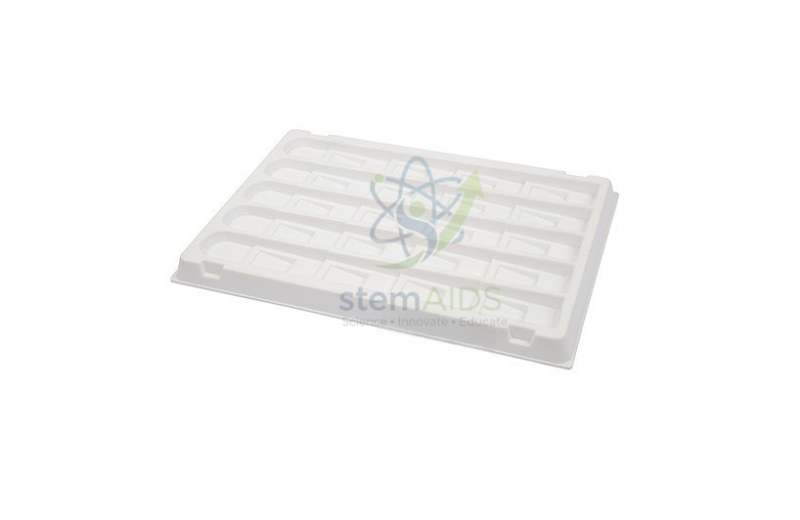
Quick Answer: The Slide Tray is a shallow tray with recesses that hold microscope slides flat and side by side, each lying level with its label showing. A microscope slide tray is used for curing permanent mounts, laying out slide sets for practicals and carrying slides without tilting them.
Why Some Slides Must Lie Flat
Freshly mounted slides are the main reason laboratories keep flat trays. A resin mountant such as DPX, or natural Canada balsam, takes time to harden, and until it does the cover glass can creep if the slide is stood on edge. Laid flat in a tray, each slide stays level while the mountant sets, usually overnight or longer depending on the medium.
Trays are also the natural way to present slides. For a practical identification test, slides are laid out in order at each station; in a histology class, one tray carries a topic’s slides from the preparation room to the benches without any of them tipping. With every label facing up, a student can pick the right slide without disturbing its neighbours.
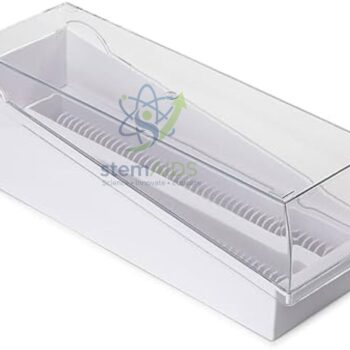
The difference from other slide storage in this range is orientation. A plastic slide storage rack files slides on edge and saves space, and a slide box closes for archiving; the tray gives up space in return for flat, level support. The listing does not give the tray’s material or how many slides it holds.
Applications
- Curing DPX or balsam mounts flat after coverslipping
- Laying out coded slides at stations for a practical identification test
- Carrying a lesson’s slides from the preparation room to student benches
- Sorting slides by student or group while marking practical work
Care & Handling
- Place slides so surplus mountant cannot touch the microscope slide tray; once set, scrape it off the glass rather than prising the slide loose.
- Keep stacked trays level and put a sheet of card between layers of wet mounts.
- Wash the tray with mild detergent, and keep xylene and similar solvents off it unless the material is known to resist them.
- Store empty trays flat so they do not warp.
Specifications
| Item | Flat tray for microscope slides |
| Slide position | Horizontal, side by side, labels visible |
| Main uses | Curing mounts, laying out slide sets, level transport |
| Suits | Freshly mounted and finished glass slides |
| Material and number of places | Confirm at enquiry |
Why Choose LabEquip
Histology labs, colleges running practical examinations and schools building prepared slide sets use flat trays daily. The tray is listed in LabEquip’s Microscope & Optics range, and you can send the number of slides you need to lay out through the contact page.
Frequently Asked Questions
How long should new mounts stay flat in the tray?
Until the mountant has hardened at the edges of the cover glass. Synthetic resin mountants often set enough to handle within a day, while natural balsam can take much longer. Test by gently pressing the edge of the cover glass with a needle.
Can slides be stored long term in a slide tray?
Yes, if the trays are covered and stacked in a dry place. Flat storage suits thick mounts and whole-mount specimens that could shift, although it takes more space than filing slides on edge.
Is a slide tray suitable for wet mounts?
Only for a short time on the bench. Temporary water or glycerine mounts dry out or leak within hours, so view them in the same session. The tray keeps them level and together while the class works.
How are slides laid out for a practical exam?
Number each station, place one slide per recess with its label covered or coded if identification is being tested, and set the tray beside the microscope. A flat tray stops slides being knocked over or muddled between candidates.
Can the tray go in a warm oven to speed up curing?
Only if the tray material tolerates the temperature. Gentle heat speeds up many resin mountants, but plastics can warp, so ask for the material when you enquire if oven curing is part of your routine.
Why do slides stick to the tray?
Mountant that has run beyond the cover glass sets like glue. Free the slide by sliding a thin blade underneath instead of levering up one end, then scrape the hardened mountant off the glass and wash the tray.
Last Updated: September 2026






Reviews
There are no reviews yet.