










In Stock
Thermal Block for Microplate
₹14,520.00
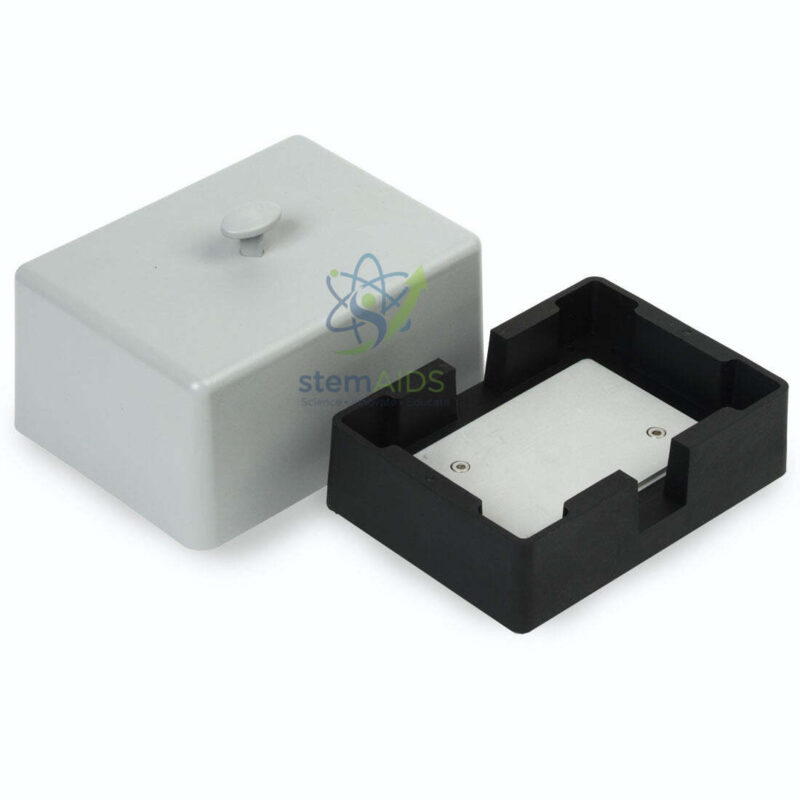
Quick Answer: The Thermal Block for Microplate is a metal block that holds a microplate in close contact so every well is warmed or cooled evenly; the photo shows a grey block with a fitted cover beside a dark frame holding a white plate.
Even Temperature Across a Plate
A microplate is a thin plastic tray, and when it sits on an uneven surface the wells at the edges run at a different temperature from those in the centre. That is one cause of the edge effect seen in assays, where outer wells give different readings because they warm, cool or evaporate differently. A thermal block for microplate work supports the plate from underneath with metal, so heat passes evenly into every well.
The photo shows two parts: a grey cover and a black frame carrying a white plate. A cover over the plate keeps warm air around it and slows evaporation from the outer wells, which matters during long incubations. The block is used on a dry bath or other heater that accepts it, or pre-chilled to keep a plate cold while samples are added.
Plates differ in footprint and in bottom shape, whether flat, round, V or skirted PCR, and the block has to match both the plate and the heater. For a heater that also takes tube blocks, the Block for Tubes or Microplates listing covers plate blocks too.
Applications
- ELISA and other plate assays incubated at 37 °C
- Enzyme kinetics in plates, keeping all wells at one temperature
- Keeping a plate cold while samples and reagents are dispensed
- Warming cell-based assay plates briefly outside the incubator
Specifications
| Type | Thermal block for microplates |
| Pictured parts | Grey cover and dark plate frame holding a plate |
| Function | Even warming or cooling of all wells |
| Use with | A dry bath or heater that accepts the block, or pre-chilled |
| Plate type and heater fit | Confirm at enquiry |
Care & Handling
- Place the plate flat in the frame so every well touches the block evenly.
- Keep the cover on during incubations to limit evaporation from outer wells.
- Wipe the block and frame with mild detergent and dry them, taking care not to scratch the contact surface.
Why Choose LabEquip
Immunology, biochemistry and teaching labs running plate assays buy a microplate block to cut edge effects and to use their existing heater for plates. Blocks and heaters are listed in General Lab Products; send your heater and plate type through the contact page to match the block.
Frequently Asked Questions
What is the edge effect, and how does the block help?
Outer wells of a plate often warm, cool and evaporate differently from inner wells, which skews assay results. Metal contact under the whole plate and a cover over it keep all wells closer to the same temperature.
Which plates fit the block?
The block must match the plate’s footprint and bottom shape, whether flat, round, V or skirted PCR. Tell us the plate you use so the block can be matched.
Can the block be used to keep a plate cold?
Yes, metal blocks are often pre-chilled so that a plate stays cold while reagents are added. Dry off condensation before placing the plate.
Why use a cover during incubation?
A cover keeps warm air over the plate and reduces evaporation from the outer wells, which is a main source of edge effects in long incubations.
Does the block work on any dry bath?
No, it has to fit the heater’s block recess or plate position. Give the heater model when ordering.
How is the block cleaned?
When it is at room temperature, wipe the block and frame with a mild detergent solution, then with a damp cloth, and dry them. Avoid abrasive pads on the contact surface.
Last Updated: September 2026
You must be logged in to post a review.
Bestsellers




Reviews
There are no reviews yet.