
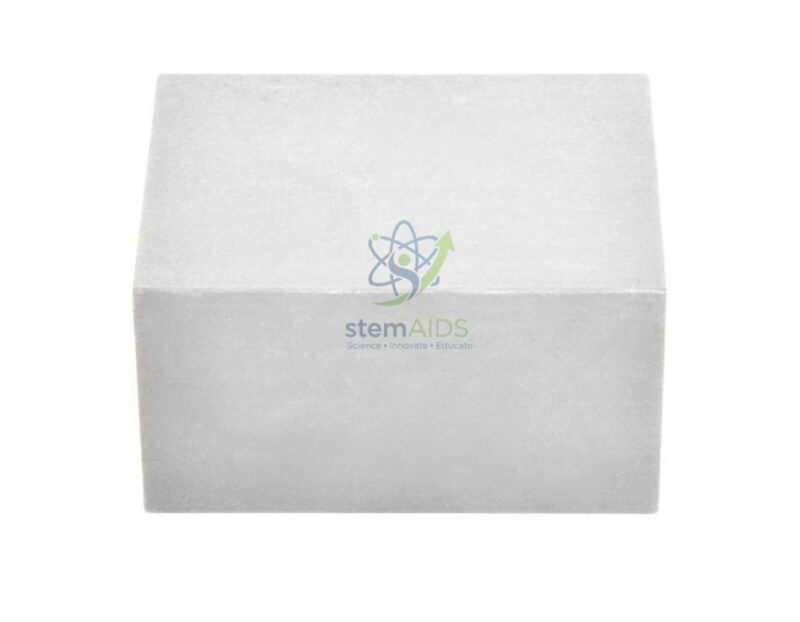
Quick Answer: The Solid block is an undrilled metal block for dry baths and block heaters, pictured as a plain rectangular block with no wells; blocks like this are usually drilled to suit unusual tubes or vessels, or used to fill an empty block position.
What an Undrilled Block Is For
Standard blocks cover the common tubes, but labs also use odd formats: thick glass tubes, custom vials, sensors or small moulds. A solid dry bath block gives a blank of the right outside size that a workshop can drill to fit, so the custom item sits in a block that still slides into the heater.
On a heater with more than one block position, a solid block can also fill a bay that is not in use, so the bay is closed rather than left open. Its flat top can warm small flat-bottomed items by contact as well.
The photo shows a plain, matt metal block with flat faces. Material and dimensions are not stated in the title; heater blocks are commonly aluminium, which machines easily and conducts heat well.
Applications
- Drilling custom wells for tubes or vials that no standard block takes
- Filling an unused position in a multi-block heater
- Contact warming of small flat-bottomed items
- Drilling a probe hole to compare the heater’s display with a reference thermometer
Care & Handling
- Drill the solid dry bath block cool and clamped, and deburr the wells so tubes are not scratched.
- Clear swarf from drilled wells and wash the block after machining.
- Mark which wells are which size if several sizes are drilled.
- Handle the block with gloves when it comes out of a hot heater.
Specifications
| Type | Undrilled (solid) block for dry baths |
| Form | Plain rectangular metal block without wells, as pictured |
| Typical use | Custom drilling, or filling a spare block position |
| Machining | Wells to be drilled by the user’s workshop |
| Material, size and heater fit | Confirm at enquiry |
Why Choose LabEquip
Research and QC labs with unusual tube sizes buy undrilled blocks to make their own inserts. LabEquip also lists ready-drilled options such as the Vial Block in General Lab Products; confirm the heater the block must fit through the contact page.
Frequently Asked Questions
Why buy a block with no wells?
It lets you drill wells for tubes or vessels that no standard block holds, while keeping the outside size that fits the heater.
What should be considered before drilling?
Measure the item’s outside diameter and choose a drill that gives a close sliding fit. Leave enough metal between wells and at the edges so the block stays strong and heats evenly.
Can a solid block be used without drilling?
Yes. It can fill an unused bay in a multi-block heater, or warm flat-bottomed items placed on its top surface.
What metal is the block made of?
The title does not state it. Heater blocks are often aluminium because it conducts heat well and is easy to machine, but confirm the material before drilling.
Will it fit my dry bath?
It needs to match the heater’s block size closely to transfer heat well. Compare its dimensions with your instrument before ordering.
Can the block be used to check heater temperature?
A small well drilled for a reference probe, with a little heat-transfer fluid in it, lets you compare the block temperature with the display. Follow your lab’s calibration procedure.
Last Updated: October 2026




Reviews
There are no reviews yet.