


In Stock
Small Diameter Magnifying Boxes
Boîtes-loupes petit diamètre. Integrated into the lid, this high-refractive-index acrylic lens provides consistent 3x magnification across the entire field of view, optimized for identifying micro-morphological features without peripheral blurring.
Precision-Engineered Specimen Ventilation Features a micro-perforated airflow system that maintains internal atmospheric equilibrium, ensuring the physiological integrity of live biological specimens during prolonged longitudinal observation and transport.
₹645.00
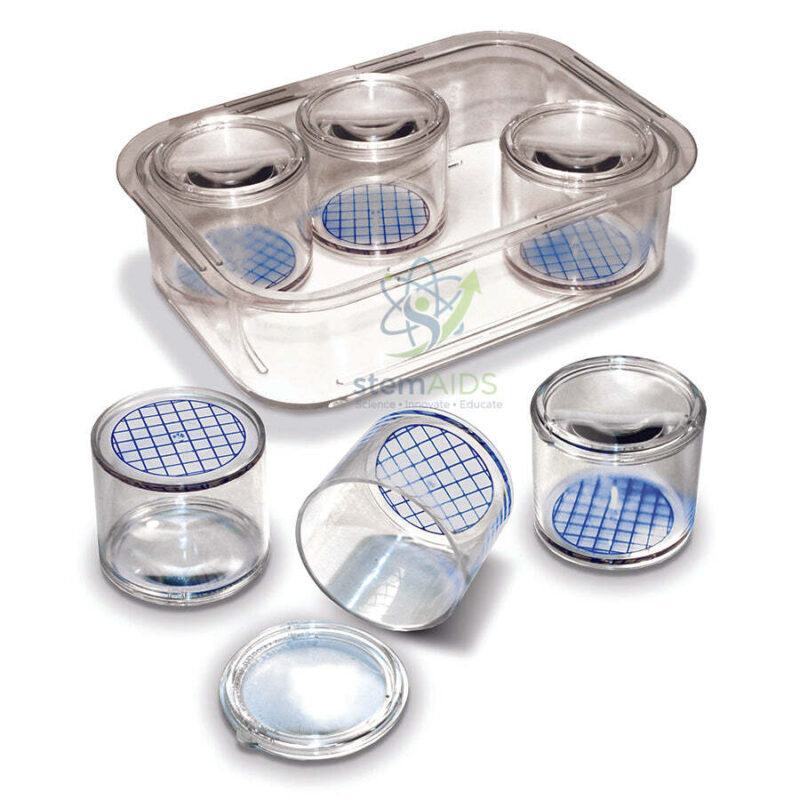
Quick Answer: Small Diameter Magnifying Boxes are compact, clear observation pots with a magnifying lens in the lid, pictured as a set in a clear storage tray with squared grids in the base. Each box holds a small insect, seed or mineral grain so students can look closely without handling it.
Why a Small Box Helps Observation
A narrow box keeps a small animal within the field of view of the lens and at roughly the right distance from it, which is the main difficulty when young students use a loose hand lens. Ants, springtails, aphids, seeds and sand grains are easier to follow in a small pot than in a large viewer, where they wander out of focus.
The squared grid in the base, visible in the listing photo, gives a scale for estimating body length or counting small items. Students can sketch the specimen on squared paper using the same number of squares, which turns a quick look into a measured drawing. The diameter, lens power and number of boxes in the set are not given in the title and are worth checking against your class size.
Compared with the single larger magnifying glass box in the same range, this set gives each pair or group its own viewer during a field lesson. For objects too big for a pot, a large diameter magnifying glass is the better choice.
Specifications
| Type | Set of small clear observation boxes with magnifying lids |
| Base | Squared grid for scale, as pictured |
| Storage | Clear tray holding the boxes, as pictured |
| Suitable specimens | Small insects, soil animals, seeds, grains, crystals |
| Diameter, lens power and boxes per set | Confirm at enquiry |
Where the Boxes Are Used
- Minibeast hunts in the school garden, with each group holding its own finds
- Examining soil animals extracted with a Berlese funnel before release
- Comparing seed shapes and sizes, or sand and soil grains, in primary and middle-school science
- Estimating the size of small invertebrates using the grid squares
Care & Handling
- Clean the lens lids with a soft damp cloth only; abrasive cleaners scratch clear plastic.
- Release live animals where they were found after a short observation, and keep occupied boxes out of direct sun.
- Store the boxes back in the tray with lids fitted to protect the lenses.
- Do not leave a lens lid facing the sun on a windowsill, since a magnifier can focus sunlight.
Why Choose LabEquip
Primary teachers, nature clubs and environmental educators choose small magnifying boxes when a whole class needs viewers at once. LabEquip stocks the set in its General Lab Products range along with other fieldwork tools.
Frequently Asked Questions
How do magnifying boxes differ from a hand lens?
A hand lens must be held at the right distance by the user, which younger children find hard, and it leaves the specimen free to escape. A magnifying box holds the specimen and fixes the lens at a set height, so focusing is easier and small animals stay put.
What is the grid in the base for?
The grid squares act as a built-in scale. Students can count how many squares a beetle covers to estimate its length, compare the sizes of seeds, or draw the specimen on squared paper at a consistent scale.
Can live insects be kept in the boxes?
Only for a short observation. Small boxes warm quickly in the sun and hold little air, so animals should be returned to where they were found within a few minutes and never left in a closed box in a hot room.
Are these boxes suitable for young children?
Yes, for supervised use; they are a familiar tool in primary science. Check that lids are fitted securely before children carry them, and remind them not to use the lens to focus sunlight.
How should the lenses be cleaned?
Rinse off dust with water, then wipe gently with a soft cloth and a drop of mild detergent. Avoid alcohol-based or solvent cleaners, which can craze clear plastic, and let the boxes air dry before storing.
When is a single large viewer better?
A larger magnifying box suits bigger animals such as beetles, snails or spiders and lets two children look together. Small boxes are better for tiny specimens that would be lost in a large pot.
Last Updated: September 2026
You must be logged in to post a review.
Bestsellers




Reviews
There are no reviews yet.