

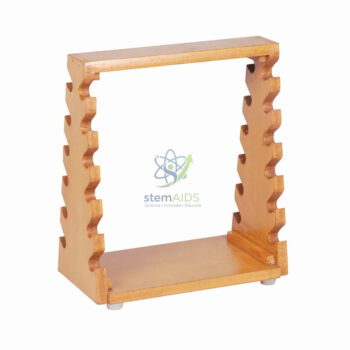
Quick Answer: The Slide Staining Tray, Rack is a shallow slide staining tray fitted with a raised rack on which microscope slides lie flat and level while stains, decolourisers and water are dropped on, with the run-off collected in the tray below.
Flat Staining Over a Drip Tray
Many routine stains are done with the smear lying flat: the slide is flooded with a few drops of each reagent in turn, left for the set time, then rinsed. A tray with a rack keeps this tidy. The rack holds several slides horizontally above the tray, each one separate, so reagents can be applied, timed and washed off without the slides touching, and the tray catches the run-off instead of the bench or the sink.
Trays of this kind usually combine a shallow drip tray with a removable rack, often in plastic or metal, so that the rack can be lifted out and both parts washed. The layout suits a class Gram staining practical, where several students stain smears at one shared station, and the collected waste stain can be disposed of as the lab’s procedures require rather than going straight down the drain.
For heat-fixing and staining over a sink, the staining bar with stand is an alternative, and after staining the slides can stand on edge in a slide draining tray to dry.
Staining Methods
- Gram staining of bacterial smears in microbiology practicals.
- Ziehl-Neelsen and other acid-fast stains, under supervision.
- Leishman or Giemsa staining of blood films in haematology teaching.
- Simple stains such as methylene blue for cheek cell or yeast smears.
Specifications
| Type | Drip tray with slide rack for flat staining |
| Holds | Standard microscope slides lying horizontally |
| Function | Collects stain and wash run-off |
| Cleaning | Rack and tray separate for washing in typical designs |
| Material and slide capacity | Confirm at enquiry |
Care & Handling
- Level the tray before use, so pools of stain stay on the smears and do not run off one end.
- Empty the collected stain after each session into the waste container used for staining solutions.
- Wash rack and tray with detergent and rinse well; dried crystal violet and carbol fuchsin mark plastic if left.
- Disinfect the tray after staining smears of cultures or blood, following the lab’s procedure.
Why Choose LabEquip
Microbiology and pathology teaching labs, hospital training labs and colleges running medical laboratory technology courses buy a slide staining tray so that several students can stain at one station without flooding the bench. LabEquip lists it in General Lab Products, and the rack’s slide capacity can be checked through the contact page.
Frequently Asked Questions
How is the tray used for Gram staining?
Place the heat-fixed smears on the rack, flood each with crystal violet, then iodine, decolourise briefly and counterstain with safranin, rinsing with water between steps. The run-off from every step drains into the tray below.
Why use a tray instead of staining over the sink?
The tray keeps stains off the bench and out of the drain, lets several slides be stained at one station and makes it easy to collect waste stain for proper disposal. It also keeps each slide level, so reagents stay on the smear.
Can heated stains, as in Ziehl-Neelsen staining, be done on the rack?
Heating is normally done by passing a flame under the slide or on a heated stage or bar. Whether that is possible on this rack depends on its material; plastic racks must never be flamed, so heat those slides on a metal staining bar instead.
How do I stop stain drying on the smear?
Use enough reagent to cover the whole smear, keep the rack level and away from heaters and draughts, and follow the timings of the method. With hot-stain methods, add more stain if the surface starts to dry.
How should waste stain collected in the tray be handled?
Pour it into the waste container your lab uses for staining solutions rather than down the sink, since several stains contain phenol, alcohol or dyes that should not go to drain. Rinse the tray and add the rinsings to the same waste.
How is dried stain removed from the tray?
Soak the tray and rack in warm detergent solution and wipe them clean. Alcohol removes many dye residues, but test it on a small area first if the tray is plastic, and rinse everything with water afterwards.
Last Updated: September 2026





Reviews
There are no reviews yet.