







In Stock
Rotary disc analog agitator
₹2,350.00
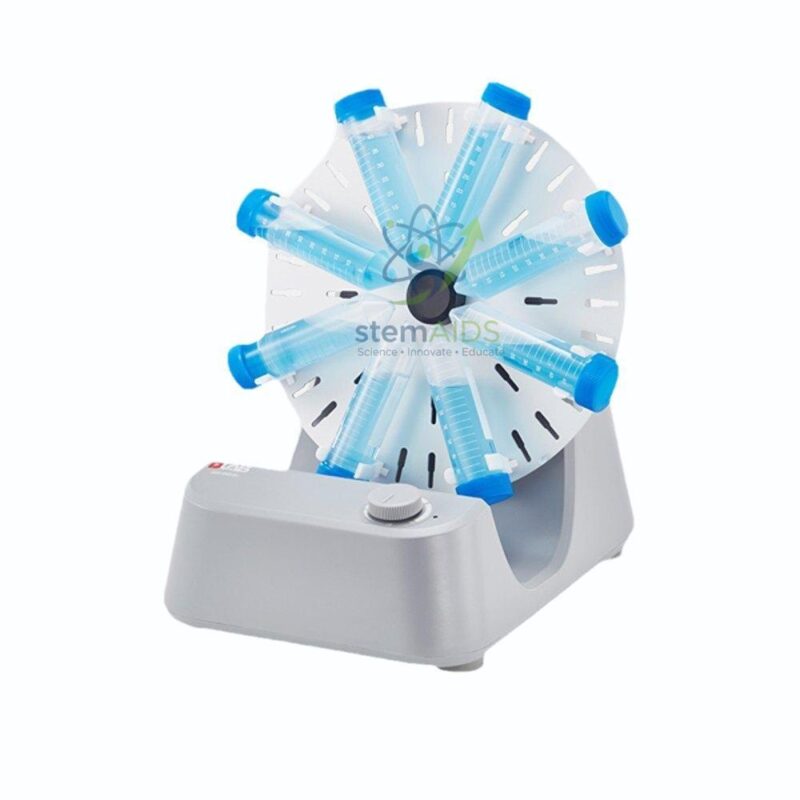
Quick Answer: The Rotary disc analog agitator is a compact tube rotator with a disc that turns tubes end over end, set by a simple knob rather than a digital display; the photo shows conical tubes of two sizes clipped on the same disc.
One Disc, Two Tube Sizes
The photo shows a round, white disc on a grey base, with larger and smaller conical centrifuge tubes clipped side by side. Holding two tube formats on the same disc is convenient in teaching and routine labs, where one practical may use 50 mL tubes for a sample and 15 mL tubes for its reagents, and both need to keep moving.
Speed is set with a knob. The rotary disc analog agitator therefore suits jobs where steady, gentle inversion matters more than a recorded rpm figure: keeping suspensions from settling, mixing reagents that must not foam, or turning samples during a room-temperature incubation. The Rotating disc digital agitator is the one to choose when a protocol quotes an exact speed or needs a timer.
A compact disc rotator also takes little bench space and moves easily between rooms. Its speed range and the number of tubes of each size the disc carries are not stated in the title, so it is worth agreeing them with the order.
Specifications
| Type | Disc rotator for end-over-end mixing |
| Control | Analog knob, as titled |
| Pictured load | Larger and smaller conical tubes on one disc |
| Base | Compact benchtop base, as pictured |
| Speed range and tube positions | Confirm at enquiry |
Routine Uses
- Mixing samples in 50 mL tubes alongside reagents held in 15 mL tubes during one practical
- Keeping yeast or bacterial suspensions uniform while a class takes samples
- Slow inversion of protein solutions that denature if they foam
- Room-temperature washing of beads or membrane pieces in tubes
Care & Handling
- Set the knob to its lowest point before switching on, then increase the speed slowly.
- Place large tubes opposite large tubes and small opposite small to keep the disc balanced.
- Wipe the disc with a damp cloth and mild detergent, then dry it before the next run.
Why Choose LabEquip
Teaching laboratories and small research groups pick an analog disc rotator when they need dependable mixing of mixed tube sizes without programming. It is listed with other rotators in General Lab Products; questions about disc formats can go to the contact page.
Frequently Asked Questions
Can 15 mL and 50 mL tubes run on the disc at the same time?
The photo shows two sizes of conical tube clipped to the same disc, which is the usual layout for this style of rotator. Keep the load balanced by placing tubes of the same size opposite each other.
When is an analog agitator enough?
When the aim is steady, gentle mixing rather than a documented speed. Suspensions, reagent mixing and room-temperature incubations rarely depend on an exact rpm figure.
How can foaming be avoided?
Keep the speed low, leave a modest air gap in each tube and avoid overfilling. End-over-end rotation causes far less foaming than shaking or vortexing.
What happens if the disc is loaded on one side only?
The disc runs unevenly, may vibrate and puts extra strain on the motor. Spread tubes around the whole disc, using water-filled tubes to balance if needed.
Can the rotator stay on during a long incubation?
Yes, rotators are made for continuous running. Keep the vents clear and check the tubes occasionally for leaks during very long runs.
How is the disc cleaned?
Stop the unit, remove the tubes and wipe the disc and clips with a mild detergent or a suitable disinfectant, then with water. Dry it fully before loading again.
Last Updated: September 2026
You must be logged in to post a review.
Bestsellers




Reviews
There are no reviews yet.