
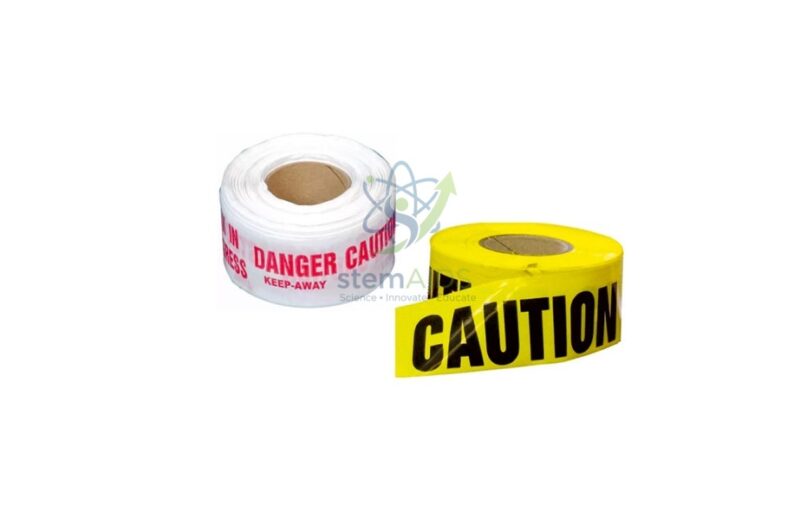
Quick Answer: The Road Barricading Tapes are rolls of printed barricading tape for marking off an area. The listing photograph shows two prints, yellow tape printed CAUTION in black and white tape printed DANGER in red, which are tied between posts, cones or fixed points to warn people away from a hazard.
Warning Tape and What It Does
Warning tape of this kind is a flat, flexible plastic ribbon printed with a warning word in contrasting colours. Tied across an opening or around an area, it sends an instant message that the space beyond is off limits, and one person can put it up in minutes using whatever supports are at hand.
The two prints in the photograph carry different levels of warning. CAUTION tape is used where there is a hazard to be aware of, such as a wet floor or work in progress, while DANGER tape marks a more serious hazard where entry could cause injury, such as an open excavation or a chemical spill. Using both consistently on a site helps people read the level of risk at a glance.
Tape is a warning, not a barrier: it can be ducked under, snapped or blown away. For areas that must stay closed for long periods, a Modular Barrier System of posts and chain lasts longer. Tape width, roll length and film type are not given in the listing.
Using Tape Effectively
- Tie the tape at about waist height and keep it taut, so it is seen and not tripped over.
- Leave a sign, or a person nearby, explaining the hazard during longer closures.
- Take tape down as soon as the hazard is gone; tape left up after the job teaches people to ignore it.
- Collect used tape for disposal instead of leaving fragments to blow around.
Situations for Warning Tape
- Cordoning off chemical or oil spills until they are cleaned up.
- Closing corridors, stairs or rooms during repairs.
- Marking excavations, open drains and damaged paving around the campus.
- Setting boundaries for fieldwork plots and outdoor experiments.
Specifications
| Type | Barricading and warning tape |
| Prints in photograph | CAUTION, yellow with black; DANGER, white with red |
| Form | Roll of flexible plastic ribbon |
| Fixing | Tied to posts, cones, railings or door frames |
| Width and roll length | Confirm at enquiry |
Why Choose LabEquip
Estates teams, laboratory managers and field-study leaders keep rolls of warning tape for spills, repairs and outdoor work. LabEquip lists these tapes in General Lab Products, and print styles and roll quantities can be arranged through the contact page.
Frequently Asked Questions
What is the difference between CAUTION and DANGER tape?
CAUTION tape warns of a hazard people should be aware of, such as a wet floor or work in progress. DANGER tape marks a serious hazard where entering could cause injury, and people should keep out entirely.
Is the tape adhesive?
Tape of this kind is normally a non-adhesive ribbon tied between supports. For marking floors, adhesive floor-marking tape is used instead, which is a different product.
Can tape alone close off a spill?
For a short time while the spill is dealt with, yes, especially with someone standing by. For longer closures, add a sign and a sturdier barrier, since tape is easily broken or ignored.
How high should the tape be tied?
Around waist height is the most visible and least likely to trip people or catch them at the neck. Keep it taut and tie it off at both ends so it cannot slip down.
Can the tape be used outdoors in wind?
Yes, but wind makes tape flap and tear. Shorter spans between supports and firm knots help, and a line of cones or posts gives it something solid to hang from.
Can the tape be reused?
Clean, untorn tape can be rolled up again for short-term reuse, but faded or stretched tape should be replaced, because a worn warning is less likely to be taken seriously.
Last Updated: September 2026






Reviews
There are no reviews yet.