


In Stock
Petri Dish Box, Aluminium/Stainless Steel
Superior Material Quality: Manufactured from non-magnetic 304-grade stainless steel or high-purity anodized aluminium to ensure lifetime resistance to rust and corrosion.
Autoclave Compatibility: Engineered to withstand repeated high-pressure steam sterilization cycles (121°C to 134°C) without warping or degrading.
₹265.00
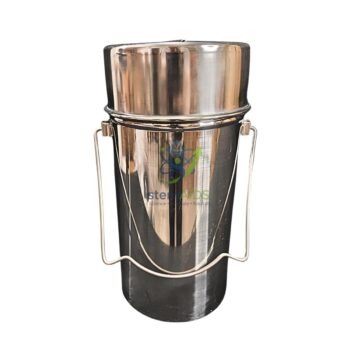
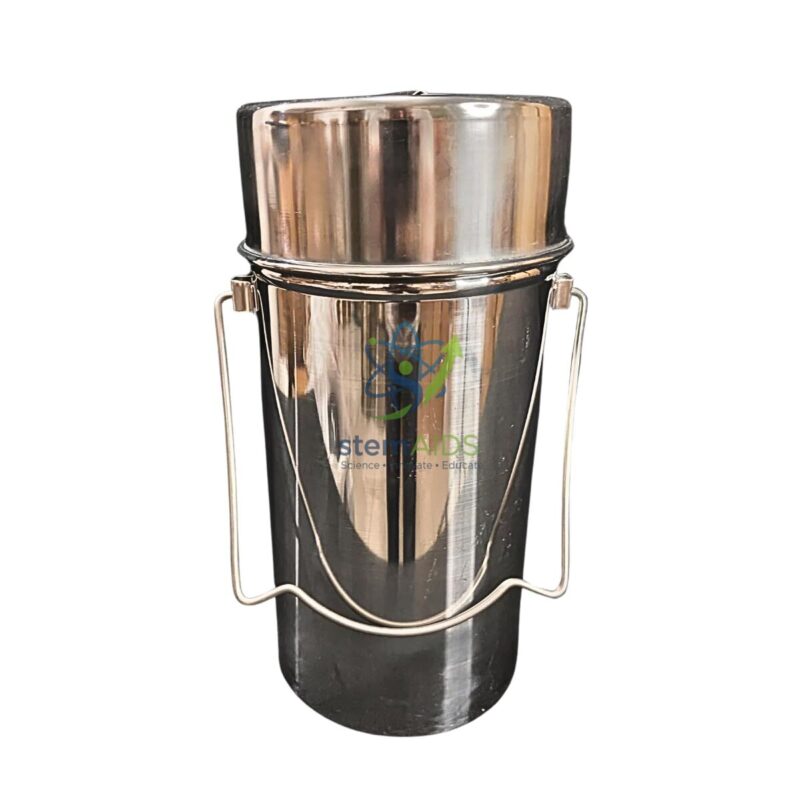
Quick Answer: The Petri Dish Box, Aluminium/Stainless Steel is a lidded metal canister for sterilising glass Petri dishes in a hot air oven and keeping them sterile until use. The listing image shows a cylindrical stainless canister with a lid and a wire carrying handle.
Dry-Heat Sterilising Glass Petri Dishes
Glass Petri dishes are sterilised before agar is poured so that only the organism being cultured grows. Dry heat in a hot air oven is the usual method for clean, dry glassware, commonly at around 160 to 180 °C with the hold time set by the laboratory’s procedure. Loading the dishes into a closed metal canister first means they leave the oven already enclosed, and they stay sterile inside until the lid is opened in a clean area.
Aluminium and stainless steel both survive oven temperatures that would melt plastic. Aluminium is lighter and heats and cools faster; stainless steel is heavier but tougher and tolerates more cleaning agents. The title offers either material, so state which you need. Disposable plastic dishes cannot go in a hot air oven at all; they are bought pre-sterilised.
A closed canister is designed for dry heat. In an autoclave, steam must reach every surface, and a closed metal box keeps it out, so autoclaved dishes need a vented container or paper wrapping instead. Fill the box with borosilicate glass Petri dishes, and hold opened stacks in Petri dish racks during a session.
Specifications
| Material | Aluminium or stainless steel (as listed) |
| Form | Cylindrical canister with lid and wire handle (as pictured) |
| Use | Dry-heat sterilisation and sterile storage of glass Petri dishes |
| Not for | Plastic dishes; steam sterilisation while closed |
| Diameter and dish capacity | Confirm at enquiry |
Applications
- Sterilising glass Petri dishes before pouring nutrient agar in microbiology practicals
- Keeping sterile dishes ready for plating in food, water and pharmaceutical microbiology
- Carrying a stack of sterile dishes from the prep room to the lab
Care & Handling
- Load only clean, fully dry dishes, since water left on glass marks it in the oven.
- Let the box cool before opening it, both to avoid burns and to stop hot glass cracking in cool air.
- Open it beside a flame or in a laminar flow cabinet, and close it again at once.
- Clean stainless steel with mild detergent and avoid bleach, whose chlorides can pit it.
Why Choose LabEquip
Microbiology teaching labs and quality-control labs that reuse glass dishes need a sterile way to move them from the oven to the bench. LabEquip lists this box in its General Lab Products range; tell us the material and dish size you use.
Frequently Asked Questions
Can the petri dish box be autoclaved?
Only if steam can get inside. A closed canister blocks steam, so the dishes would not be sterilised. For autoclaving, use a vented container or wrap the dishes in paper instead.
What temperature is used for dry-heat sterilisation?
Common hot air oven cycles range from about 160 °C with a longer hold to 180 °C with a shorter one. Follow your laboratory’s validated procedure and time the hold from when the load reaches temperature.
Aluminium or stainless steel: which should I choose?
Aluminium is lighter and heats and cools more quickly. Stainless steel is heavier but more durable and tolerates a wider range of cleaning agents. Both handle oven temperatures.
Can plastic Petri dishes be sterilised in the box?
No. Polystyrene dishes melt far below dry-heat sterilising temperatures. Plastic dishes are supplied pre-sterilised and used once.
How long do dishes stay sterile in the box?
They stay sterile while the lid remains closed and undamaged. Laboratories usually set a storage limit in their procedures and re-sterilise dishes that exceed it.
Should dishes be loaded with their lids on?
Yes. Assemble each dish with its lid, stack them and load the stack. The dishes can then be taken out and used without touching the inner surfaces.
Last Updated: September 2026
You must be logged in to post a review.
Bestsellers




Reviews
There are no reviews yet.