





In Stock
Magnifying Glass Box Magnification
Boîte-loupe grossissement x2/x4 Integrated high-refractive-index PMMA lenses provide seamless transitions between 2 primary magnifications and 4 secondary magnifications for detailed analysis, optimized for identifying minute morphological characteristics in biological and mineral specimens.
Ventilated High-Impact Chassis Constructed from UV-stabilized, laboratory-grade polymers with integrated micro-perforations to ensure atmospheric equilibrium, maintaining the physiological stability of live specimens during longitudinal observation and transport cycles.
$1.52
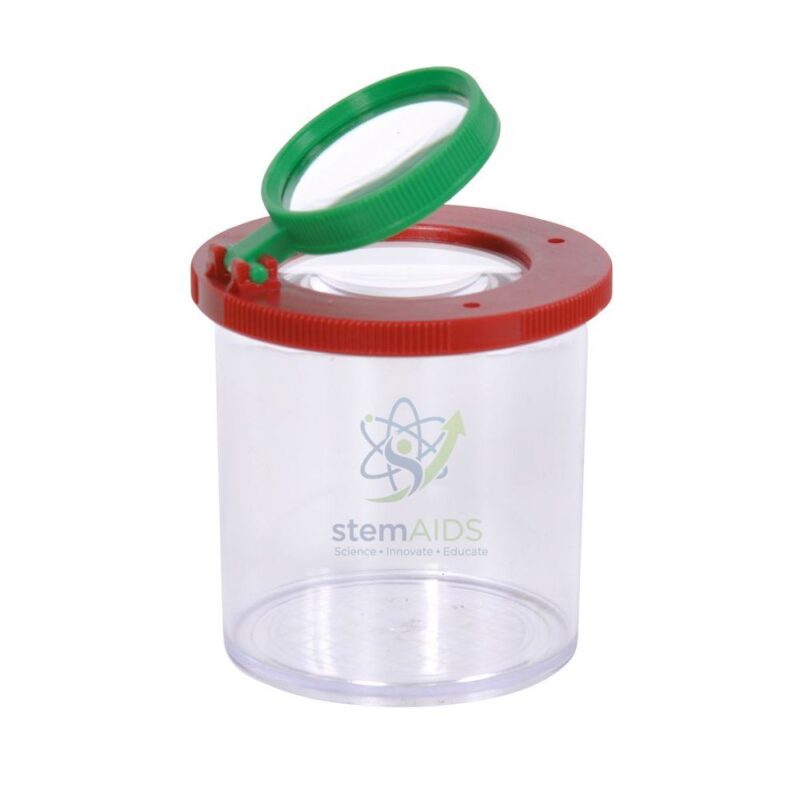
Quick Answer: The Magnifying Glass Box is a clear cylindrical observation pot whose lid carries a magnifying lens, with a second green-rimmed lens hinged above it in the listing photo. It holds a live insect, spider or other small find so children can examine it closely and then let it go.
Specifications
| Type | Single observation box with magnifying lid |
| Lenses | Lens in the lid plus a hinged second lens, as pictured |
| Body | Clear cylindrical pot |
| Suitable specimens | Insects, spiders, snails, woodlice, leaves, small rocks |
| Magnification of each lens | Confirm at enquiry |
Two Lenses, Two Views
Lenses placed one above the other act together, so a viewer with a fixed lens in the lid and a second lens hinged over it gives two levels of magnification: one lens for a wider view of the whole animal, both together for a closer look at legs, wings or mouthparts. The magnification figures are not stated in the product title, so ask for them if a worksheet depends on exact values.
The pot is wide enough for beetles, woodlice, snails, spiders and leaves, and tall enough that a walking insect stays inside while the lid is lifted briefly. Viewing from the side through the clear wall shows how the animal moves its legs; viewing down through the lens shows surface detail. Turning the box slowly lets students see the underside without touching the animal.
For groups that need one viewer each for very small specimens, the Small Diameter Magnifying Boxes set is the companion item. The larger single box described here is the better fit for bigger creatures and for sharing between two learners.
Uses in Nature Study
- Minibeast safaris in the school grounds, with observation sheets for drawing and labelling
- Watching how a snail or caterpillar moves and feeds over a few minutes
- Close study of flower parts, seeds, bark or lichen
- Examining rock and mineral samples in early earth-science lessons
Care & Handling
- Catch animals with a soft brush or by coaxing them onto a leaf, rather than with fingers.
- Keep the box shaded while an animal is inside and release it within a few minutes.
- Wipe the lenses with a soft damp cloth; avoid gritty tissues and solvent cleaners.
- Never leave the box with its lens facing the sun, where it can focus light onto a surface.
Why Choose LabEquip
Early-years and primary teachers, outdoor educators and nature clubs use a magnifying glass box as a first observation tool that children can manage safely. LabEquip lists it in the General Lab Products range and can supply class quantities through the contact page.
Frequently Asked Questions
Why does the box have two lenses?
Two lenses stacked together magnify more than either lens alone. Using the lid lens by itself gives a wider field of view to find the animal, and swinging the second lens over it gives a closer view of fine detail.
Is the magnifying glass box safe for young children?
It is widely used in early-years and primary science under supervision. Remind children to handle living things gently, keep the lid on while carrying the box, and never point the lens at the sun.
How long can an insect stay in the box?
Only a few minutes for observation. The box has limited air and warms up quickly in sunlight, so return the animal to the place where it was found soon after drawing or photographing it.
Can the box be used for water animals?
For a short look, a little pond water in the box lets students see water fleas, larvae or snails through the lens. Empty and rinse it afterwards and return the animals to the pond.
How do students record what they see?
A simple observation sheet works well: sketch the animal from above and from the side, count legs and body parts, note colour and movement, and compare it with a picture key to find its group.
Can the box be used to photograph specimens?
Yes. Holding a phone camera just above the lens lid often gives a clear enlarged picture, and photos let a class compare finds later without keeping the animals. Steady the phone on the rim and use good daylight.
Last Updated: September 2026
You must be logged in to post a review.
Bestsellers




Reviews
There are no reviews yet.