
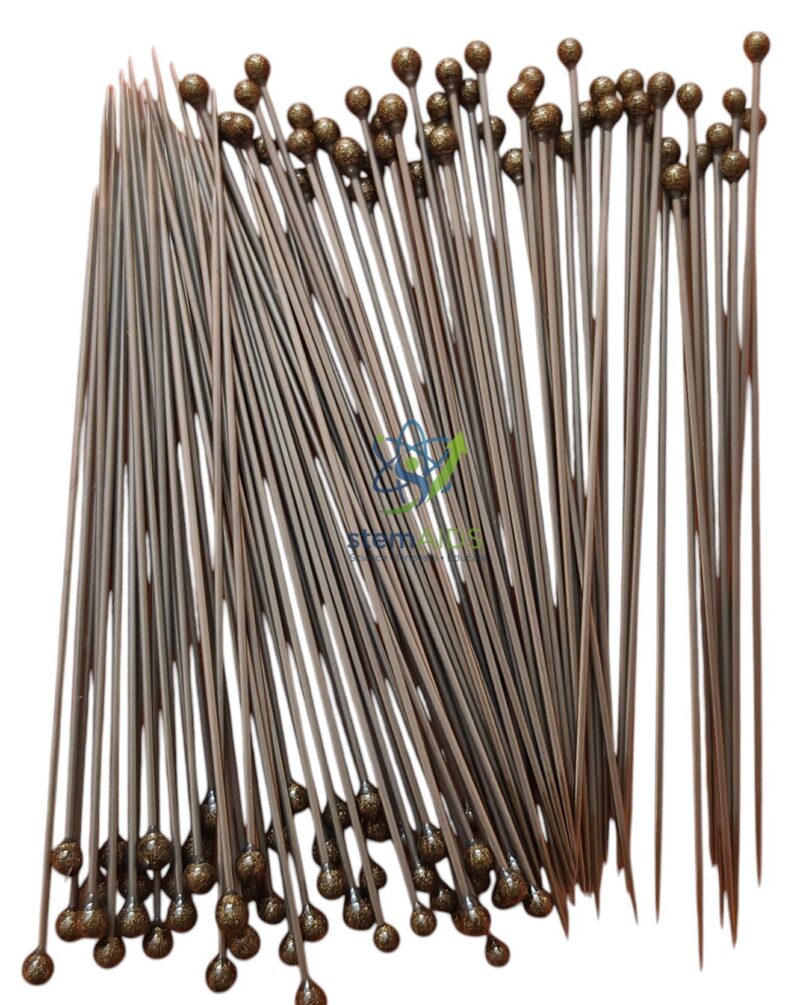
Quick Answer: Insect pins are long, slender pins with small ball heads, as pictured, made for mounting dried insect specimens in entomology collections. Each pin passes through the insect’s body and then holds the data labels below it, so specimen and information stay together.
Why Entomology Uses Special Pins
Ordinary dressmaking pins are short, thick and prone to rust, so they split small insects, leave little room for labels and corrode inside collections. Entomological pins are longer and thinner, allowing the specimen to sit high on the pin with labels stacked neatly underneath. The pins pictured have a dark finish and small round heads that are easy to grip with fingers or forceps.
Pin thickness is graded by number, with lower numbers thinner and higher numbers thicker. Sizes 2 and 3 are common for medium insects such as beetles and moths, while very small insects are glued to card points or mounted on fine micro-pins instead. The sizes in this listing are not stated in the title, so confirm them with LabEquip before ordering for a particular insect group.
Where the pin goes depends on the insect. Placing pins consistently keeps important features visible for identification, so collections pinned by different students can still be compared. The usual positions are listed below.
Pinning Positions for Common Insect Groups
- Beetles: through the right wing case (elytron), near its front
- True bugs: through the scutellum, the triangular plate between the wing bases
- Butterflies and moths: through the centre of the thorax, then spread on a setting board
- Bees, wasps and flies: through the thorax, slightly right of the midline
- Grasshoppers: through the back of the pronotum, slightly right of centre
Specifications
| Product | Entomological (insect) pins |
| As pictured | Long fine pins with ball heads and a dark finish |
| Use | Mounting dried insects and holding data labels |
| Used with | Pinning block, setting boards, foam- or cork-lined collection boxes |
| Pin size and quantity per pack | Confirm at enquiry |
Mounting & Storage Tips
- Pin insects while fresh, or after relaxing them; dry specimens crack
- Use a pinning block to set specimen and label heights evenly
- Keep pinned specimens in closed boxes with a pest deterrent, since museum beetles eat collections
- Keep spare pins in a closed container in a dry place
Why Choose LabEquip
Biology teachers, university zoology departments and students building insect collections buy these pins with a pinning block and storage boxes from LabEquip’s general lab products range. For holding larger specimens during dissection there are also nickel-plated T-pins; quantities can be requested through the contact page.
Frequently Asked Questions
Why are insects pinned through the right side?
Pinning slightly to the right keeps the left side intact, so features on one side of the body always remain visible for identification. Most collections follow this convention.
What size pin should students use?
Medium sizes such as 2 or 3 suit most beetles, bugs, moths and flies. Very small insects are better glued to a card point mounted on a pin, since even thin pins can destroy them.
How high should the insect sit on the pin?
Leave enough pin above the insect to grip it comfortably with fingers or forceps without touching the specimen. A pinning block sets this height the same way for every specimen.
Can dry specimens be pinned?
Dry insects are brittle and crack when pinned. Place them in a relaxing chamber, a closed container with moist paper, for a day or more until the legs and wings move freely, then pin them.
What do the labels on the pin record?
The first label gives where and when the insect was collected and who collected it. A second label below records the identification. Both stay on the pin with the specimen.
Why are ordinary sewing pins unsuitable?
They are short and thick, so they split small insects and leave no room for labels, and plain steel can rust inside the specimen. Insect pins are made long and fine for this purpose.
Last Updated: October 2026




Reviews
There are no reviews yet.