






In Stock
Dissection Pins with Label Holder
$1.69
Quick Answer: Dissection pins with label holder are steel pins whose head is bent into a loop that grips a small paper or card tag. Pushed into a wax tray or board, each pin can hold a specimen in place and mark a named or numbered structure at the same time, for labelled displays and practical tests.
How the Looped Head Holds a Label
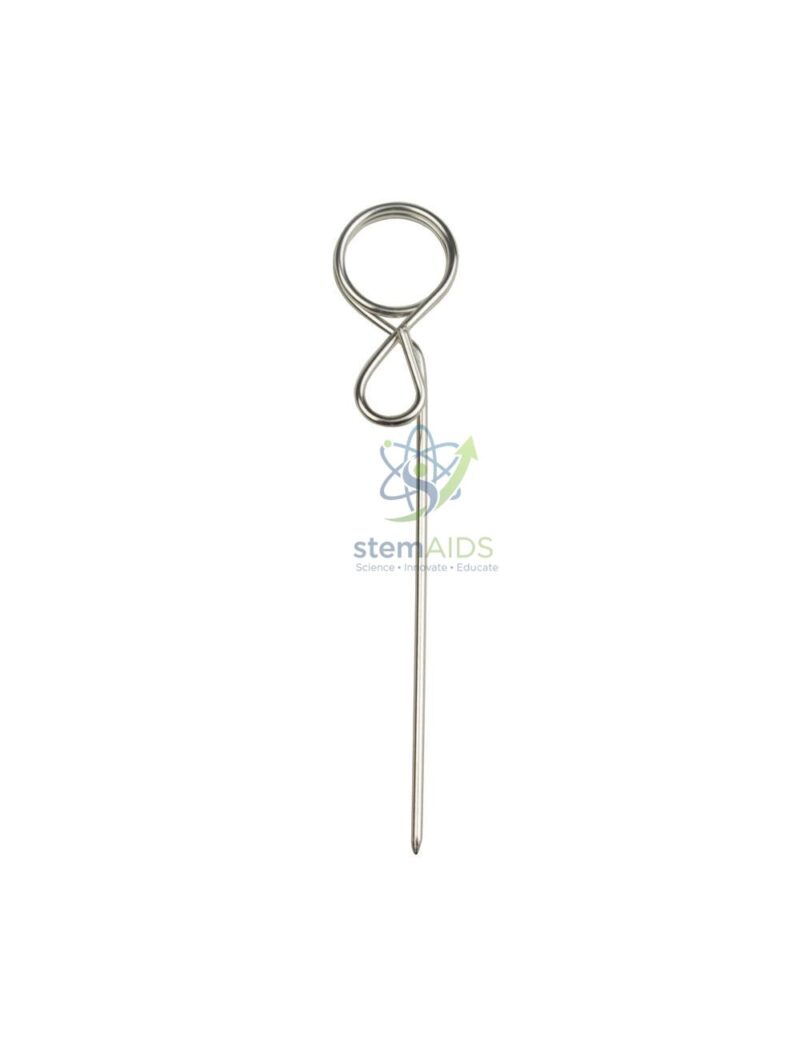
The listing photograph shows a straight steel shank with a pointed tip and a head wound into a double loop, like a figure of eight. A small folded tag, a numbered square of card or a slip of paper is pushed between the coils, and the spring of the wire grips it without glue or tape. Because the tag stands up above the tissue on its pin, it can be read from the side of the tray without anyone leaning over the specimen.
That head is what separates these from ordinary dissecting pins. Standard pins with a bead or T-shaped head only fix the specimen and hold back flaps of body wall; they carry nothing. A label-holder pin does both jobs at once, anchoring tissue while pointing to a structure with its name or number beside it. Many teachers use plain pins for fixing and keep the label pins for marking.
Labelled Dissections and Pin Tests
Label-holder pins are the usual tool for practical examinations known as pin tests. The teacher tags structures on several dissected specimens with numbered pins, sets them out as stations, and students move round writing the name, and often the function, of each numbered part. The same pins turn a finished class dissection into a display: a pinned-out earthworm with the crop, gizzard and hearts tagged, or a flower opened out on a board with its sepals, petals, stamens and carpel labelled.
Specifications
| Item | Dissection pins with looped label-holder head |
| Head | Wire wound into a double loop that grips a tag (as pictured) |
| Shank | Straight steel pin with a pointed tip |
| Labels used | Small paper or card tags pushed between the coils |
| Pinning surfaces | Wax dissecting trays, cork, foam or pin boards |
| Length and pins per pack | Confirm at enquiry |
Applications
- Numbered pin tests in zoology and biology practical examinations
- Tagging organs on a pinned-out dissection for a class display or photograph
- Labelling flower, seed and leaf parts laid out on a board in botany lessons
- Revision sessions where students label a specimen themselves and check each other
Care & Handling
- Insert each pin at an angle leaning away from the structure it marks, so the tag stays readable and the scalpel has room to work.
- Write tags in pencil or waterproof ink; ordinary ink runs on moist or preserved tissue.
- Rinse the pins after use, dry them fully and keep them in a closed box, because damp steel rusts and stains specimens.
- Keep a tally of how many pins each group takes and returns, so none go out with specimen waste.
Why Choose LabEquip
Biology teachers buy label-holder pins for practical assessments and end-of-dissection displays, normally alongside plain pins and trays. LabEquip also supplies standard Dissecting Pins for fixing specimens and the Dissecting Tray both kinds are pushed into. More bench items are listed in General Lab Products.
Frequently Asked Questions
What is the difference between label-holder pins and ordinary dissecting pins?
Ordinary pins have a bead or T-shaped head and only fix the specimen. Label-holder pins have a wire loop at the head that grips a small tag, so the same pin marks a structure with its name or number while still holding tissue in place.
How do I attach a label to the pin?
Cut a small rectangle of card, write the number or name on it, fold it once if needed and slide one edge between the coils of the loop. The spring of the wire holds it; pull it out and insert a new tag to relabel.
Can these pins be used in a wax dissecting tray?
Yes. A wax-lined tray is the usual surface, and the pins also hold in cork, foam and soft pin boards. They will not grip a bare metal or plastic tray that has no wax or foam layer.
Can these pins be used for mounting insects in a collection?
They are not the right pin for that. Insect collections use thin, rust-resistant entomological pins sized to the insect, with labels threaded on the pin below the specimen. Label-holder pins are meant for dissection trays and display boards, where the tag stands above the tissue.
Will the pins rust after contact with preserved specimens?
Steel can rust if it is left wet, especially after contact with preserving fluid or saline. Rinse the pins in water after use, dry them straight away and store them in a closed container; throw away any that become rusty or bent.
What should be written on the labels?
For a display, write the structure name in pencil or waterproof ink. For assessment, use numbers only and keep the answer key separately, so students have to identify each structure themselves.
Last Updated: September 2026
You must be logged in to post a review.
Bestsellers




Reviews
There are no reviews yet.