






In Stock
Digital dry bath for microtubes
₹17,580.00
Quick Answer: The Digital dry bath for microtubes is a compact heating instrument with a metal block drilled for microcentrifuge tubes and a digital temperature setting, used to hold small samples at a set temperature without water.
Why Molecular Labs Use Dry Baths
A dry bath replaces the water of a water bath with a metal block whose wells match the tubes. Heat passes from the block wall straight into the tube, there is no water to top up or contaminate, and there are no floating racks or wet tube labels. For microtubes, which hold small volumes, that direct contact brings samples to temperature quickly.
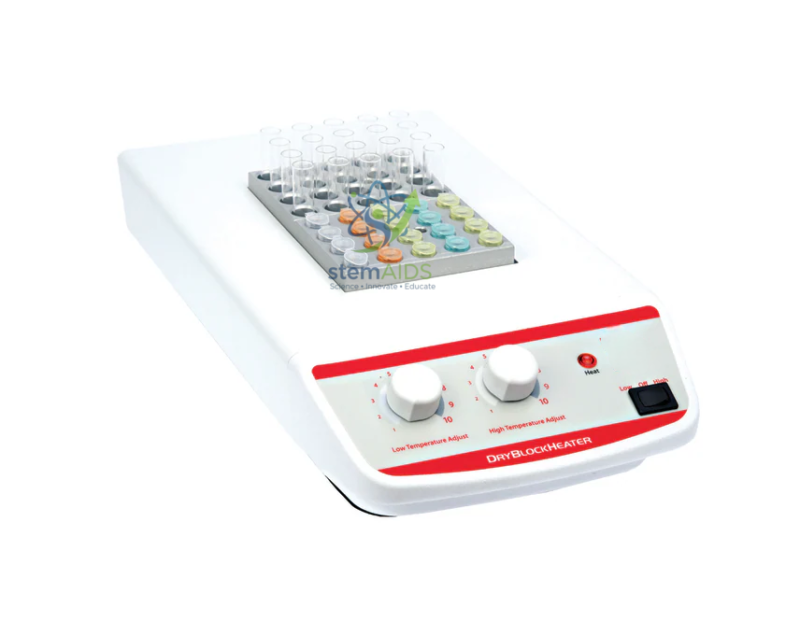
The photo shows a white, flat unit with a single block of microtubes, two control knobs and a red trim line. Digital setting means a temperature can be entered as a number, which makes it straightforward to hold 37 °C for a restriction digest, 42 °C for a heat-shock step, or a higher value for enzyme inactivation or DNA denaturation, provided the unit’s range covers it. That range, the block’s well count and whether other blocks fit are not stated in the title.
Compared with the Microtube heating dry bath with lid, this model is shown without a cover, which keeps tubes within quick reach during short incubations. Interchangeable blocks such as the Block for Tubes or Microplates suit dry baths that accept them; match any block to the unit before ordering.
Common Protocol Steps
- Restriction enzyme digests and ligations incubated at a fixed temperature
- Heat-shock of competent cells during bacterial transformation practicals
- Heat inactivation of enzymes after a reaction
- Warming reagents and thawing frozen aliquots evenly
Care & Handling
- Add a drop of water to wells where tubes fit loosely, to improve heat transfer, and wipe it away afterwards.
- Check the block with a thermometer in a water-filled tube rather than relying on the display alone.
- Use lid locks on tubes above about 90 °C, since pressure can open ordinary caps.
- Clean the block with a damp cloth when cool, keeping liquids out of the housing.
Specifications
| Type | Dry block heater (dry bath) |
| Control | Digital, as titled |
| Block | Metal block for microtubes, as pictured |
| Cover | None shown in the photo |
| Temperature range and number of wells | Confirm at enquiry |
Why Choose LabEquip
School biotechnology labs and research groups buy a compact digital dry bath as the everyday heater for small-tube protocols. It is listed with blocks and other heaters in General Lab Products.
Frequently Asked Questions
What is the advantage of a dry bath over a water bath?
No water means no contamination from bath water, no wet tubes and no refilling. The metal block also heats small tubes quickly and holds them upright.
How can I check that the block is at the right temperature?
Fill a tube with water, place a calibrated thermometer or probe in it, put it in a well and wait until the reading settles. Compare it with the set value.
Can it reach temperatures for DNA denaturation?
Denaturation steps are usually run at around 94 to 98 °C. Whether this unit reaches that depends on its rated range, so check the range of the supplied model.
Why do tube caps pop open at high temperature?
Air and vapour inside the tube expand as it heats and push the cap open. Use tubes with secure caps or add lid locks for steps above about 90 °C.
What if my tubes fit loosely in the wells?
An air gap slows heating. A small drop of water in each well improves contact; alternatively, use a block made for your tube size.
How is the block cleaned?
Switch off and let it cool, then wipe the wells with a damp cloth or 70% ethanol. Do not pour liquid onto the unit, and dry the wells before using it again.
Last Updated: September 2026
You must be logged in to post a review.
Bestsellers





Reviews
There are no reviews yet.