




In Stock
Condenser Clamp, Copper Oxidized
Superior Copper-Oxidized Finish: Provides an extra layer of durability and resistance to thermal expansion, oxidation, and corrosive chemical fumes.
Heavy-Duty Four-Prong Design: Features a four-jaw "clover" grip that provides maximum contact surface area, distributing pressure evenly to prevent stress on large condensers.
₹235.00
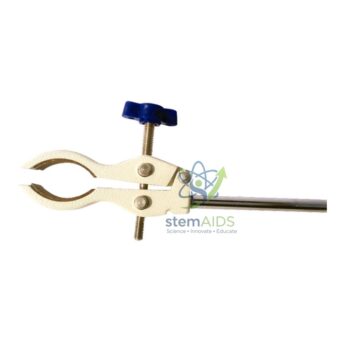
Quick Answer: The Condenser Clamp, Copper Oxidized is a rod-mounted clamp for holding a condenser by its outer jacket, finished with a dark oxidised copper surface. The listing image shows a darkened body and rod, padded jaws and a wing screw.
The Oxidized Copper Finish
An oxidised copper finish is made by chemically darkening a copper surface into a brown-black oxide layer; on hardware this is commonly a copper plating that has been darkened, and the base metal is not stated in the title. It gives the copper oxidized condenser clamp an even dark colour that does not show fingermarks. It is a finish rather than a chemical-resistant coating: nitric acid attacks copper, and ammonia fumes discolour it.
The clamp itself is built to open wide enough for a condenser jacket, which is thicker than a burette or test tube. Padded jaws, tan in the photograph, cushion the glass. A condenser should be held near its middle, around the jacket, and the clamp tightened only enough to stop slipping, because the condenser also has to line up with the joint on the flask or still head.
Pair it with a Liebig condenser for simple distillation, or a Graham coil condenser where a longer cooling path is wanted.
Care & Handling
- Keep the clamp away from ammonia bottles and nitric acid, both of which tarnish copper finishes.
- Clean the finish with a dry or slightly damp cloth; abrasive cleaners strip the oxide layer and expose bright metal.
- Replace the jaw padding if it hardens or tears.
- Never clamp over the water inlet or outlet of the condenser.
Specifications
| Type | Condenser clamp on a rod |
| Finish | Copper oxidized, dark (as pictured) |
| Jaws | Padded, tan lining in the listing image |
| Closure | Wing screw |
| Mounting | Rod into a boss head |
| Jaw opening | Confirm at enquiry |
Applications
- Holding a Liebig condenser at a downward slope during simple distillation
- Supporting a coil or Allihn condenser upright for reflux
- Holding the condenser in steam distillation and solvent recovery set-ups
Why Choose LabEquip
Distillation and organic chemistry labs, where condensers are set up every session, are the main buyers of dedicated condenser clamps. LabEquip lists the copper oxidized version in its General Lab Products range; ask us about the jaw opening before ordering.
Frequently Asked Questions
What is a copper oxidized finish?
It is a darkened copper surface produced by chemically oxidising copper, typically a copper plating, to a brown-black layer. It gives an even dark colour but is not a barrier against acids.
Which chemicals affect this finish?
Nitric acid attacks copper, and ammonia and its fumes tarnish copper surfaces. Keep the clamp away from open bottles of both and wipe off any splashes.
Where should a condenser be clamped?
Around the outer jacket, roughly in the middle, not at the water connections or at the ground-glass joint. Clamp firmly enough to prevent slipping but let the condenser line up with the joint.
Is a condenser clamp different from a burette clamp?
Yes. A condenser jacket is wider than a burette, so condenser clamps open wider and usually have more padding. A burette clamp may not open far enough to hold a condenser safely.
Can the finish be polished?
Polishing removes the oxide layer and leaves bright copper that darkens again unevenly. Clean it by wiping only.
Does a distillation need two clamps?
Usually yes: one clamp holds the flask at its neck and another holds the condenser around its jacket. Supporting both parts prevents strain on the joint between them.
Last Updated: September 2026
You must be logged in to post a review.
Bestsellers




Reviews
There are no reviews yet.