
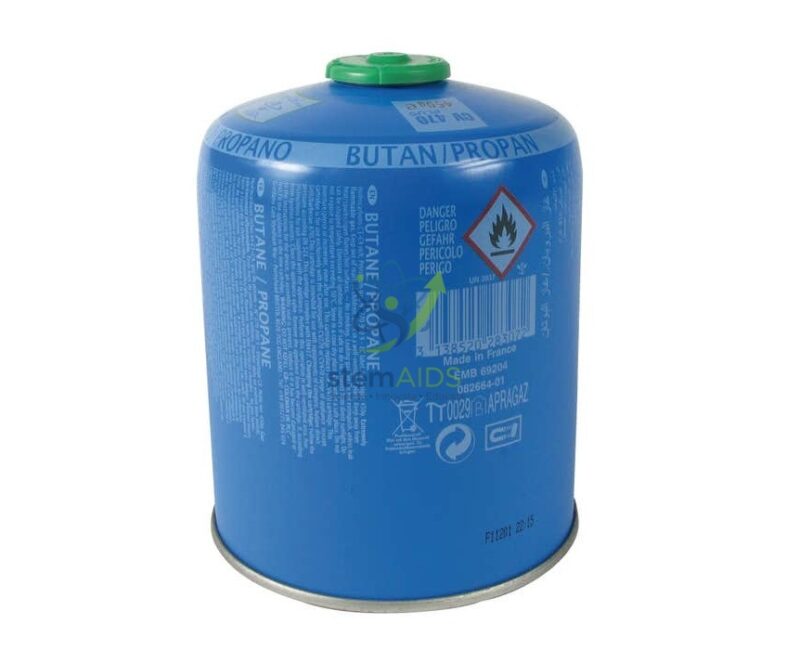
Quick Answer: The butane-propane cartridge 450 g is a disposable metal canister holding 450 g of a liquefied butane and propane mixture. It fuels portable laboratory burners and flame sterilisers in rooms without a piped gas supply.
Why a Blend in a 450 g Cartridge
Pure butane barely vaporises as it approaches 0 °C, close to its boiling point, so a butane-only canister used in a cold room or an unheated field station gives a weak, sputtering flame. Propane boils at about -42 °C and keeps the pressure up as the canister cools during use. That is why fuel for portable burners is so often sold as a butane and propane blend.
The 450 g in the title is the mass of fuel, a fill that means fewer changes during a long practical than small canisters allow. The photo shows a canister with a valve on top. Valved canisters screw onto a matching burner and can be removed before they are empty, while pierceable types cannot, so check that the valve suits the burner or flame steriliser you already own.
This fuel suits field courses, temporary teaching rooms, exhibitions and schools that never had bench gas fitted. Because it is a pressurised container, delivery follows dangerous-goods transport rules, which can affect how it is shipped to buyers abroad.
Specifications
| Product | Gas cartridge, butane and propane mixture |
| Fuel mass (title) | 450 g |
| As pictured | Blue metal canister with valve top |
| Fuels | Portable laboratory burners and flame sterilisers with a compatible connection |
| Valve type and connection | Confirm at enquiry |
Fitting, Storage & Disposal
- Change canisters outdoors or in a well-ventilated area away from flames and hot surfaces
- Check the burner’s sealing ring before fitting, and never fit a canister to a damaged or dented connection
- Store below 50 °C, out of direct sunlight, in a ventilated cupboard away from oxidisers
- Never puncture or burn a canister, even an empty one; dispose of it as local waste rules require
Applications
- Running a portable burner for heating practicals in rooms without piped gas
- Flame sterilising inoculating loops in microbiology classes
- Outdoor and field practicals, such as warming water samples at a study site
- A backup fuel source when a lab’s mains gas is shut off for maintenance
Why Choose LabEquip
Field-course leaders and schools without bench gas usually reorder fuel each term alongside their portable burners. LabEquip supplies the butane-propane cartridge together with burners such as the Bunsen burner with tap and pilot light for butane or propane in its general lab products range; send expected quantities through the contact page so the shipping rules for pressurised gas can be planned.
Frequently Asked Questions
Will this cartridge fit any portable burner?
No. Canisters come with different connections, so the burner must accept this valve type. Compare the connection on your burner with the valve shown in the photo before ordering, and never force a fitting.
Why does the flame weaken in a cold room?
Gas leaves the canister by evaporating from the liquid inside, and evaporation cools it. In the cold, the butane part evaporates slowly. The propane in the blend helps, but keeping the canister at room temperature gives a steadier flame.
How long will a 450 g cartridge last?
That depends on the burner’s gas consumption and flame setting. Burner manuals usually state consumption in grams per hour; dividing 450 by that figure estimates the running time at full flame.
Can a valved cartridge be removed before it is empty?
Yes. Valved canisters seal themselves when unscrewed, so they can be removed and stored. Do this away from flames, and listen for any hiss that would show the valve has not closed before putting it away.
How should spare cartridges be stored in a school?
Keep them in a cool, ventilated store away from heat, sunlight, ignition sources and oxidising chemicals, and bring only the number a session needs into the teaching room. Follow any local limits on stored quantities.
How is an empty cartridge disposed of safely?
Use it until the flame goes out, then let it stand in fresh air. Do not puncture, crush or burn it. Take it to the collection point your local authority uses for gas canisters or pressurised containers.
Last Updated: October 2026




Reviews
There are no reviews yet.