









In Stock
Burette Clamp, Sheet Metal
Durable Sheet Metal Construction: Fabricated from heavy-gauge pressed steel, providing excellent structural integrity and a long service life.
Corrosion-Resistant Finish: Typically finished with a high-quality epoxy powder coating or bright zinc plating to protect against chemical splashes and oxidation.
₹250.00
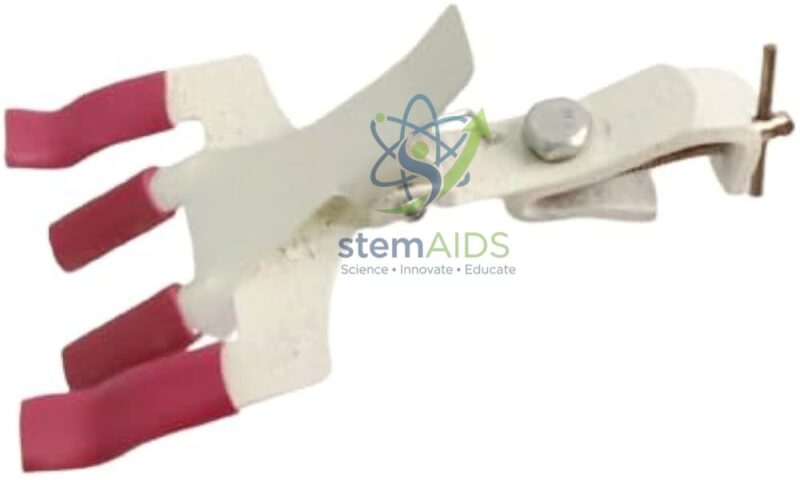
Quick Answer: The Burette Clamp, Sheet Metal is a burette holder cut and formed from metal sheet rather than cast. The listing image shows a butterfly-style body with four red sleeved fingers, which indicates a clamp for two burettes, and a screw for fixing it to the stand rod.
Pressed Sheet Metal Compared with Die-Cast
Burette clamps are made in two main ways. Die-cast clamps, such as the pressure die-cast double burette clamp, are solid castings with thick sections. A sheet metal burette clamp is cut and bent from flat sheet, which makes it lighter and thinner. Glass burettes weigh little even when full, so the lighter construction is generally enough, and less weight hangs off the stand rod.
The trade-off is stiffness. Thin formed fingers can bend if the clamp is dropped or a burette is forced in sideways, and a bent finger no longer grips evenly. Check the fingers at the start of each term and ease them back into line by hand if needed.
The red sleeves in the image cover the fingers where they touch the glass, cushioning the burette and adding grip. Sleeves of this kind are usually push-on tubes that can be renewed when they split.
Applications
- Routine school titrations, where many stands need clamps
- Back titrations or paired titrations from one stand, with the two-burette layout pictured
- Spare clamps for replacing damaged ones at student benches
Specifications
| Construction | Formed from sheet metal |
| Style | Butterfly type with four fingers (as pictured) |
| Finger covers | Red sleeves |
| Fixing | Screw onto the stand rod |
| Weight | Lighter than a comparable die-cast clamp (general) |
| Number of burettes and grip range | Confirm at enquiry |
Care & Handling
- Push burettes into the fingers straight, never from an angle, to avoid bending them.
- Replace split red sleeves promptly so bare metal never touches the glass.
- Dry the clamp after washing; the cut edges of sheet metal are where rust usually starts.
- Store clamps loose in a tray, not under heavy items that could bend the fingers.
Why Choose LabEquip
Schools fitting out many titration benches at once often choose sheet metal clamps for their low weight and simple design. LabEquip lists this clamp in its General Lab Products range; tell us how many burettes each stand should hold.
Frequently Asked Questions
How does a sheet metal burette clamp differ from a die-cast one?
It is formed from bent metal sheet rather than cast in a mould. That makes it lighter and thinner, but its fingers bend more easily if the clamp is dropped or misused.
Is a sheet metal clamp strong enough for a full burette?
Yes. A glass burette full of solution is a light load, and a formed clamp holds it without difficulty. The limit is rough handling, not the weight of the burette.
What are the red sleeves for?
They cover the metal fingers where they touch the burette, giving grip on smooth glass and preventing scratches or chips. Replace any sleeve that splits or slides off.
How do I straighten a bent finger?
Remove the burette and bend the finger gently back by hand until it lines up with its partner. Avoid bending it back and forth repeatedly, as thin sheet weakens and can snap.
Does it rust?
Bare steel rusts where a coating is chipped, especially at cut edges. Dry the clamp after washing and keep it away from open acid bottles to slow corrosion.
Can it be used with a wooden burette stand?
It is made to fix onto a round stand rod. A wooden burette stand of the notched type holds burettes in its own cross-arm, so it does not need a separate clamp.
Last Updated: September 2026
You must be logged in to post a review.
Bestsellers




Reviews
There are no reviews yet.