






In Stock
Breathalyzer
Ethylotest utilizes advanced catalytic technology to specifically detect ethanol molecules, eliminating cross-reactivity with acetone or other hydrocarbons for high-fidelity BrAC readings.
Integrated Calibration Management System features an automated internal cycle counter and recalibration alert to ensure the device maintains precision within specified laboratory tolerances over long-term industrial deployment.
₹145.00
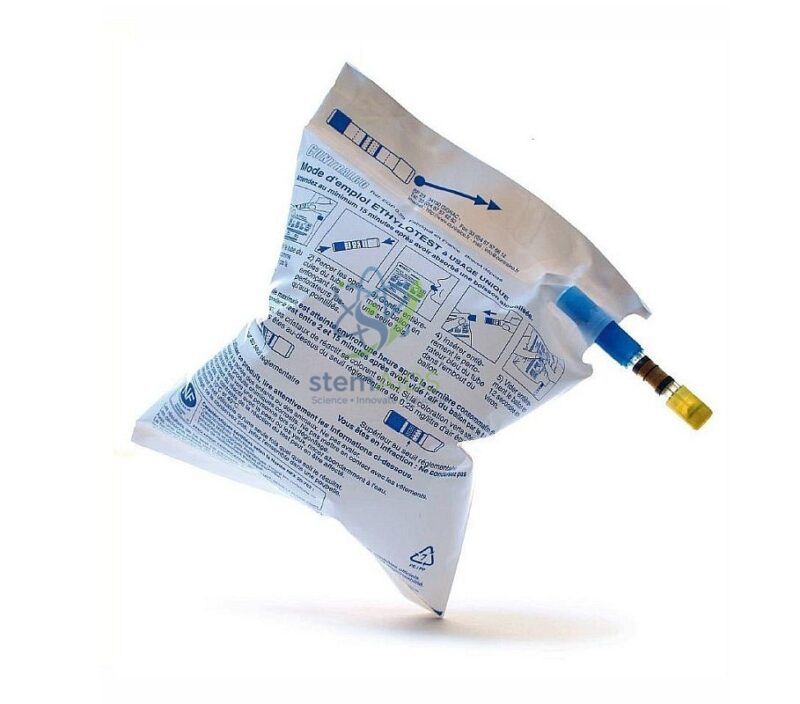
Quick Answer: The Breathalyzer shown in this listing is a single-use chemical breath-alcohol test: a plastic bag is inflated with one breath, then emptied through a sealed tube of indicator crystals that change colour if alcohol is present. In schools it is used to teach the oxidation of ethanol and road-safety awareness, not to decide whether anyone is fit to drive.
The Chemistry Inside the Tube
Disposable breath testers of this pattern have traditionally used crystals impregnated with acidified potassium dichromate, which is orange-yellow. Ethanol vapour in exhaled breath reduces the orange chromium(VI) to green chromium(III) while itself being oxidised, first to ethanal and then to ethanoic acid. The length of the green zone along the tube, compared with a printed mark, shows whether the alcohol in the breath sample was above or below the threshold the tube was made for.
The bag matters because it fixes the volume: the user fills it with one continuous breath, then the tube is fitted and the bag is squeezed so all of that air passes over the crystals. This connects to a standard chemistry topic, the oxidation of primary alcohols by acidified dichromate, and to biology lessons on how alcohol passes from the blood into the air in the lungs.
Because the formulation and threshold of a particular tube are set by its maker, the printed instructions and mark on the pack take priority. Electronic breath analysers use fuel-cell or semiconductor sensors instead and display a number; this breathalyzer is the simpler colour-change type.
Specifications
| Type | Single-use chemical breath-alcohol test |
| Pictured parts | Inflatable plastic bag and sealed indicator tube |
| Principle | Colour change of indicator crystals as ethanol vapour passes through |
| Reading | Length of the colour change against a printed mark on the tube |
| Use | Teaching and awareness only; not a legal, medical or workplace test |
Teaching Uses
- Demonstrating the oxidation of ethanol with a visible colour change in a redox or organic chemistry lesson
- Road-safety and substance-awareness sessions, together with alcohol impairment simulation glasses
- Discussing how breath alcohol relates to blood alcohol in human biology
- Comparing a chemical test with electronic sensors in a lesson on measurement methods
Care & Handling
- Keep tubes sealed until use and store them away from heat and sunlight, within the expiry date on the pack.
- Each bag and tube is for one test only; a used tube cannot be reset.
- Never involve students drinking alcohol; for a demonstration, the teacher can fill the bag with air drawn over a swab moistened with dilute ethanol.
- Do not break open used or unused tubes, and do not let students handle the crystals.
Why Choose LabEquip
Chemistry teachers, road-safety educators and health-education programmes use this breathalyzer as a simple, visual example of a real colour-change test. LabEquip lists it in the General Lab Products range; for class sets and the number of tubes per pack, use the contact page.
Frequently Asked Questions
Can this breathalyzer be used to decide whether someone may drive?
No. It is a single-use indicator for teaching and awareness. Its reading is approximate, it cannot show how impairment varies between people, and only approved evidential instruments used by the authorities have legal standing. The safe rule is not to drive after drinking.
Why does the crystal colour change from orange to green?
Acidified dichromate contains chromium in the +6 oxidation state, which is orange. Ethanol reduces it to chromium in the +3 state, which is green, while the ethanol is oxidised. The more alcohol passes through the tube, the further the green colour spreads.
Why must the bag be filled completely?
The test is designed for a set volume of breath passing over the crystals. A half-filled bag delivers less air and therefore less alcohol, which can make the green zone shorter than it should be.
Can mouthwash or hand sanitiser affect the result?
Yes. Many mouthwashes and sanitisers contain alcohol, and residues in the mouth or vapour nearby can produce a colour change even when no alcohol has been drunk. This is a useful classroom point about false positives in chemical tests.
How should used tubes be disposed of?
Keep used tubes intact and dispose of them according to the pack instructions and your institution’s chemical waste rules, since crystals of the dichromate type contain chromium compounds. Do not open the tubes.
How does this differ from an electronic breath analyser?
An electronic analyser uses a fuel-cell or semiconductor sensor, shows a number and can be reused many times. This chemical type gives one colour-change result per tube, needs no power and shows the underlying redox reaction directly, which is why it suits chemistry teaching.
Last Updated: September 2026
You must be logged in to post a review.
Bestsellers





Reviews
There are no reviews yet.