

In Stock
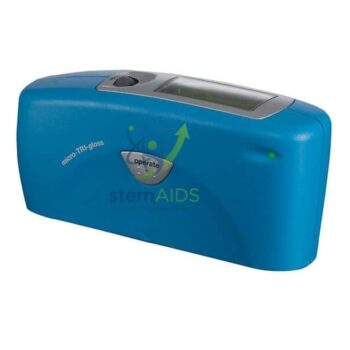
Wireless Joulemeter Sensor Redy
Capteur Redy Joulemètre Dual Bluetooth/USB-C Connectivity Facilitates real-time energy dissipation modeling and collaborative data synthesis across institutional networks, reinforcing the "Analyze" and "Evaluate" levels of cognitive processing.
Integrated Digital Calibration Baseline Ensures repeatable baseline accuracy across high-cadence laboratory rotations, maintaining data integrity for student-led research projects and institutional audits.
$63.62
Quick Answer: The Redy wireless joulemeter sensor measures the electrical energy, in joules, delivered to a component and sends the running total wirelessly to a connected device. A wireless joulemeter stands in for a separate ammeter, voltmeter and stopwatch in energy and power experiments.
Energy From Voltage, Current and Time
Electrical energy transferred equals voltage multiplied by current multiplied by time. A traditional specific heat capacity practical needs three instruments and a calculation to find it; a joulemeter measures it directly. Placed between a low-voltage supply and an immersion heater in an aluminium block, it gives the energy supplied while a wireless thermometer sensor records the temperature rise, and specific heat capacity follows from one division.
Joulemeters of this type typically measure voltage and current internally and multiply them many times a second, so they report power as well. That lets students compare a filament lamp with an LED of similar brightness, or find the efficiency of a small motor lifting a mass by comparing the gravitational potential energy gained with the electrical energy supplied.
The title does not give the voltage and current limits, and the sensor must be matched to low-voltage laboratory supplies. For logging current alone, see the wireless ammeter sensor.
Specifications
| Measures | Electrical energy (joules) delivered to a load |
| Also reported | Usually power, from internally measured voltage and current |
| Connection | Between a low-voltage supply and the component |
| Output | Wireless logging of the running energy total |
| Voltage and current limits | Confirm at enquiry |
Applications
- Specific heat capacity of water or metal blocks with an immersion heater
- Comparing the energy used by filament lamps and LEDs
- Efficiency of an electric motor lifting a load
- Energy needed to melt ice or to heat a measured volume of water
Care & Handling
- Keep within the stated voltage and current limits, and never connect to the mains.
- Reset the energy total before each run so readings start from zero.
- Use heaters and lamps rated for the supply voltage, and switch off before rearranging wires.
- Let heaters cool before removing them from blocks or water.
Why Choose LabEquip
Physics teachers covering energy, power and specific heat capacity choose joulemeters to cut down set-up time and calculation errors. LabEquip carries this one in its chemistry lab equipment listing; ask about limits and leads through the contact page.
Frequently Asked Questions
What does a joulemeter measure?
It measures the electrical energy transferred to whatever is connected to its output, in joules. Most joulemeters work this out continuously from voltage and current, so power can be shown as well.
How do I find specific heat capacity with the joulemeter?
Heat a block or a known mass of water with an immersion heater connected through the joulemeter, and record the temperature rise. Divide the energy supplied by the mass and by the temperature change.
Why is my specific heat capacity result too high?
Some of the energy heats the surroundings rather than the block or water. Insulate the block, use a lid and keep the temperature rise modest so losses stay low.
Can it measure the energy used by a household appliance?
No. It is intended for low-voltage laboratory circuits. Mains appliances must never be connected to it; a plug-in energy monitor is designed for that purpose.
What is the difference between energy and power readings?
Energy is the total transferred, in joules, and keeps increasing while the circuit is on. Power is the rate of transfer, in watts or joules per second, and stays steady when conditions are constant.
How can the joulemeter show efficiency?
Measure the electrical energy given to a device such as a motor, and calculate the useful energy it produces, such as the potential energy gained by a lifted mass. Efficiency is the useful energy divided by the energy supplied.
Last Updated: September 2026
You must be logged in to post a review.
Bestsellers





Reviews
There are no reviews yet.