

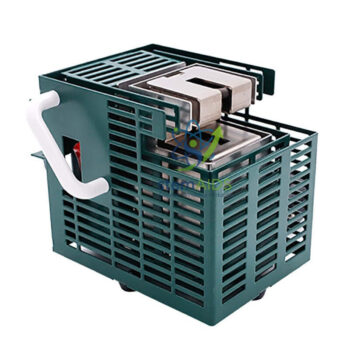
Quick Answer: The Redy protective case is an accessory listed with the Redy wireless sensor range, used to protect sensors from knocks, dust and spills while they are stored, carried between rooms or taken outdoors.
Protecting Sensors Between Lessons
Wireless sensors are small, portable and easy to pick up, which is exactly why they get dropped, stacked in drawers under heavy apparatus, or left on wet benches. A protective case keeps each sensor in a known place and cushions it from impact, and it makes a class set easier to count back in at the end of a lesson.
The title gives no dimensions, material or internal layout, so it is not clear whether this is a sleeve for a single sensor or a carrying case for several sensors and probes. Whatever the form, sensors with delicate parts need thought in storage: a pH electrode such as the one on the wireless pH meter sensor must stay in its wet storage cap, and sensors with exposed faces, like the ultrasonic wireless motion sensor, should be packed so nothing presses on the sensing surface.
A case also earns its place on fieldwork, when weather and oxygen sensors travel to ponds, gardens and playing fields.
Applications
- Storing a class set of sensors between lessons
- Carrying sensors between laboratories or school sites
- Protecting sensors during outdoor fieldwork
- Keeping small accessories, such as probes and charging leads, with their sensors
Care & Handling
- Make sure sensors and probes are clean and dry before closing them in the case.
- Store pH electrodes upright in their storage solution, never loose and dry.
- Label the case contents so a missing item is noticed at the end of a lesson.
- Keep the case out of direct sun and away from heaters, which can harm batteries and plastics.
Specifications
| Item | Protective case for Redy wireless sensors, as titled |
| Purpose | Protection from knocks, dust and spills |
| Use | Classroom storage, moving between labs, fieldwork |
| Compatibility | Listed with the Redy sensor range |
Why Choose LabEquip
Schools and colleges that invest in a set of Redy wireless sensors add cases to protect them and keep class sets together. LabEquip lists this case with its chemistry lab equipment; tell us which sensors you own via the contact page.
Related Products
- Wireless pH Meter Sensor Redy: The Redy wireless pH sensor, whose electrode must keep its wet storage cap when packed away.
- Wireless Motion Sensor Redy: The Redy wireless motion sensor, whose sensing face should be packed so nothing presses on it.
- Wireless CO2 air sensor Redy: The Redy wireless CO2 air sensor for room air and sealed chamber experiments.
- Wireless Thermometer Sensor Redy: The Redy wireless thermometer sensor for logging temperature in liquids and air.
Frequently Asked Questions
What is the Redy protective case for?
It protects Redy wireless sensors from knocks, dust and spills while they are stored, carried between rooms or taken outdoors. Keeping sensors in a case also gives each one a known place, which makes a class set easier to count back in at the end of a lesson.
Why does a wireless sensor need a protective case?
Wireless sensors are small and portable, which is exactly why they get dropped, stacked under heavy apparatus or left on wet benches. A case cushions them from impact and keeps liquids and dust away from charging ports and sensing faces.
Can a pH sensor be stored in a protective case?
Yes, provided the pH electrode keeps its wet storage cap on. A glass pH electrode must not dry out between uses, so check the storage solution in the cap before packing the sensor away, and stand it so the cap cannot be knocked off.
Should wireless sensors be charged before long storage?
Wireless sensors usually run on rechargeable batteries, which are generally best stored partly charged rather than completely flat. Top them up every few months during long breaks, such as school holidays, so they are ready for the next term.
How should a sensor protective case be cleaned?
Empty it and wipe the inside and outside with a damp cloth and mild detergent, then let it dry fully before the sensors go back in. Remove any spilt chemical promptly, since residues can transfer to sensors stored in the case.
Is a sensor protective case useful for fieldwork?
Yes. Outdoors, sensors face dust, rain, mud and drops onto hard ground. Carrying them in a case between sampling points and packing them away before moving keeps them working through a field trip, such as a pond or stream study.
Last Updated: November 2026






Reviews
There are no reviews yet.