




In Stock
Pipette Box
Telescopic Height Adjustment: Features a precision-engineered sliding sleeve design that allows for the accommodation of pipettes with varying lengths, ensuring a secure internal fit and preventing rattling during logistical transport.
Medical-Grade Polypropylene: Constructed from high-density, autoclavable polymers that maintain mechanical rigidity at 121°C, offering a chemically inert and shatterproof alternative to traditional stainless steel sterilization canisters.
₹240.00
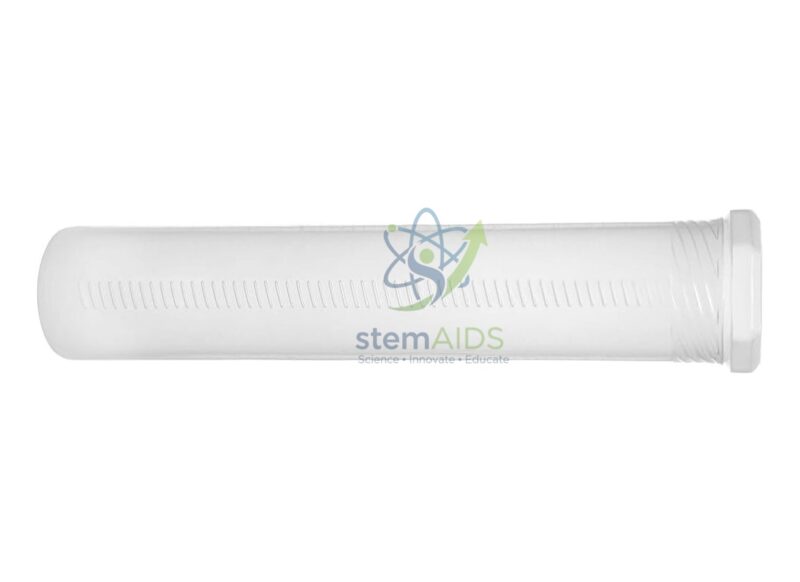
Quick Answer: A pipette box is a long, closed container that holds pipettes lengthwise so they are protected from dust, chipping and contamination between uses. The listing image shows a translucent tubular body with a screw cap at one end.
Closed Storage for Clean Pipettes
Open racks keep pipettes sorted but leave them exposed. Once pipettes have been cleaned, and especially once they have been sterilised for microbiology, they need a closed container that holds them full-length without bending or knocking the tips. This tube does that, and a batch of clean pipettes can be carried to the bench in it and opened only when needed.
The title gives no material, length or diameter. In laboratory practice, metal pipette canisters are used for dry-heat sterilisation in a hot-air oven, while polypropylene containers are generally autoclavable but would melt in a hot-air oven. If the container will be used for sterilising, confirm its material first and choose the method to match.
The internal length must exceed your longest pipette. Before pipettes go in, dry them tip down in a vertical pipette stand; graduated pipettes such as the analytical graduated pipette are a typical load.
Specifications
| Item | Closed container for storing pipettes lengthwise |
| Form | Translucent tube with a screw cap, as shown in the listing image |
| Protects against | Dust, contamination and chipped tips |
| Sterilisation | Depends on material: autoclave suitable plastics, never a hot-air oven |
| Material, length and diameter | Confirm at enquiry |
Applications
- Storing sterile pipettes for microbiology practicals after autoclaving
- Keeping a cleaned titration set dust-free between lessons
- Carrying pipettes safely between prep room and laboratory
- Protecting long graduated pipettes from breakage in drawers
Care & Handling
- Load pipettes tips first and all the same way round, so they can be withdrawn by the upper end without touching the tips.
- Make sure pipettes are fully dry before closed storage, or mould and water spots form.
- Keep a plastic container out of hot-air ovens.
Why Choose LabEquip
Microbiology and analytical labs that need pipettes kept clean and ready use closed containers rather than open racks. LabEquip offers this one with its chemistry lab equipment; give us your pipette lengths through the contact page.
Frequently Asked Questions
Can pipettes be sterilised inside the box?
Yes, if the box material suits the method. Polypropylene containers are generally autoclavable, while metal canisters are used for dry-heat sterilisation. A plastic container must not go into a hot-air oven.
Which way should the pipettes point?
Tips toward the closed end, so that when the cap is removed each pipette is taken by its upper end. This keeps fingers away from the tip that enters the sample.
How long must the container be?
Longer than the longest pipette you will store, with a little clearance at each end. Measure your longest graduated or volumetric pipette before choosing a size.
Can it store micropipette tips?
It is designed for full-length pipettes. Micropipette tips are better kept in a racked tips box, which holds them upright for direct fitting.
Why keep pipettes in a closed container rather than on a rack?
A closed container keeps dust and aerosols off clean pipettes and keeps sterile ones sterile. Racks are for pipettes in daily use that are rinsed before each use anyway.
How should the container be cleaned?
Wash it with warm water and laboratory detergent using a long bottle brush, rinse with distilled water and let it dry fully before loading.
Last Updated: September 2026
You must be logged in to post a review.
Bestsellers






Reviews
There are no reviews yet.