

In Stock
Kipps Apparatus, Plastic
High-Density Polyethylene Architecture: Constructed from chemically inert, medical-grade polyethylene that offers superior resistance to concentrated acids and remains shatterproof under internal gaseous pressure.
Precision-Molded Three-Chamber System: Features a modular design with hermetically sealed joints and a heavy-duty leak-proof stopcock, allowing for precise, intermittent gas flow regulation and simplified internal decontamination.
₹800.00
Quick Answer: A plastic Kipps apparatus, or Kipp’s generator, is a three-bulb gas generator that produces gas from a lump solid and a dilute acid on demand. Closing the outlet tap forces the acid away from the solid and stops the reaction, so gas is made only while it is being drawn off.
How the Three Bulbs Regulate Themselves
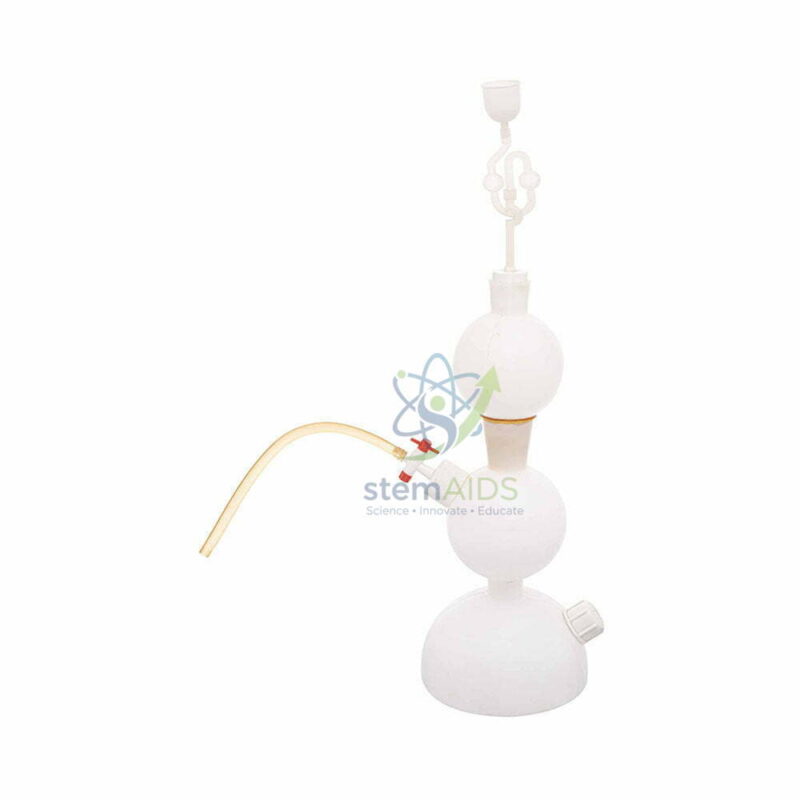
The listing image shows the classic form in white plastic: a top reservoir whose long stem runs down through the middle bulb into the bottom bulb, a side outlet with a tap and tubing on the middle bulb, and a small drain outlet on the lowest bulb. Lumps of solid, such as marble chips or granulated zinc, sit in the middle bulb. Acid poured into the top reservoir runs down to the bottom bulb and rises until it reaches the solid, at which point gas starts to form.
When the outlet tap is open, gas leaves as fast as it forms. With the tap shut, gas collecting in the middle bulb forces the liquid downward, off the solid and back up into the top reservoir. Nothing more is produced until the tap is reopened. That self-regulation made the Kipp’s generator the standard gas supply in school labs for generations.
A plastic body avoids the weight and breakage risk of the large glass generator. Check the plastic against the acid in use, and keep to reactions that run at room temperature between a lump solid and a dilute liquid. Gas can be collected in a gas jar over water in a pneumatic trough.
Care & Handling
- Use lumps, not powder; powder falls into the lower bulb, reacts continuously and cannot be stopped.
- Check that the tap and joints hold pressure when closed before leaving the apparatus charged.
- When making hydrogen, never ignite gas at the outlet until a collected test tube burns with a quiet pop, showing the air has been flushed out.
- Drain the acid and rinse all bulbs when the apparatus will stand unused.
Specifications
| Item | Three-bulb Kipp’s gas generator in plastic |
| Principle | Closing the outlet lets trapped gas drive the acid off the solid |
| Suitable reactions | Lump solid with dilute acid at room temperature |
| Outlets | Side outlet with tap; drain outlet on the lowest bulb (listing image) |
| Capacity and plastic type | Confirm at enquiry |
Applications
- Carbon dioxide from marble chips and dilute hydrochloric acid for limewater and extinguishing demonstrations
- Hydrogen from granulated zinc and dilute acid, collected over water
- Hydrogen sulfide, made from iron(II) sulfide with dilute acid, for qualitative analysis and only ever in a fume cupboard
- A steady gas supply for a class, drawn off in turn by opening the tap
Why Choose LabEquip
Chemistry teachers who prepare gases for demonstrations and class tests choose a Kipp’s generator for a supply they can start and stop at will. LabEquip lists this plastic version in its chemistry lab equipment range; ask about size through the contact page.
Frequently Asked Questions
How does a Kipps apparatus stop producing gas?
Shutting the outlet tap traps the gas that is still forming. As it accumulates, it drives the liquid downward from the middle bulb and back up into the top reservoir, so acid and solid part company and the reaction halts.
Which gases can be made in a Kipps apparatus?
Gases formed without heating from a lump solid and a dilute acid: carbon dioxide from marble chips, hydrogen from zinc, and hydrogen sulfide from iron(II) sulfide. Reactions that need heating, use powders or need concentrated acid are not suitable.
Why must the solid be in lumps?
Lumps stay on their support in the middle bulb. Powder or small fragments fall through into the lower bulb, where they remain in contact with the acid and keep reacting even when the tap is closed.
Is a plastic Kipps apparatus suitable for hydrogen sulfide?
It can generate it, but hydrogen sulfide is highly toxic, so the whole set-up must stand in a working fume cupboard. Many schools now avoid preparing it and use other tests.
How is spent acid replaced?
Close the tap and let the acid settle, then drain it from the lowest bulb through its outlet, or dismantle the apparatus over a sink or tray. Rinse the solid with water before adding fresh acid, and wear gloves and eye protection.
Why use a plastic Kipps apparatus instead of glass?
A glass generator is heavy and costly to replace if it cracks, and a broken one releases acid and gas together. Plastic is light and does not shatter, though it should be kept away from heat and checked against the acid used.
Last Updated: September 2026
You must be logged in to post a review.
Bestsellers




Reviews
There are no reviews yet.