
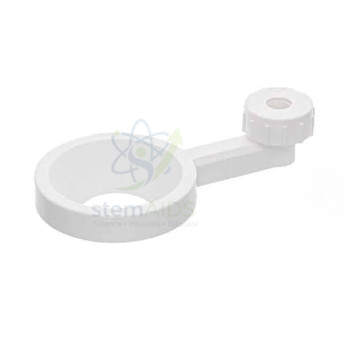

In Stock
Flavor Synthesis and Purification kit
Kit synthèse et purification d'arômes enables students to analyze reversible reaction kinetics and Le Chatelier’s equilibrium shifts at the "Evaluate" cognitive level.
Manipulations réalisables en classe entière, Integrated Liquid-Liquid Separation Funnel Supports the "Application" of salting-out effects and density-based phase separation for evidentiary-grade high-purity yield verification.
$16.02
Quick Answer: The flavor synthesis and purification kit is an organic chemistry practical in which students make a flavour compound, typically a fruity-smelling ester, and then purify it. The purification stage, using washes, a separating funnel and a drying agent, is what sets it apart from a simple smell-the-product ester demonstration.
Synthesis First, Then Purification
Esters give many fruits their smell: isoamyl acetate recalls bananas and pear drops, ethyl butanoate pineapple, and methyl salicylate wintergreen. They are made by heating a carboxylic acid with an alcohol and a few drops of concentrated sulfuric acid as catalyst, usually under reflux so that nothing boils away. The reaction is an equilibrium, so the crude product still contains unreacted acid, alcohol and catalyst.
Purification removes them. The cooled mixture is washed in a separating funnel with sodium hydrogencarbonate solution, which neutralises the acids and releases carbon dioxide, and then with water. The ester layer is separated, dried over an anhydrous salt and, in fuller versions, distilled. Each step teaches a technique that recurs throughout organic chemistry.
Which ester the kit makes, and whether glassware is included, is not stated in the title, so check the contents list against your equipment. A reflux assembly and a separating funnel are the core glassware for the method described here.
Specifications
| Item | Flavour compound synthesis and purification kit |
| Typical reaction | Esterification of an acid and an alcohol with an acid catalyst |
| Purification steps | Washing, layer separation, drying, optionally distillation |
| Level | Upper-secondary, vocational and introductory college chemistry |
| Ester made and contents | Confirm at enquiry |
Applications
- Teaching esterification, reversible reactions and the role of a catalyst
- Practising separating funnel technique, including venting carbon dioxide during a hydrogencarbonate wash
- Calculating percentage yield from a weighed, purified product
- Linking organic chemistry to the food and fragrance industries
Care & Handling
- Dispense concentrated sulfuric acid only in a fume cupboard with goggles and gloves, adding it slowly to the mixture of acid and alcohol.
- Keep esters and alcohols away from open flames; many are flammable.
- Vent the separating funnel often during the hydrogencarbonate wash, pointing the stem away from people.
- Smell products only by wafting, never by sniffing directly from the container.
Why Choose LabEquip
Chemistry teachers who want students to carry an organic synthesis through to a purified product, not just a smell, are the buyers of this kit. LabEquip lists it under chemistry lab equipment; send your glassware list through the contact page to check what else is needed.
Frequently Asked Questions
Why is concentrated sulfuric acid added?
It catalyses the esterification and also takes up some of the water formed, which helps shift the equilibrium towards the ester. Only a few drops are needed.
Why is sodium hydrogencarbonate used in the wash?
It neutralises leftover carboxylic acid and sulfuric acid, turning them into water-soluble salts that stay in the aqueous layer. Carbon dioxide is released, so the funnel must be vented often.
How can I tell which layer is the ester?
Most simple esters are less dense than water and form the upper layer. If unsure, add a few drops of water and watch which layer they join.
What drying agent is used?
An anhydrous salt such as magnesium sulfate or calcium chloride is added to the separated ester until it no longer clumps, then filtered or decanted off. The kit instructions will name the one supplied.
Why is the yield usually low?
Esterification is an equilibrium, so it never goes to completion, and some product is lost in every transfer, wash and separation. Yields well below 100 percent are normal and make a useful discussion point.
Is it safe to taste the product?
No. Nothing made in the laboratory is ever tasted, because it may contain traces of acid, alcohol or other contaminants. Identify esters only by carefully wafting the smell.
Last Updated: September 2026
You must be logged in to post a review.
Bestsellers





Reviews
There are no reviews yet.