
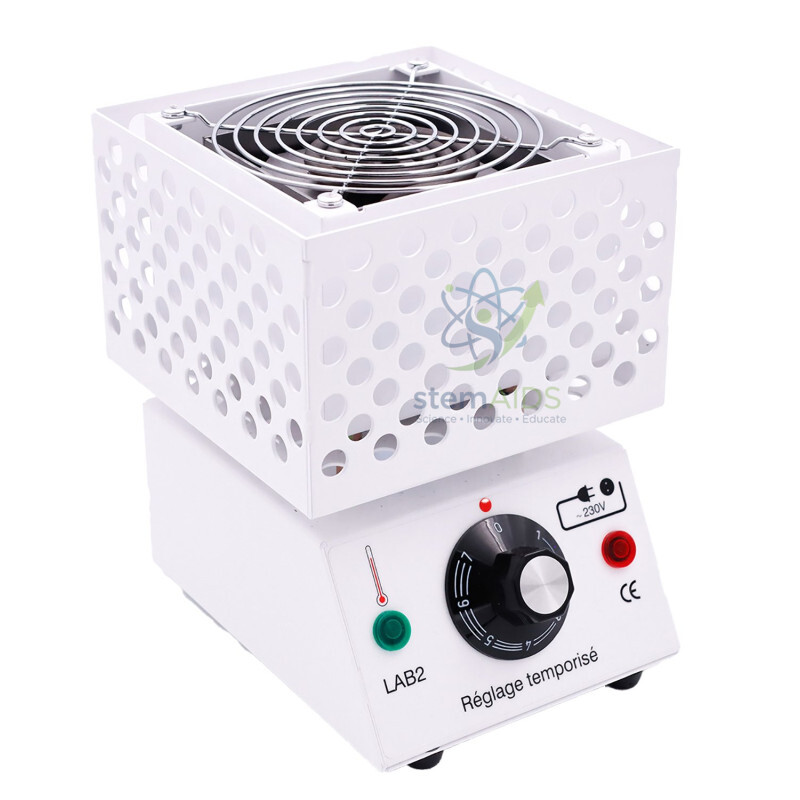
Quick Answer: The Electric Bunsen Burner LAB 2 is a mains-powered bench heater used in place of a gas Bunsen burner. In the listing photo it is a white unit with a graduated front knob and two indicator lamps, topped by a perforated guard that surrounds a round heating grille.
LAB 2 Layout: Control Base and Guarded Heating Zone
An electric burner of this type keeps the name of the gas burner it replaces but works on a different principle. An electric element heats the space above the unit, and the vessel is held in that zone instead of in a flame. The LAB 2, as photographed, separates the two jobs clearly: the lower box carries the knob and lamps, and the upper section is a perforated white cage with a circular grille in its top face, which is where the heat comes out.
That cage matters in a classroom. Fingers, sleeves and loose paper cannot reach the element directly, yet a test tube or wire loop can still be lowered through the open top into the hot zone. Going by the photo, the graduated knob on the front is the heat control, which helps when students need to warm a liquid gently rather than bring it straight to the boil.
Compared with the LAB Microbiology electric Bunsen burner, which is photographed inside a tall green cage with a carrying handle for aseptic work, the LAB 2 is a squat, general bench model. It suits heating tubes and small evaporating dishes in chemistry and physics practicals; the microbiology version suits benches where the main task is sterilising loops beside open plates.
Where the LAB 2 Is Used
- Heating test tubes of liquid in lower-secondary chemistry, with the tube held in a holder above the grille
- Warming small evaporating dishes to concentrate a salt solution before crystallising
- Physics practicals such as heating a small beaker of water for a cooling-curve experiment
- Replacing gas burners in portable classrooms or labs where the gas supply has been disconnected
Specifications
| Item | Electric bench burner, model LAB 2 |
| Fuel | None; mains electricity replaces gas |
| Guard | Perforated cage around the heating zone with an open grille on top (photo) |
| Controls | Graduated front knob and two indicator lamps (photo) |
Care & Handling
- Keep the perforations of the LAB 2 cage clear; covering them traps heat and can overheat the base.
- Hold vessels in the zone above the grille with tongs or a holder rather than resting glassware on the grille, unless the instructions allow it.
- Unplug the unit and let it cool completely before wiping the casing or storing it in a cupboard.
- Inspect the cable and plug before each session, and withdraw the unit from use if either is damaged.
Why Choose LabEquip
Science departments replacing gas taps, and colleges needing a few extra heating points for practical exams, are the typical buyers of a unit like this. LabEquip lists the LAB 2 among its chemistry lab equipment and can help plan a full class set through the contact page.
Related Products
- LAB Microbiology Electric Bunsen Burner: An electric Bunsen burner designed for microbiology, in a perforated cage with a side carrying handle.
- Electric beak Techni: The Techni compact electric burner, with only an on-off switch, for corners of crowded benches.
- Hofmann Electric Burner: A Hofmann upright electric burner, with a separate guard and power regulator available.
- Laboratory Bunsen Burner Set of 2: A set of two gas Bunsen burners for practicals such as flame tests that need a real flame.
Frequently Asked Questions
How does the LAB 2 electric Bunsen burner heat without a flame?
An electric element inside the LAB 2 heats the space above the unit, and the hot air rises through the round grille in the top of its perforated cage. A tube, loop or small vessel is held in that heat zone instead of in a flame. No gas connection is needed; the burner runs from mains electricity.
Can flame tests be carried out on an electric Bunsen burner?
No. A flame test depends on a flame to excite metal ions so they give off their characteristic colours, such as lilac for potassium or brick red for calcium. An electric burner produces heat but no flame, so the colours do not appear. Flame tests need a gas burner, or a spirit burner where gas is not available.
What is the graduated knob on the LAB 2 for?
The graduated front knob sets the heat output, so the same burner can give gentle warming at a low setting or strong heat at a high one. The two indicator lamps beside it show the burner’s state at a glance, which matters because an electric burner gives no flame to show that it is on.
Why are schools replacing gas Bunsen burners with electric ones?
Electric burners remove gas pipes, taps and leaks from the room and do away with open flames, so the risk of hair, sleeves or paper catching fire falls. They can also be used in rooms without a gas supply. The trade-offs are that heat is invisible and some practicals, such as flame tests, still need a real flame.
Does the LAB 2 stay hot after it is switched off?
Yes. The element, grille and cage hold heat for some time after the burner is turned off, and nothing glows to warn anyone. Leave it switched off on the bench until it is cool to the touch before moving or storing it, and do not let students pick it up straight after use.
What is the cage around the top of the LAB 2 for?
The perforated white cage surrounds the heating zone and keeps fingers and loose materials away from the element while letting heat out through the grille on top. It also defines where the hot zone is, so students learn to bring the loop or tube to the top of the cage rather than reaching inside it.
Last Updated: November 2026





Reviews
There are no reviews yet.