



In Stock
Rake Retractor
₹650.00
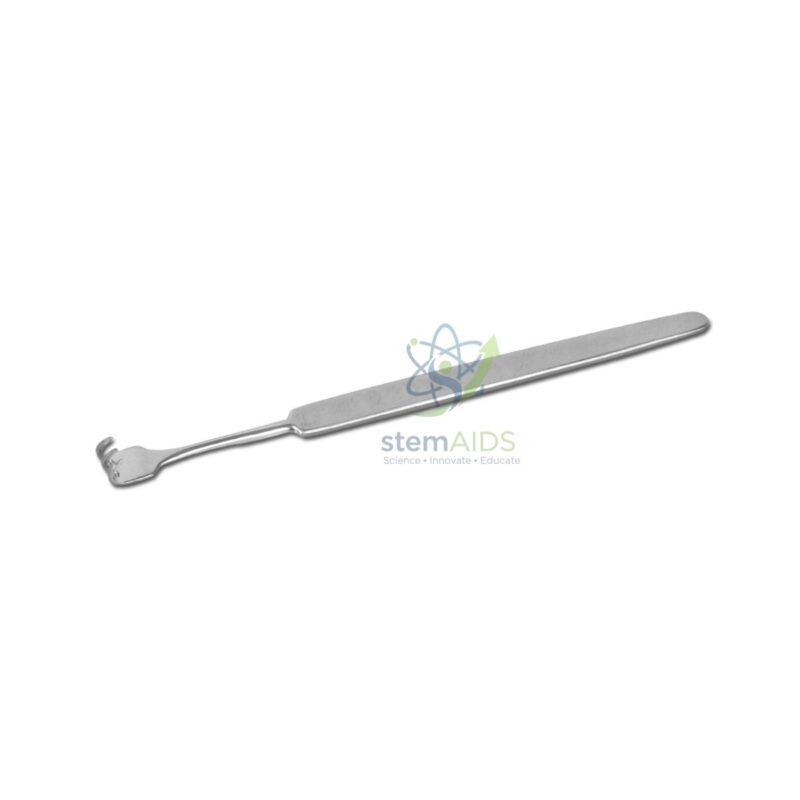
Quick Answer: A rake retractor is a hand-held instrument with several curved prongs at the end of a handle, shaped like a small garden rake. It hooks under the edge of skin or tissue and holds it back so the deeper area stays visible. The listing photograph shows a steel-coloured instrument with a small pronged end on a flat handle.
How a Rake Retractor Is Used
Retractors exist because the person cutting needs both hands and a clear view. Once an incision is made, the edges fall back over the area of interest. The rake solves this by catching the edge on its curved prongs and pulling it gently aside; an assistant holds the handle while the operator works. Several prongs spread the pull across a width of tissue, so it holds more securely than a single hook and is less likely to tear the edge.
They are made with sharp or blunt prongs and with different numbers of prongs. Sharp prongs grip skin edges firmly; blunt prongs are gentler and safer near vessels and nerves and are the usual choice for students. The number of prongs, their sharpness and the instrument’s length are not stated in the title, and the listing photograph shows the rake only at small size, so confirm the pattern before ordering for a particular exercise.
In education this retractor appears in dissection practicals on preserved specimens, in suturing practice on skin pads, and in instrument-identification sessions for nursing and operating-theatre technology students, where it is set beside the single-pronged skin hook and self-retaining retractors. LabEquip also lists a general retractor for comparison.
Specifications
| Item | Hand-held rake retractor |
| Working end | Small rake of curved prongs, per the listing photograph |
| Handle | Flat handle, per the listing photograph |
| Use | Holding back skin and tissue edges |
| Prong count, sharp or blunt, length and grade | Confirm at enquiry |
Training Uses
- Holding back skin flaps during dissection of preserved specimens
- Suturing and wound-closure practice on synthetic skin pads
- Surgical instrument identification for nursing and theatre technology courses
- Demonstrating exposure of deeper structures in anatomy practicals
Care & Handling
- Handle and pass the retractor by the handle, prongs pointing down and away from people.
- Clean it promptly after use, brushing between the prongs, then rinse and dry thoroughly before storage.
- Check the prongs for bending before each use, and store the instrument with a tip guard or in a tray slot.
Why Choose LabEquip
Retractors of this type are usually ordered with dissection sets and instrument-training kits. LabEquip lists this one in Biology Lab Products with related instruments such as stainless steel scalpel handles. Use the LabEquip contact page to confirm prong pattern and grade for your course.
Frequently Asked Questions
What is a rake retractor used for?
It holds back the edges of skin or tissue so that deeper structures stay in view. An assistant holds the handle while the operator dissects or sutures with both hands.
Should students use sharp or blunt prongs?
Blunt prongs are usually preferred for teaching because they are less likely to injure users or tear specimens. Sharp prongs grip skin edges more firmly and are used where a secure hold matters more.
How does it differ from a single skin hook?
A skin hook has a single prong and lifts a small point of tissue. A rake has several prongs side by side and holds back a wider edge with the pull spread across its width.
How should the retractor be held?
Hold the handle in the fist with the prongs curving away from you, hook them under the tissue edge and pull gently and steadily. Avoid jerky movements, which tear the edge.
How should the retractor be cleaned and sterilised?
Brush between the prongs with detergent and water, rinse and dry thoroughly. If it is a stainless steel instrument, it can normally be autoclaved; confirm the material at enquiry before autoclaving.
Why do retractors come in different prong numbers?
More prongs give a wider, more even hold for larger openings. Fewer prongs suit small incisions and fine work where space is limited.
Last Updated: September 2026
You must be logged in to post a review.
Bestsellers




Reviews
There are no reviews yet.