







In Stock
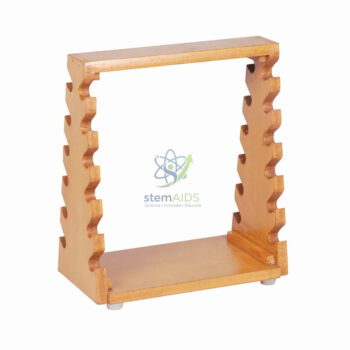
PCR Rack with Cover
High-Contrast Alphanumeric Grid: Molded-in coordinate indexing facilitates error-free sample mapping and rapid identification, supporting absolute data integrity during complex multi-step amplification protocols.
Reinforced Polypropylene Architecture: Engineered for thermal resilience, this stackable system maintains mechanical stability between -90°C and +121°C, ensuring full compatibility with ultra-low temperature storage and autoclave sterilization.
₹400.00
Quick Answer: A PCR rack with cover is a plastic rack with a grid of small wells for PCR tubes and tube strips, closed by a lid. The cover protects prepared reactions and reagents from dust, light and knocks while they wait in a fridge or are carried to the thermal cycler.
Why a Lid Makes a Difference
An open rack is fine while you pipette, but finished reactions often have to wait, travel down a corridor to a shared cycler or sit in a fridge overnight. The cover turns this rack into a closed box, so tubes stay put if the rack is tipped and airborne dust or droplets cannot settle on the caps.
Covers also help with light-sensitive reagents. Fluorescent probes and dyes for real-time PCR lose signal under bright bench lights, which is why some covered racks have a tinted or opaque lid. With lids closed, several racks can usually be stacked on a fridge shelf, saving space in a crowded cold room.
Most racks of this type mark positions with letters on one side and numbers on the other, copying a 96-well plate. That grid lets you draw a plate map on paper, load tubes in the same positions and transfer them to the cycler without confusing samples.
Applications
- Holding a finished set-up in the fridge while the cycler completes another run
- Carrying reactions from a clean set-up room to a separate amplification room
- Shielding fluorescent qPCR reagents from bench lighting
- Keeping amplified products in order until they are run on a gel
Specifications
| Holds | PCR tubes and tube strips, upright |
| Grid marking | Alphanumeric positions, as is usual for PCR racks |
| Cover | Lid closing over the tubes |
| Material | Moulded plastic |
| Lid tint and number of positions | Confirm at enquiry |
| Typical uses | Set-up, short-term cold storage, carrying samples to the cycler |
Care & Handling
- Wipe rack and lid with a DNA-decontaminating solution between uses to stop carry-over of amplified product.
- Keep separate racks for pre-PCR and post-PCR areas, and never bring a post-PCR rack back into the set-up room.
- Check the plastic’s cold tolerance before freezer storage and its heat tolerance before autoclaving.
- Close the lid gently so it does not press down on tube caps.
Why Choose LabEquip
Molecular labs that separate pre- and post-amplification areas find a covered rack the simplest way to move reactions between rooms. LabEquip offers it in the Biology Lab Products range; for an open bench rack, see the PCR tube rack. Questions about the lid can go through the contact page.
Frequently Asked Questions
What is the cover on a PCR rack for?
It keeps dust and splashes off tube caps, stops tubes falling out if the rack is knocked, allows closed racks to be stacked and shields light-sensitive qPCR reagents from bench lighting.
Can single tubes and 8-tube strips go in the same rack?
Yes. PCR racks are usually laid out on the same grid spacing as a 96-well plate, so single tubes and strips of eight or twelve sit in the same wells, with strips running along a row or down a column.
Can the rack go in a freezer?
Many PCR racks are polypropylene, which stays usable at freezer temperatures, but some plastics turn brittle in the cold. Check the rack material before storing it at minus 20 degrees or lower, and let condensation dry before opening the lid.
How do I keep old PCR product out of new reactions?
Dedicate one rack to set-up and another to amplified samples, clean surfaces with a DNA-decontaminating solution and change gloves when moving between areas. Carry-over of amplicons is a frequent cause of false positives.
Does the rack keep reactions cold on the bench?
The rack is not a chilling block. To keep enzymes and mixes cold during set-up, rest the rack on ice or use a dedicated cooling block, then return it to the fridge with the cover closed.
Is the lid clear or tinted?
PCR rack lids are made both ways: clear lids let you read labels without opening the rack, while tinted lids reduce light exposure for fluorescent reagents. The lid type of this listing is confirmed at enquiry.
Last Updated: September 2026
You must be logged in to post a review.
Bestsellers




Reviews
There are no reviews yet.