
















In Stock
Meiosis Manipulatives Kit
₹458.00
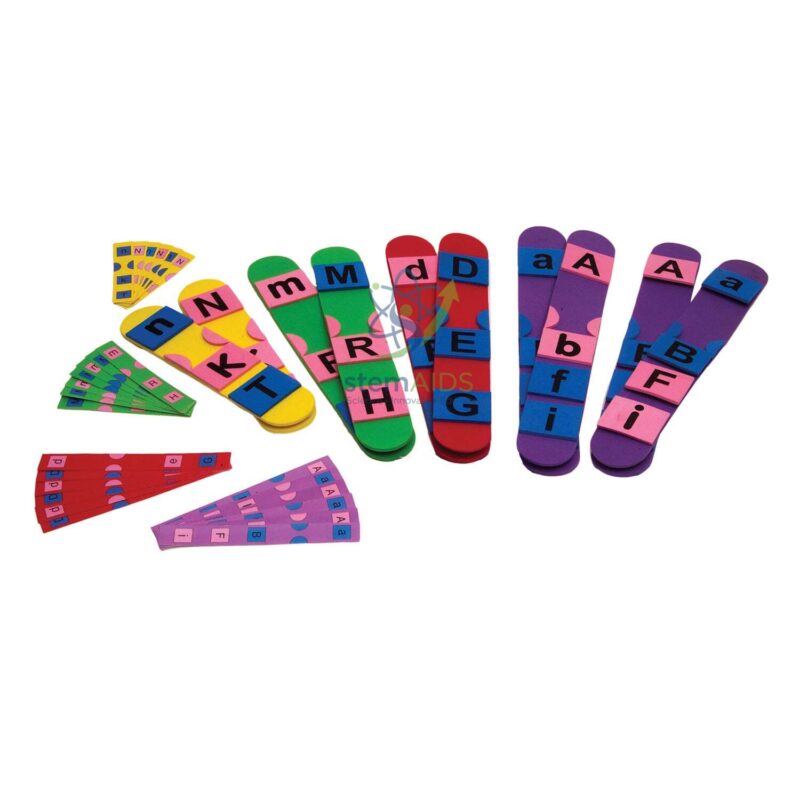
Quick Answer: The Meiosis Manipulatives Kit is a hands-on set of chromosome pieces that students move through the stages of meiosis. The listing photograph shows flat pieces in several colours printed with allele letters such as A and a, used to model homologous pairing, crossing over, independent assortment and the formation of four haploid cells.
Moving Chromosomes by Hand
Meiosis is hard to learn from static diagrams because the important events are movements: homologous chromosomes find each other, exchange segments, line up and separate twice. With a meiosis manipulatives kit, students do those movements themselves on the desk. Each pair of homologues is represented by pieces of two colours, commonly one for the chromosome inherited from the mother and one for the father, and the allele letters on them let students track exactly which versions of each gene end up in each cell.
A typical sequence starts with a diploid cell containing two or more homologous pairs. Students duplicate each chromosome into two sister chromatids, bring the homologues together as pairs, and model crossing over by exchanging matching segments between non-sister chromatids. In the first division they separate homologues; in the second, sister chromatids. They finish with four cells, each holding one set of chromosomes, and can read off the allele combinations each gamete carries.
Whether the pieces can be physically split to swap segments, and how many chromosome pairs and student sets the kit contains, are not stated in the title. If segments are fixed, students can still show crossing over by exchanging the lettered end portions or by recording the swap on paper.
Applications
- Step-by-step modelling of meiosis I and meiosis II on a desk or whiteboard
- Showing how crossing over creates new allele combinations on one chromosome
- Demonstrating independent assortment by lining up pairs in different orientations
- Contrasting meiosis with mitosis using the same pieces
- Illustrating non-disjunction, when a pair fails to separate
Care & Handling
- Keep each set in its own bag or box after the lesson so that pieces from different sets do not mix.
- Wipe pieces with a damp cloth; avoid soaking printed pieces, which can loosen the letters.
- Count pieces back at the end of the practical, since a single missing chromosome spoils the model.
Specifications
| Item | Manipulative chromosome pieces for modelling meiosis |
| Pieces shown | Coloured chromosome shapes printed with allele letters (listing photograph) |
| Concepts | Homologous pairing, crossing over, independent assortment, reduction to haploid |
| Level | Secondary biology and introductory college genetics |
| Number of pairs and student sets | Confirm at enquiry |
Why Choose LabEquip
Genetics teachers use this kind of kit for group work before or after a microscope study of dividing cells. LabEquip lists it in Biology Lab Products with display models such as the plant meiosis model and the chromatid chromosomes set. Use the LabEquip contact page to confirm set contents for your group size.
Frequently Asked Questions
How does the kit show crossing over?
Students place two homologous chromosomes side by side and exchange matching segments between one chromatid of each. The allele letters on the swapped segments then show the new combinations, for example A with b instead of A with B.
How does the kit demonstrate independent assortment?
With two or more pairs lined up at the cell equator, students flip the orientation of one pair and repeat the division. Each arrangement sends a different mix of maternal and paternal chromosomes to the daughter cells, giving several possible gamete types.
What is the difference between meiosis I and meiosis II in the model?
In meiosis I students separate the homologous chromosomes, halving the chromosome number. In meiosis II they separate the sister chromatids of each chromosome, much as in mitosis, ending with four haploid cells.
What do the capital and small letters on the pieces mean?
They stand for alleles of the same gene. A capital letter usually marks a dominant allele and a small letter a recessive one, so A and a sit at the same position on two homologous chromosomes.
Why are chromosomes usually shown in two colours?
One colour represents the chromosome inherited from the mother and the other the one from the father. The colours make it easy to see how meiosis mixes parental chromosomes and, after crossing over, parts of them.
Can the same pieces be used to model mitosis?
Yes. Students duplicate the chromosomes and line them up singly, not in pairs, then separate sister chromatids once. Comparing the two outcomes shows why mitosis keeps the chromosome number while meiosis halves it.
Last Updated: September 2026
You must be logged in to post a review.
Bestsellers




Reviews
There are no reviews yet.