





In Stock
Immune System Education Kit
₹1,450.00
Quick Answer: The Immune System Education Kit is a boxed biology teaching kit for lessons on how the body defends itself against infection. It supports activities on physical barriers, phagocytes, antibodies and lymphocytes, and on how vaccination creates immune memory; the exact contents should be confirmed with LabEquip.
What the Kit Helps Students Understand
The immune system is taught in layers. The first line of defence is physical and chemical: skin, mucus, cilia, stomach acid and enzymes in tears keep most microbes out. The second is the innate response: white blood cells called phagocytes engulf and digest invaders, and inflammation brings more of them to an infected site. The third is the adaptive response, carried out by lymphocytes. B cells release antibodies that fit the shape of one particular antigen, and T cells help coordinate the response or destroy infected cells directly.
Hands-on kits are especially useful for the idea of specificity, which students often find abstract. Matching antibody shapes to antigen shapes shows why an antibody against one virus does not protect against another, and how antibodies clump pathogens together so that phagocytes can remove them. The same activity leads into immune memory: after a first infection or a vaccine, memory cells remain, so a second encounter produces a faster, larger antibody response.
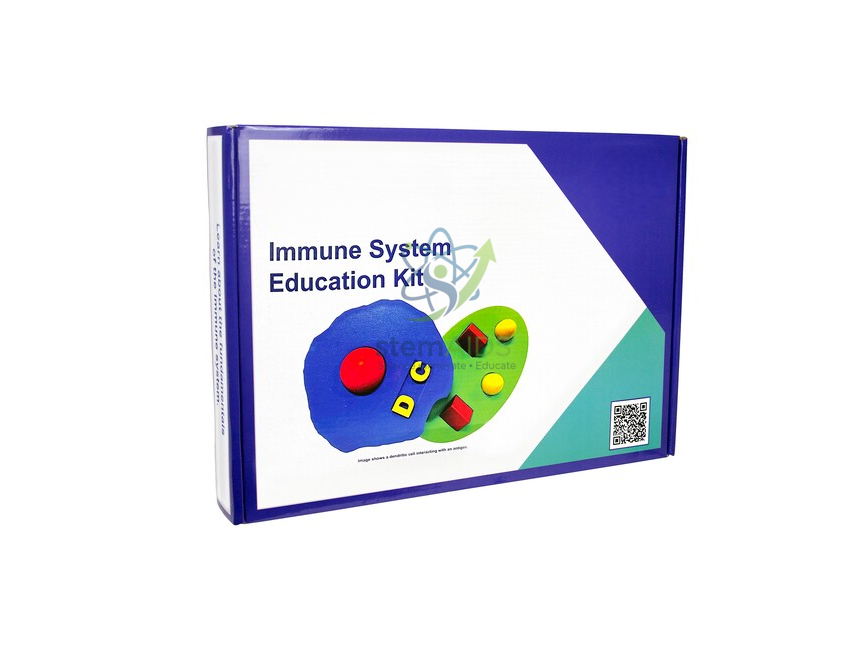
The listing photograph shows a printed box with an illustration of a cell and coloured shapes, but the title does not list the kit’s pieces, the number of students it serves or whether a teacher guide is included. Confirm these before planning lessons. The human lymph node model gives a structural view of where lymphocytes gather.
Applications
- Introducing the three lines of defence against infection
- Modelling antibody and antigen specificity with shape-matching activities
- Explaining primary and secondary immune responses and vaccination
- Health-education sessions on how infections spread and are controlled
Care & Handling
- Keep the kit’s pieces and any guide together in the box, and check contents at the end of each lesson.
- Wipe reusable pieces with a damp cloth and let them dry before packing them away.
- Store the box flat and dry so printed parts do not warp or fade.
Specifications
| Item | Boxed teaching kit on the human immune system |
| Topics | Barriers, phagocytosis, antibodies and antigens, lymphocytes, vaccination |
| Format | Printed box with illustrated cover (listing photograph) |
| Level | Secondary biology and health science |
| Contents, group size and guide | Confirm at enquiry |
Why Choose LabEquip
Biology and health-science teachers use kits like this to make an abstract topic concrete for group work. LabEquip lists the kit in Biology Lab Products alongside anatomy models of the lymphatic system. Ask for a contents list through the LabEquip contact page before ordering class quantities.
Frequently Asked Questions
What is the difference between innate and adaptive immunity?
Innate immunity responds quickly in the same way to any invader, through barriers, phagocytes and inflammation. Adaptive immunity takes days to build up the first time but targets one specific pathogen and remembers it afterwards.
How can a kit show that antibodies are specific?
Shape-matching pieces show that each antibody fits only the antigen with the complementary shape. An antibody that fits one pathogen does not fit another, which is why immunity to one disease does not protect against others.
How does vaccination work in terms students can model?
A vaccine presents a harmless form of an antigen. Lymphocytes respond and leave memory cells behind, so if the real pathogen appears later, antibodies are made faster and in larger amounts, often before illness develops.
What do helper T cells do?
Helper T cells recognise antigens presented by other immune cells and release signals that activate B cells and cytotoxic T cells. Without them, the adaptive response is weak.
What do phagocytes do?
Phagocytes are white blood cells that engulf microbes and debris, enclose them in a vacuole and digest them with enzymes. Antibodies that stick to microbes make them easier for phagocytes to catch.
What does the kit contain?
The title does not list the contents. The box illustration suggests a cell with coloured pieces, but the number and type of pieces, the group size and any teacher guide should be confirmed at enquiry.
Last Updated: September 2026
You must be logged in to post a review.
Bestsellers




Reviews
There are no reviews yet.