

















In Stock
Human Foot Model
$14.27
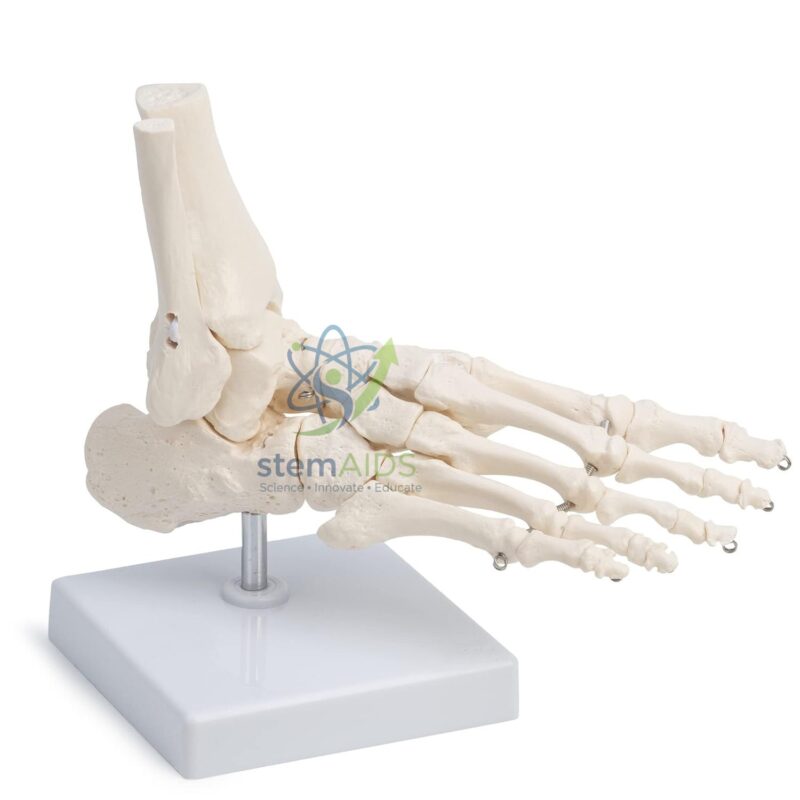
Quick Answer: The Human Foot Model is an anatomy teaching model of the skeleton of the foot. The listing photograph shows the tarsal bones, metatarsals and toe bones articulated on a stand, used to teach how the foot bears weight, how the ankle joint works and where common injuries occur.
A Skeleton Built for Standing
The foot does two jobs the hand never has to: it carries the whole body’s weight and it acts as a springy lever for walking and running. Its skeleton reflects this. Seven tarsal bones, much larger than the carpals of the wrist, form the heel and the back of the foot. The talus sits on top and fits into the socket formed by the lower ends of the tibia and fibula at the ankle; beneath it the calcaneus forms the heel and takes the first impact of each step. In front lie the navicular, the cuboid and three cuneiforms, then five metatarsals and fourteen phalanges.
The model shows how these bones are arranged in an arch rather than lying flat. Weight passes down through the talus and spreads backwards to the heel and forwards to the heads of the metatarsals, which is why these points bear pressure while the middle of the inner foot stays off the ground. The big toe, unlike the thumb, is aligned with the other toes, a design for push-off rather than grasping.
Whether the model includes the lower ends of the leg bones, how it is joined and its scale are not stated in the title. It shows bone only; ligaments, tendons and the plantar fascia are not represented. For comparing normal, flat and high-arched feet, LabEquip lists a separate human foot set model.
Teaching Uses
- Naming the tarsals and tracing the path of body weight through the foot
- Comparing the skeleton of the foot with that of the hand
- Explaining ankle fractures, metatarsal stress fractures and bunions
- Physiotherapy, sports-science and podiatry introductions
Specifications
| Model of | Skeleton of the human foot |
| Format | Articulated bones on a stand, per the listing photograph |
| Bones shown | Tarsals, metatarsals and phalanges |
| Topics | Ankle joint, arches, weight bearing, common fractures |
| Scale, material and leg bones | Confirm at enquiry |
Care & Handling
- Lift the model by its base; the small toe bones are fragile at their joints.
- Clean with a soft brush or a slightly damp cloth, never with solvents.
- Keep the model in a cupboard or under a cover so the fine joints do not collect dust.
Why Choose LabEquip
Schools, nursing colleges and sports-science courses often buy a foot model with a hand model for limb comparison. LabEquip lists this model in Biology Lab Products beside the Human Hand Model. Ask about scale and mounting through the LabEquip contact page.
Frequently Asked Questions
How many bones are in the foot and how are they grouped?
There are 26: seven tarsals at the back of the foot, five metatarsals in the middle and fourteen phalanges in the toes. The big toe has two phalanges and the other toes three each.
Which bones form the ankle joint?
The talus fits into a socket formed by the lower ends of the tibia and fibula. This hinge lets the foot point up and down. Turning the sole inwards and outwards happens mainly at joints below the talus.
How is this model different from the foot set model?
This model shows the skeleton of one foot for learning bone names and structure. The foot set is used to compare foot types, such as normal, flat and high-arched feet.
Why is the big toe different from the thumb?
The big toe lines up with the other toes and cannot rotate across the foot, because its job is to push off during walking. The thumb’s saddle joint lets it oppose the fingers for gripping.
Where do stress fractures in the foot usually occur?
The shafts of the second and third metatarsals are common sites, especially in runners and soldiers who suddenly increase their training. Students can locate them on the model.
What is a bunion, and can it be shown on the model?
A bunion is a bony bump at the base of the big toe where the toe angles towards the others. The model shows the normal joint, so students can see which bones are involved.
Last Updated: September 2026
You must be logged in to post a review.
Bestsellers




Reviews
There are no reviews yet.