










In Stock
Box for Micro Centrifuge Tubes
Broad Thermal Range Stability: Manufactured from medical-grade polypropylene, maintaining structural integrity from -80°C cryogenic storage to 121°C steam sterilization cycles.
Precision Alphanumeric Indexing: Features a molded coordinate matrix on the base and transparent lid for unambiguous sample tracking and error-free retrieval in high-volume settings.
₹210.00
Quick Answer: The Box for Micro Centrifuge Tubes is a lidded storage box that holds microcentrifuge tubes upright in rows, so samples can be kept in order in a refrigerator or freezer and found again by position. Plastic microtube boxes of this kind usually take the common 1.5 ml and 2.0 ml tubes.
Keeping Microtubes in Order
Microcentrifuge tubes are small, look alike and are easily lost in a freezer drawer. A box for micro centrifuge tubes solves this by giving every tube a fixed place. Rows and columns are usually marked with letters and numbers, so a position such as B7 can be written into a lab notebook or spreadsheet and the tube found months later without thawing its neighbours.
Boxes of this type are commonly moulded from polypropylene, which stays tough at freezer temperatures and takes a lab marker. In many designs the base doubles as a bench rack while tubes are loaded, and the lid closes over the tops so caps are not knocked open when boxes are stacked. Whether the lid is hinged or separate, and how many positions the grid has, are not given in the title.
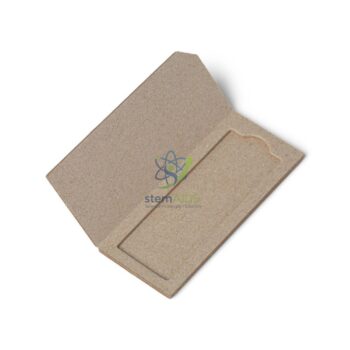
For short-term storage, or where boxes are thrown away with the samples, the Cardboard Box for Micro Centrifuge Tubes is a lighter alternative. Tubes of 0.5 ml, or tubes with tall screw caps, may not seat properly in a grid sized for 1.5 ml and 2.0 ml tubes, so try one before loading a full set.
Specifications
| Type | Storage box for microcentrifuge tubes |
| Usual tube size | 1.5 ml and 2.0 ml microtubes |
| Typical material | Polypropylene, for plastic microtube boxes |
| Storage | Refrigerator and freezer storage of samples |
| Number of positions and lid style | Confirm at enquiry |
Care of Microtube Boxes
- Record the position of every tube as it is loaded, and label the lid and one side of the box
- Use freezer-grade labels or markers, since ordinary ink smears with condensation
- Wash spills off promptly with warm detergent solution; a polypropylene box can generally be autoclaved, but check its rating first
- Keep lids closed in the freezer to limit frost forming around the tube caps
Everyday Uses
- Storing DNA, RNA and protein samples at −20 °C between practical sessions
- Keeping aliquots of enzymes, primers and buffers organised in the freezer
- Holding each student group’s samples from a class practical in its own labelled row
- Carrying a set of closed tubes from the bench to the freezer without spills
Why Choose LabEquip
Molecular biology and biotechnology labs, diagnostic training labs and college project students rely on boxes like this to keep freezer stocks traceable. LabEquip offers it with racks and other plastic ware in the Biology Lab Products range; ask about grid size and lid type through our contact page.
Frequently Asked Questions
What size tubes fit in this box?
Microtube storage boxes are usually made for 1.5 ml and 2.0 ml tubes, which share a similar outer diameter. Smaller 0.5 ml tubes sit loose in such grids and are better kept in an insert or a dedicated rack.
Can the box be used in a −80 °C freezer?
Polypropylene boxes are commonly used at −80 °C, but brittleness at that temperature varies between plastics, so check the box’s minimum temperature rating. Handle frozen boxes gently, as cold plastic cracks more easily if dropped.
How should samples in the box be recorded?
Label the box on the lid and side with owner, project and date, then map each tube to its row and column in a notebook or spreadsheet. This lets you find one sample without opening every tube.
Is a plastic box better than a cardboard one?
Plastic boxes are reusable, washable and unaffected by frost and condensation. Cardboard boxes are lighter and simply discarded when worn, which suits short-term storage or samples that will be thrown away with their box.
Can I centrifuge tubes while they are in the box?
No. Tubes must be moved into the centrifuge rotor. The box is only for holding and storing tubes and would not survive the forces in a centrifuge.
How do I stop tube caps popping open in the freezer?
Close each cap firmly before storage and keep the lid of the box shut so caps cannot be knocked. For long-term or volatile samples, screw-cap tubes or cap locks give a more secure seal than snap caps.
Last Updated: September 2026
You must be logged in to post a review.
Bestsellers




Reviews
There are no reviews yet.