

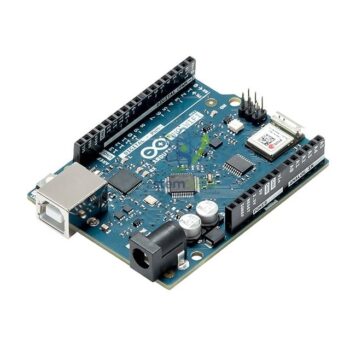
The StemAids Arduino Micro Board (Platine Arduino Micro) is a compact microcontroller development board designed for electronics prototyping, embedded systems learning, coding practice, and STEM education. Its small form factor makes it suitable for space-conscious projects while still supporting practical learning in programming, circuit interfacing, automation, and hardware control.
Designed for students, teachers, hobby users, engineering learners, and technical training labs, the StemAids Arduino Micro Board helps users build a real-world understanding of microcontroller-based systems. It is widely used in school labs, college practical sessions, robotics workshops, innovation centers, and maker environments where learners need a reliable platform for hands-on electronics and coding applications.
Key Features
- Compact microcontroller board for electronics and coding projects
- Suitable for STEM education, embedded systems learning, and prototyping
- Supports practical learning in programming and hardware interfacing
- Useful for sensors, switches, LEDs, buzzers, motors, and displays
- Compact size for portable and space-saving project integration
- Suitable for school labs, colleges, workshops, and maker spaces
- Helps users understand digital and analog input/output applications
- Useful for beginner to intermediate learners
- Supports project-based learning and innovation activities
- Reliable board for repeated educational and lab use
Product Specifications
- Product Name: Arduino Micro Board
- Brand: StemAids
- Product Type: Microcontroller development board
- Application: Programming, electronics interfacing, embedded systems learning, STEM education
- Usage Area: School labs, college labs, robotics workshops, innovation labs, maker spaces
- Suitable For: Students, teachers, hobby users, engineering learners, project developers, training centers
- Programming Support: USB-based programming with compatible development software
- Input/Output Support: Digital and analog input/output functions
- Compatibility: Sensors, LEDs, switches, buzzers, motors, displays, and communication modules
- Use Case: Coding practice, automation models, electronics experiments, prototype development
- Operation Type: Programmable educational development board
- Design: Compact board layout for embedded and portable electronics projects
Uses of Arduino Micro Board
The StemAids Arduino Micro Board is used in electronics and coding applications where a compact programmable board is needed. It is commonly used for:
- Learning microcontroller programming
- Building compact electronics projects
- Interfacing sensors and output devices
- Creating automation and control models
- STEM and embedded system experiments
- Classroom demonstrations and lab practical work
- Robotics and maker projects
- Prototype development for educational and technical applications
How to Use Arduino Micro Board
- Connect the StemAids Arduino Micro Board to a computer using a compatible USB cable.
- Install the required Arduino-compatible development software on the computer.
- Select the correct board and communication port in the software settings.
- Write a new program or open an example code according to the project requirement.
- Upload the code to the board through the USB connection.
- Connect the required electronic components, such as LEDs, sensors, switches, or modules to the board pins.
- Power the board and test the hardware response according to the uploaded program.
- Modify the code and connections as needed for learning, experimentation, or prototype development.
Benefits
- Supports compact and practical project development
- Helps users learn coding with real hardware interaction
- Useful for STEM education and electronics training
- Encourages hands-on experimentation and problem-solving
- Suitable for classroom, lab, and workshop environments
- Helps build understanding of input-output control and interfacing
- Makes embedded systems learning more application-focused
Care and Maintenance
- Keep the board away from moisture, dust, and excessive heat
- Use correct voltage and compatible accessories only
- Disconnect power before changing wiring connections
- Handle the board and connectors carefully during use
- Store in a dry, safe, and anti-static environment
- Avoid unnecessary pressure on the USB port and pin headers
Why Choose the StemAids Arduino Micro Board
The StemAids Arduino Micro Board is a practical choice for learners and educators who need a compact and capable development board for electronics and programming education. Its small size, flexible application range, and suitability for project-based learning make it ideal for STEM labs, robotics training, innovation activities, and hands-on classroom use. It helps users build confidence in coding, interfacing, and embedded systems development through direct experimentation.
FAQ
1. What is the StemAids Arduino Micro Board used for?
It is used for programming, electronics interfacing, automation models, embedded systems learning, and STEM-based projects.
2. Is this board suitable for beginners?
Yes, it is suitable for beginners, students, teachers, and users learning electronics and microcontroller programming.
3. Can it be used in school and college labs?
Yes, it is suitable for school labs, college practical sessions, engineering workshops, and STEM education environments.
4. What kind of components can be connected to this board?
It can be connected to sensors, LEDs, switches, buzzers, motors, displays, and many commonly used electronic modules.
5. Why choose an Arduino Micro Board?
It is useful when a compact board is preferred for smaller projects, portable models, or space-saving electronics applications.
6. Is it useful for robotics and automation projects?
Yes, it is useful for robotics, automation, control systems, and interactive electronics projects.
7. What can students learn from this board?
Students can learn coding, circuit interfacing, sensor reading, output control, automation basics, and embedded systems fundamentals.
8. Does the board require software for programming?
Yes, the board is programmed through compatible Arduino-style development software using a computer connection.






Reviews
There are no reviews yet.