

In Stock
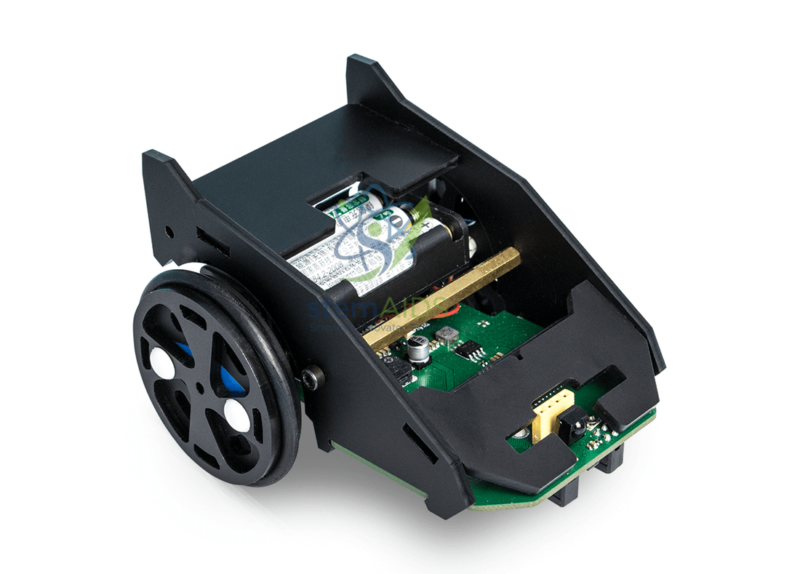
Bit car without micro:bit card
Quick Answer: The Bit car without micro:bit card is a small two-wheeled robot car designed to be driven by a BBC micro:bit, which plugs into the car and is programmed to steer, follow lines and react to sensors. As a bit car robot sold without the board, it suits schools that already own micro:bits.
A Ready-Built Chassis for micro:bit Robotics
Building a robot from loose motors and wheels takes lessons of preparation, and the Bit car skips that stage. The chassis, motors and driver circuit are already together, so students insert their micro:bit and spend the lesson on programming: straight runs, turns, squares and figure-of-eight paths. Robot cars of this type usually also carry on-board features such as line-tracking sensors, LEDs and a buzzer, and the features of this model should be confirmed.
Two-wheel differential steering is the core idea. Each wheel has its own motor, so equal speeds go straight, unequal speeds curve and opposite directions spin the car on the spot. Students soon learn that timed turns are unreliable, because battery level and floor surface change how far the car moves, and that discovery motivates sensor-based control such as following a black line with downward-facing sensors.
Without micro:bit card means the board is not part of the listing. A micro:bit the school already has can be moved between the car and other projects; check that your board version is supported by the car’s MakeCode extension.
Lesson Sequence
- Drive a square and discover why timed turns vary
- Follow a black line on a white track
- Program lights and sounds as indicators and a horn
- Steer the car from a second micro:bit by radio
Specifications
| Item | micro:bit robot car: chassis with motors and driver |
| Controller | BBC micro:bit, not included |
| Steering | Two-wheel differential drive |
| Typical on-board features | Line sensors, LEDs and a buzzer on cars of this type |
| Programming | MakeCode extension blocks or Python |
| Fitted sensors and battery type | Confirm at enquiry |
Care & Handling
- Remove the micro:bit before storing the car, and keep the connector slot clean.
- Take out the batteries when the car will not be used for a while, to prevent leakage.
- Run cars on the floor or on tables with barriers so they cannot drive off an edge.
- Clear hair and dust from wheels and axles regularly.
Why Choose LabEquip
The Bit car suits schools that own micro:bits and want a quick route into robotics without building chassis from scratch. LabEquip lists it in the STEM kits range; spare Micro USB B Cables keep programming sessions running. Send class numbers through the contact page.
Frequently Asked Questions
What does without micro:bit card mean?
The micro:bit board is not included. You plug in a micro:bit your school already owns, program it and move it between the car and other projects.
Why does the car not drive straight?
Motors and wheels are never perfectly matched. Reduce the speed of the faster side in code until the car tracks straight, and retest as the batteries run down.
How does line following work?
Sensors under the car detect the difference between a dark line and a light floor. If the left sensor sees the line, the car steers left; if the right one does, it steers right.
Why are timed turns inconsistent?
The angle turned depends on battery voltage, floor friction and wheel slip, so the same wait time gives different results. Sensors or the micro:bit compass give more repeatable turns.
Can the car be controlled remotely?
Yes, with a second micro:bit. The handheld board sends radio messages from its buttons or tilt, and the micro:bit in the car turns each message into a movement.
What batteries does the car use?
Battery type and holder depend on the model. The battery arrangement for this car should be confirmed at enquiry so spares can be ready for lessons.
Last Updated: September 2026
You must be logged in to post a review.
Bestsellers

Sale
Sale

Sale


Reviews
There are no reviews yet.