



Sale
In Stock
Acid Base Experiment Kit
Original price was: ₹1,150.00.₹565.00Current price is: ₹565.00.
Quick Answer: The Acid Base Experiment Kit is a school chemistry set for classifying solutions as acidic, neutral or alkaline using indicators. Students test samples in test tubes, watch colour changes, place results on the pH scale and neutralise an acid with a base, learning the basic ideas of acid-base chemistry through practical work.
What Students Investigate
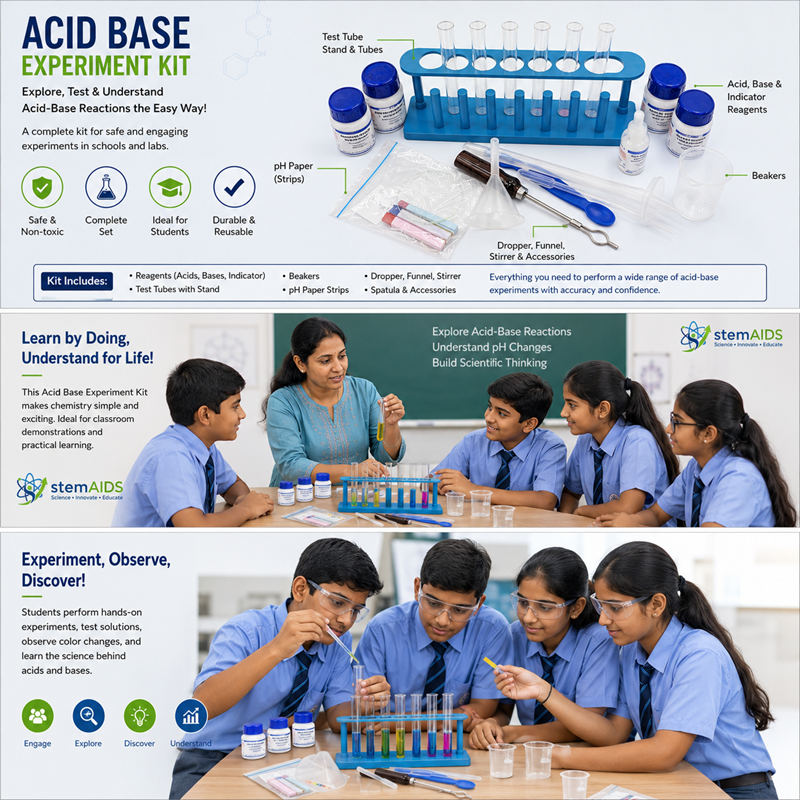
The listing image of the acid base experiment kit shows a rack of test tubes, reagent bottles, droppers and a test-tube brush, with students carrying out colour tests. Indicators are substances whose colour depends on acidity. Litmus turns red in acid and blue in alkali, phenolphthalein stays colourless in acid and turns pink in alkali, and universal indicator runs through a spectrum of colours that can be matched to pH values from 0 to 14.
A typical first practical tests everyday samples such as lemon juice, vinegar, soap solution, baking soda solution and tap water, and sorts them into groups. Students then learn that pH 7 is neutral, lower numbers are acidic and higher numbers alkaline, and that each step on the scale is a tenfold change in hydrogen ion concentration. Natural indicators make a good extension: red cabbage extract passes through several colours, and turmeric turns reddish-brown in soap and other alkaline solutions.
Neutralisation brings the topic together. Adding a base to an acid a few drops at a time, with indicator present, shows the colour switch at the point where the acid is used up, and a word equation such as hydrochloric acid plus sodium hydroxide giving sodium chloride and water follows naturally. The reagents and indicators actually supplied should be confirmed when ordering, and their safety data sheets read before use.
Specifications
| Item | Indicator-based acid and base experiment set |
| Apparatus shown | Test tubes, rack, droppers and reagent bottles, as in the listing image |
| Tests | Colour change with indicators to classify acidic, neutral and alkaline samples |
| Scale used | pH 0 to 14 |
| Level | Middle and secondary school chemistry |
| Reagents and indicators included | Confirm at enquiry |
Care & Handling
- Wear safety goggles for all tests and keep acids and alkalis at the dilute strengths used in school practicals.
- Read the safety data sheet for each reagent and store acids and alkalis apart, in closed, labelled bottles.
- Rinse any splash on skin with plenty of running water and tell the teacher.
- Wash test tubes and droppers after each session so indicator residues do not affect the next test.
Applications
- Classifying household substances as acids, bases or neutral
- Introducing the pH scale with universal indicator
- Demonstrating neutralisation, including antacid and soil-treatment examples
- Preparing natural indicators from red cabbage, turmeric or flower petals
Why Choose LabEquip
Science teachers usually order this kit for practicals on acids, bases and salts from Class 7 to Class 10, where each group needs its own tubes and indicators. LabEquip lists it in the STEM kits range and supplies the glassware and stands for a full practical through its chemistry lab equipment range. Tell us what quantities you need through the contact page.
Frequently Asked Questions
Which indicators are used to test acids and bases?
Litmus is the classic one, turning red in acid and blue in alkali. Phenolphthalein turns pink in alkali and stays colourless in acid, methyl orange turns red in acid and yellow in alkali, and universal indicator shows a range of colours linked to pH.
What does the pH scale measure?
It measures how acidic or alkaline a solution is, from 0 to 14. pH 7 is neutral, values below 7 are acidic and values above 7 are alkaline. Each whole-number step represents a tenfold change in hydrogen ion concentration.
What happens during neutralisation?
An acid reacts with a base to form a salt and water. With an indicator present, the colour changes at the point where the acid has been used up, which is how titrations find the exact amount of base needed.
Can household items be tested?
Yes, and they make the lesson memorable. Lemon juice and vinegar are acidic, baking soda and soap solutions are alkaline, and pure water is close to neutral. Avoid strong cleaners such as drain or toilet cleaners, which are corrosive.
How can students make a natural indicator?
Chop red cabbage, soak it in hot water and strain off the purple liquid once it cools. It turns red or pink in acids and green or yellow in alkalis. Turmeric solution or turmeric paper is another option, turning reddish-brown in alkali.
What safety precautions apply?
Wear goggles, use dilute solutions, add acid to water and never the reverse, and never taste chemicals or smell them directly. Wipe up spills at once and wash hands after the practical.
Last Updated: September 2026
You must be logged in to post a review.
Bestsellers
Sale
Sale
Sale

Sale


Reviews
There are no reviews yet.