




In Stock
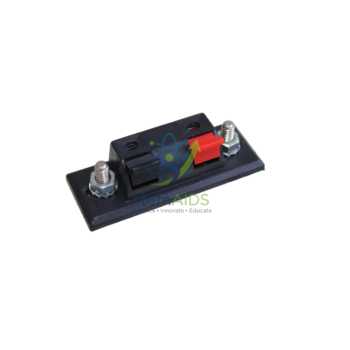
Geometrical Progression Kit for School Maths Lab
Precision-Molded Proportional Elements: The kit features a series of interlocking components manufactured from high-impact, non-toxic polymer, specifically calibrated to represent increasing geometric powers (a, ar, ar2) for empirical verification of series summation.
Multi-Stage Visualization System: Includes a specialized baseboard with graduated markings and color-coded blocks that allow students to physically model common ratios and calculate sequence limits using tactile, three-dimensional geometric representations.
$3.67
Quick Answer: A Geometrical Progression Kit is a set of hands-on pieces for modelling a geometric progression (GP), a sequence in which each term is the previous term multiplied by a fixed common ratio. Secondary maths classes use the geometrical progression kit to see the terms, the ratio and the sum of a GP take shape.
How a Geometric Progression Is Modelled
A geometric progression grows or shrinks by multiplication rather than by addition. With a first term a and a common ratio r, the terms run a, ar, ar², ar³ and so on, so the nth term is arⁿ⁻¹. Laying out pieces that double from one term to the next shows how fast a ratio of 2 runs away, while a ratio of ½ makes each piece half the size of the one before.
A common activity with GP models is the halving square. A unit square is split into two halves, one half is split again, and the process continues, so the pieces stand for ½, ¼, ⅛, 1/16 and so on. Fitted back together they fill more and more of the square without going past it, giving students a visual reason why the infinite series ½ + ¼ + ⅛ + … has the sum 1, and the formula S∞ = a ÷ (1 − r), valid when r lies between −1 and 1, reads as a description of the model rather than a rule to memorise.
For finite sums the same idea supports Sn = a(rⁿ − 1) ÷ (r − 1). Students add the first few terms by hand, compare the total with the formula and look for the pattern. Kit contents differ between versions, so confirm the pieces before planning around a particular ratio.
Applications
- Generating terms from a first term and common ratio, and finding the ratio from two consecutive terms
- Showing that ½ + ¼ + ⅛ + … approaches but never exceeds one whole, as a lead-in to the sum to infinity
- Checking the formula for the sum of the first n terms against pieces counted by hand
- Contrasting arithmetic and geometric growth side by side, such as 2, 4, 6, 8 against 2, 4, 8, 16
Specifications
| Item | Manipulative kit for geometric progressions (GP) |
| Concepts | Terms a, ar, ar², …; common ratio; sum of n terms; sum to infinity |
| Typical level | Secondary classes where sequences and series are taught |
| Works alongside | Arithmetic progression models and squared paper |
| Pieces, material and size | Confirm at enquiry |
Care & Handling
- Store the pieces of the geometrical progression kit in size order so that a missing term is noticed before the next lesson.
- Wipe pieces with a dry or barely damp cloth; never soak them.
- Keep the kit flat and away from heat, which can warp thin pieces and spoil the fit when they are placed together.
Why Choose LabEquip
Mathematics departments that already teach arithmetic progressions with the Arithmetic Progression magnetic tiles often add a GP model so both kinds of sequence can be compared in the same term. LabEquip lists both in its Mathematics School Lab Products range, and the LabEquip contact page is the place to ask for the current contents and to send class quantities.
Frequently Asked Questions
What is the difference between an arithmetic and a geometric progression?
An arithmetic progression adds the same number each time, such as 3, 7, 11, 15, where the common difference is 4. A geometric progression multiplies by the same number each time, such as 3, 6, 12, 24, where the common ratio is 2. Arithmetic sequences change in equal steps; geometric ones change by equal factors.
How do students find the common ratio of a GP?
Divide any term by the term before it. In 5, 15, 45, 135 each division gives 3, so the ratio is 3. If the divisions give different results, the sequence is not geometric. A negative ratio makes the terms alternate in sign, and a ratio between 0 and 1 makes them shrink.
Why does the sum ½ + ¼ + ⅛ + … never go past 1?
Each new term is exactly half of the gap still left to fill. After ½ the gap is ½; after adding ¼ the gap is ¼, and so on. The total gets as close to 1 as you like but never passes it. The formula a ÷ (1 – r) gives ½ ÷ ½, which equals 1.
When can the sum to infinity formula be used?
Only when the common ratio lies strictly between -1 and 1. Then the terms shrink towards zero and the sum settles on a limit. With a ratio of 2, or of -3, the terms grow without bound and the series has no finite sum.
Which classes use a GP model like this?
Sequences and series appear in the senior secondary syllabus, usually after arithmetic progressions. Middle-school teachers also use the halving idea informally when introducing fractions and powers of 2, because the model can be understood without any formula.
Can the model be linked to compound interest?
Yes, as a pattern. Money growing at 10 percent a year is multiplied by 1.1 each year, so the yearly amounts form a GP with ratio 1.1. The pieces show the idea of repeated multiplying; the exact amounts are then worked out on paper or with a calculator.
Last Updated: September 2026
You must be logged in to post a review.
Bestsellers




Reviews
There are no reviews yet.