



In Stock
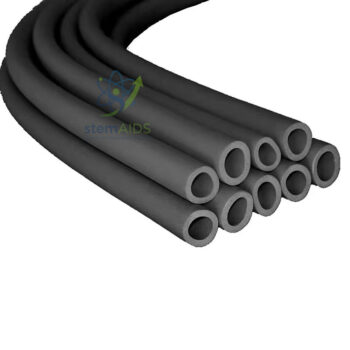
Synthetic Elderberry Marrow
$1.80
Quick Answer: Synthetic Elderberry Marrow is a synthetic substitute for elder pith, the soft, spongy support used to hold thin plant material while it is cut into sections by hand. The name is a word-for-word translation of the French moelle de sureau; in English botany the material is called elder pith.
How Synthetic Elder Pith Supports Hand Sectioning
Leaves, petals and thin stems are too soft and flimsy to hold between the fingers while a razor passes through them. Botanists traditionally cut a short cylinder of pith from elder (Sambucus) stems, split it lengthwise, laid the leaf in the split and then sliced through pith and leaf together. The pith grips the specimen evenly, cuts cleanly and keeps fingers clear of the blade.
A synthetic elder pith does the same job without the variation of a natural material, which can be too dry, too hard or crumbly depending on how it was collected and stored. The listing does not name the polymer, so treat it as a sectioning support only, not as an embedding medium for wax-style work.
The same pith cylinder can be clamped in a hand microtome, where a screw feed raises the specimen by a small step between cuts and gives more even thickness than freehand cutting. It is a different product from the small elderberry pith balls used in electrostatics experiments, although both names come from the elder plant.
Sections Prepared with Pith
- Transverse sections of a dicot leaf showing palisade and spongy mesophyll, veins and stomata
- Sections through young sunflower or maize stems to compare vascular bundle arrangement in dicots and monocots
- Root sections showing the endodermis and the arrangement of xylem
- Thin sections of petals or fruit skin to show pigment cells
Specifications
| Material | Synthetic substitute for natural elder pith |
| Use | Support for plant specimens during hand or hand-microtome sectioning |
| Suitable specimens | Leaves, petals, thin herbaceous stems, young roots |
| Cutting tool | Sharp razor or microtome blade, kept wet |
| Piece size and quantity | Confirm at enquiry |
Care & Handling
- Cut the pith to a length that suits the razor stroke or the microtome well, then split it lengthwise with a scalpel to make the slot for the specimen.
- Keep both the blade and the pith wet with water, or dilute ethanol, while cutting; this reduces tearing and lets sections float off the blade into a watch glass.
- Use a single-edged razor or a guarded blade and always cut away from the fingers.
- Discard pieces once they are cut down or stained, and store unused pith dry in a closed box.
Why Choose LabEquip
Botany teachers and plant anatomy instructors in colleges order synthetic pith for practical classes where every student cuts their own sections. LabEquip lists it in General Lab Products, and quantities for a laboratory batch can be arranged through the contact page.
Frequently Asked Questions
What is elderberry marrow?
It is a literal translation of the French moelle de sureau. In English it is called elder pith: the soft, white tissue at the centre of elder stems. This product is a synthetic version of that pith, used to hold specimens for sectioning.
Why use synthetic pith instead of natural elder pith?
Natural pith varies with the plant, the season and how it dried. Synthetic pith is more uniform, so each piece cuts in the same way and is ready to use without collecting and drying elder stems.
How do I hold a leaf in the pith?
Split a short cylinder of pith lengthwise, lay the leaf or a strip of it in the slit so that it lies straight, and press the halves together. Hold the pith upright and slice across the top with a wet razor, taking many thin cuts rather than one thick one.
Can the pith be used in a hand microtome?
Yes, a pith cylinder with the specimen inside is the usual way to load a hand microtome. It is gripped in the well and fed upward with the screw between cuts, which gives more even section thickness than freehand cutting.
Which sections are thin enough to use?
Choose the thinnest, most transparent sections, often only part of a slice. Float the cut sections in water, pick them up with a fine brush, and check them at low power before staining with a stain such as safranin or toluidine blue.
Can the same piece of pith be reused?
A piece can be used for several cuts on the same specimen until it becomes too short to hold safely. Once stained or soiled it should be discarded, since carried-over stain or tissue confuses the next preparation.
Last Updated: September 2026
You must be logged in to post a review.
Bestsellers





Reviews
There are no reviews yet.