
In Stock
SD Memory Card
$5.14
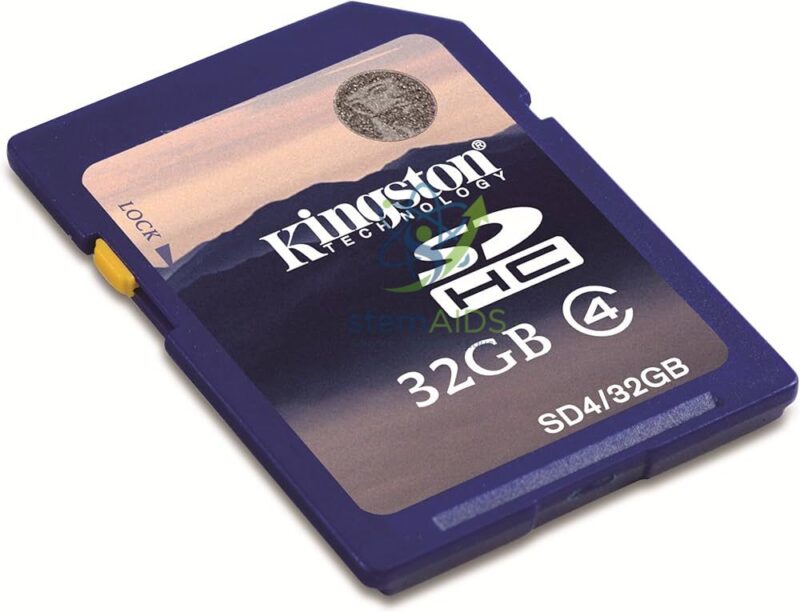
Quick Answer: An SD memory card is a small removable flash storage card in the full-size Secure Digital format, used in digital cameras, audio recorders, data loggers and similar devices. The SD memory card in the listing photo is an SDHC type.
SD, SDHC and SDXC Explained
The SD family has three capacity types that look alike. Standard SD covers the smallest cards, SDHC (high capacity) runs from above 2 GB up to 32 GB, and SDXC (extended capacity) covers larger cards. Devices designed before a type appeared may not read it, so an old camera that accepts SDHC may refuse an SDXC card. The capacity supplied should be confirmed at enquiry.
Speed markings matter for video. A number inside a C (such as Class 4 or Class 10), a U1 or U3 symbol, or a V rating such as V30 indicates a minimum sustained write speed. Higher classes are needed for high-resolution video; for photos, audio notes and logger data, a lower class is usually enough.
Full-size SD cards have a small lock switch on the side; slid down, it asks the device not to write or erase. Many laptops read SD cards directly, and a reader such as the mini 6 in 1 memory card reader adds a slot to computers that lack one.
Specifications
| Format | Full-size SD (Secure Digital) flash card |
| Type pictured | SDHC |
| Write protection | Side lock switch, standard on full-size SD cards |
| Typical devices | Cameras, audio recorders, data loggers, trail cameras |
| Capacity and speed class supplied | Confirm at enquiry |
Common School Uses
- Storing photos and video from digital cameras on field trips
- Recording audio interviews and music practice
- Collecting readings from data loggers and weather stations that write to SD
- Trail cameras used in ecology projects
Care & Handling
- Format the card in the device that will use it, after copying off any files you need.
- Eject the card in the operating system before removing it from a computer.
- Keep cards in a small case to protect the contacts from dirt and the card from bending.
- Copy important data to a second place; a single card is not a backup.
Why Choose LabEquip
Schools and colleges buy SD cards in quantity for cameras, recorders and loggers, often as spares so a full card never stops a field trip. LabEquip lists them in General Lab Products; send capacities and quantities through the contact page.
Frequently Asked Questions
What is the difference between SD, SDHC and SDXC?
They are capacity types of the same card format. SDHC covers cards above 2 GB up to 32 GB, and SDXC covers larger cards. A device must support the type to read the card.
Which speed class do I need?
For photos, audio and logger data, a basic class is usually fine. For recording high-resolution video, choose a card marked U3 or with a V30 rating, which indicates a higher minimum write speed.
What does the small switch on the side do?
It is a write-protect lock. When slid to the lock position, most devices will not save to or erase the card. If a camera reports that the card is locked, check this switch first.
Why won’t my camera read the card?
The card type may be newer than the camera supports, or the card may be formatted for another device. Copy off any files, then format it in the camera itself.
Can I use an SD card in a device that takes microSD?
No. microSD is a smaller card and needs a microSD slot. The reverse works: a microSD card can go in an SD slot using an adapter.
How should cards be stored?
In a small case or card wallet, away from heat and moisture, with the contacts kept clean. Label cards by class or device so data does not get mixed up.
Last Updated: September 2026
You must be logged in to post a review.
Bestsellers




Reviews
There are no reviews yet.