





In Stock
PT 1000 stainless steel temperature probe
$40.16
Quick Answer: The PT 1000 Stainless Steel Temperature Probe is a platinum resistance temperature sensor sealed in a thin stainless steel sheath, with a cable and connector for a hotplate stirrer or temperature controller. It is placed in the liquid so the heating is regulated by the sample temperature rather than the plate temperature.
How a Pt1000 Sensor Measures Temperature
A Pt1000 is a resistance temperature detector (RTD) built around a platinum element with a resistance of 1000 ohms at 0 °C. As the temperature rises, the resistance of platinum rises in a very predictable way, and the controller converts that resistance into a temperature reading. Platinum is chosen because its response is stable and repeatable over a wide range.
The “1000” matters. A Pt100 element, the other common type, starts at 100 ohms, so the resistance of the connecting wires is a larger share of the reading. With a Pt1000 the lead-wire error is ten times smaller in proportion, which is why many stirrers and compact controllers use Pt1000 probes with simple two-wire connections.
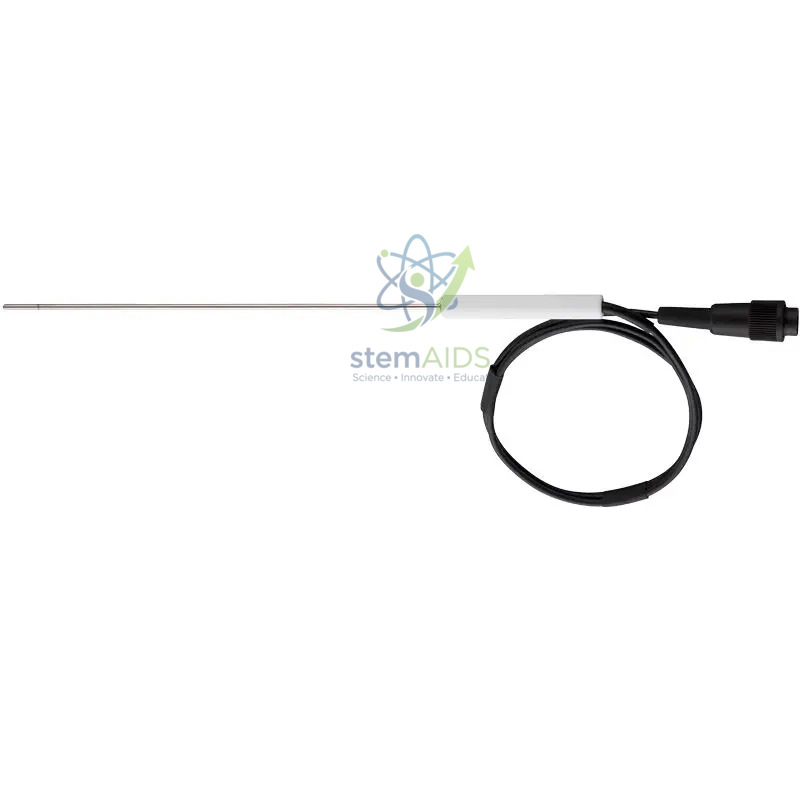
The listing photograph shows a long, thin stainless steel sheath, a short handle section, and a coiled cable ending in a round connector. Stainless steel suits water, most buffers, oils and many organic solvents. For strong acids or halide solutions a PTFE-coated probe is the usual choice instead. The connector type and probe length are not stated, so check them against your instrument.
Care & Handling
- Hold the probe at the right depth with a clamp such as the Pt1000 clamping system
- Do not bend the sheath sharply; a kink can break the element inside
- Keep the cable and connector away from the heated plate
- Rinse the sheath after use and dry the connector before storage
Where the Probe Is Used
- External temperature control on hotplate magnetic stirrers
- Monitoring a flask in a heating block during reflux
- Checking the temperature of a water or oil bath
- Temperature logging in student practicals on heating and cooling curves
Specifications
| Sensor | Pt1000 platinum resistance element |
| Sheath | Stainless steel, as titled |
| Connection (from photo) | Coiled cable with round connector |
| Purpose | Liquid temperature measurement and control |
| Connector type, length and compatible instruments | Confirm at enquiry |
Why Choose LabEquip
Buyers of this PT 1000 stainless steel temperature probe are usually adding probe control to an existing stirrer or replacing a damaged probe. LabEquip can check connector compatibility against your instrument when you contact us, and supply the probe with a matching clamp from our general lab products range.
Frequently Asked Questions
What does Pt1000 mean?
It is a platinum resistance sensor whose element measures 1000 ohms at 0 °C. The resistance rises with temperature, and the instrument converts it into a reading.
What is the difference between a Pt100 and a Pt1000 probe?
Both use platinum, but a Pt1000 has ten times the base resistance. That makes errors from the connecting wires proportionally smaller, so Pt1000 probes work well with simple two-wire connections.
Will this probe work with my hotplate stirrer?
Only if the stirrer accepts a Pt1000 input with the same connector. Check the connector and input type in your stirrer manual before ordering.
Can the stainless steel probe go into acids?
Stainless steel resists water, oils and many solvents, but strong acids and chloride-rich solutions can attack it. A PTFE-sheathed probe is better for those liquids.
How deep should the probe go into the sample?
Submerge the sensing tip well below the surface and above the stir bar, keeping it clear of the vessel wall so the reading reflects the bulk liquid.
How do I check that the probe still reads correctly?
Compare it with a reference thermometer in stirred water at two temperatures, such as ice water and warm water. A large difference suggests the probe or cable is damaged.
Last Updated: September 2026
You must be logged in to post a review.
Bestsellers




Reviews
There are no reviews yet.