


In Stock
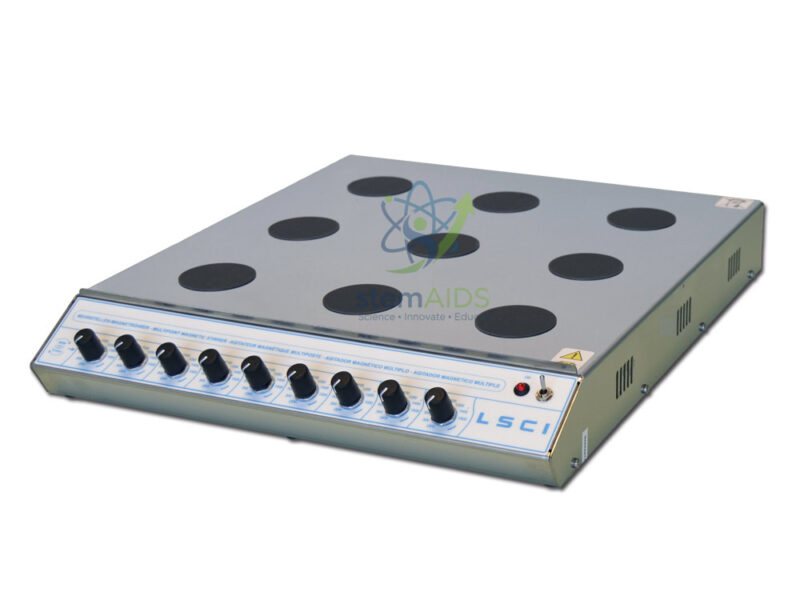
Non-heating multi-position magnetic stirrer
₹11,203.00
Quick Answer: Non-heating multi-position magnetic stirrer is a bench unit with several stirring points on one top and no heater, so a number of vessels are mixed at the same time at room temperature. It suits dilution series, class sets and replicate samples.
Several Vessels at Room Temperature
When a class prepares a dilution series, or a technician makes the same solution in several bottles, one stirrer per vessel quickly fills the bench. A non-heating multi-position magnetic stirrer drives several bars from one housing, using one power point and one footprint. Without a heater it can stir for longer periods without warming the samples, which suits dissolution checks and equilibration.
The number of positions, and whether each has its own speed control or all share one, is not given in the title. With a shared control, every vessel should hold a similar volume and the same size of bar, so that all positions mix at a similar rate. Keep each vessel centred on its marked position, because a vessel standing between two drives can pull its bar off-centre.
Multi-position units are designed for small to medium vessels at each point, typically beakers or flasks of up to a few hundred millilitres, rather than one large batch.
Specifications
| Type | Multi-position magnetic stirrer |
| Heating | None (non-heating, as titled) |
| Vessel per position | Small to medium beakers, flasks or bottles |
| Loading | Similar volumes and matching stir bars across positions |
| Number of positions and speed control layout | Confirm at enquiry |
Care of a Multi-Position Stirrer
- Mark each position number on its vessel so samples cannot be swapped.
- Start with all bars in place and raise the speed slowly, watching that every bar couples.
- Clean spills promptly so liquid does not track across the top to the other positions.
- Store the stirrer under a cover to keep dust off the plate.
Where Several Positions Help
- Preparing a dilution series for a calibration curve, each dilution stirring in its own flask
- Running replicate dissolving or adsorption experiments side by side
- Stirring solutions for several student groups from one unit on the teacher’s bench
- Keeping several stock solutions mixed while they are dispensed
Why Choose LabEquip
Multi-position stirrers are bought by teaching labs and QC training rooms that stir many samples at once. LabEquip lists this non-heating model in its General Lab Products range beside the heated multi-position magnetic stirring hotplate; tell us how many positions you need through the contact page.
Frequently Asked Questions
Why choose a stirrer with several positions but no heater?
It stirs several samples at once without warming them, which suits dilution series, dissolution checks and replicates at room temperature. It also has no hot surface to manage when students work around it.
Do all positions stir at the same speed?
If one control drives every position, the setting is shared, but the actual swirl still depends on each vessel’s volume and bar size. Use matching vessels and bars to keep them alike.
Can different vessel sizes be used together?
Yes, but each bar should suit its vessel, and the speed has to suit the smallest bar. A large vessel with a short bar may mix poorly at that shared speed.
Why does one bar keep jumping?
Its vessel may be off-centre, too close to a neighbour, or holding a bar that is too long. Recentre it, space the vessels evenly and reduce the speed before raising it again.
Can I leave samples stirring for hours?
A unit without a heater is well suited to longer runs, but cover the vessels to reduce evaporation and check at intervals that every bar is still turning.
Is a multi-position stirrer useful for titrations?
Less so. A titration needs one vessel under a burette at a time, so a single compact stirrer at each titration station is more practical.
Last Updated: September 2026
You must be logged in to post a review.
Bestsellers




Reviews
There are no reviews yet.