


In Stock
Net Curtain
Filet troubleau Features a 30cm aperture with an integrated high-torque handle socket, engineered for heavy-duty substrate scraping and benthic disturbance in high-velocity streams.
Precision-Calibrated Nitex Mesh utilizes industrial-grade monofilament with standardized 500-micron apertures, optimized for high hydraulic flow-through and the non-destructive retention of sensitive aquatic bioindicator taxa.
$13.03
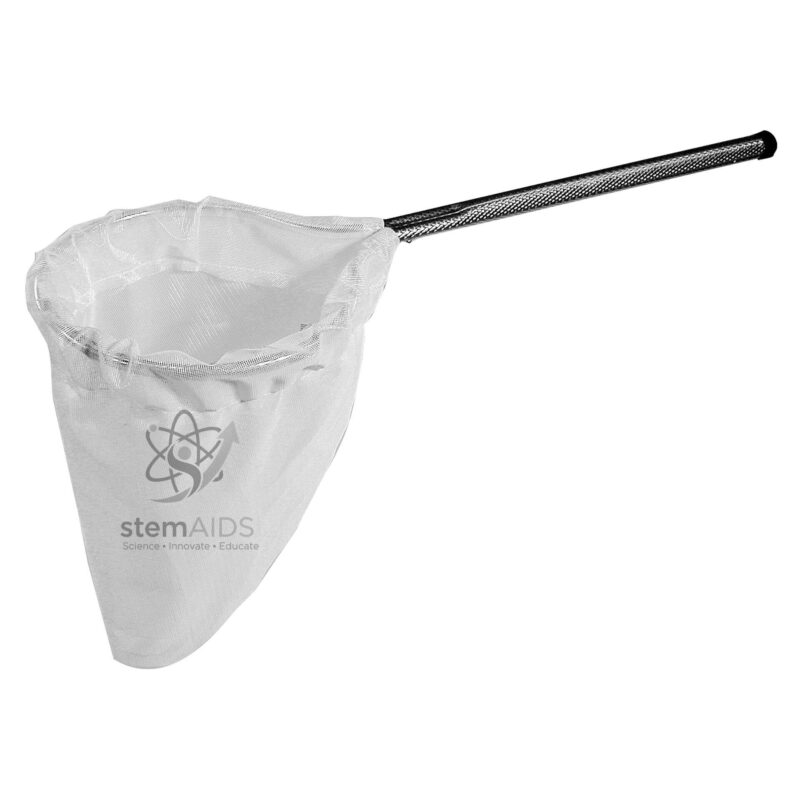
Quick Answer: Net Curtain is a hand-held insect net: the listing photo shows a fine white net bag on a round metal frame with a short handle. Nets of this form are used to catch flying insects and to sweep grass and low plants for insects and spiders during biology fieldwork.
Sweeping and Netting Technique
For sweeping, the net is swung in a steady arc through the top of grass or low vegetation, with the frame slightly tilted so the leading edge cuts through the stems. After a set number of sweeps, for example ten, a quick turn of the wrist folds the bag over the frame and traps the catch. Standardising the number and length of sweeps lets groups compare the insect life of a mown lawn, a meadow and a hedge bottom.
For flying insects, the net is swept up behind the insect and turned so the bag closes over the frame. The catch is worked into the bottom of the bag and transferred to a pot or picked up with an aspirator. A fine, pale bag like the one pictured makes small insects easy to see against the fabric and is gentle on delicate wings.
The mesh size, bag depth, frame diameter and handle length are not stated in the listing title. The pictured net has a short handle, which suits close work in grass and shrubs; for wetland work, a sturdier pond net with a coarser, faster-draining mesh is usually preferred. Catches can be viewed in a Magnifying Glass Box before release.
Care & Handling
- Shake out and check the bag after each outing, and brush off seeds and plant debris.
- Rinse the bag if it gets wet or muddy and dry it fully before storing, to prevent mildew.
- Avoid sweeping through thorny or woody plants, which snag and tear fine netting.
- Handle bees and wasps with care; let them fly out of the bag rather than grabbing them.
Specifications
| Type | Hand collecting net |
| Bag | Fine white net, as pictured |
| Frame | Round metal ring |
| Handle | Short metal handle, as pictured |
| Mesh size, frame diameter and handle length | Confirm at enquiry |
Fieldwork Uses
- Sweep-net sampling to compare insect diversity between habitats
- Catching butterflies, moths and flies for identification and release
- Collecting leafhoppers, beetles and spiders from grassland
- Project work on pollinators visiting flowers in the school garden
Why Choose LabEquip
Biology teachers, field-study centres and entomology clubs use a hand net as the first tool for sampling insects in open habitats. LabEquip lists it in the General Lab Products range; for frame and handle dimensions, ask through the contact page.
Frequently Asked Questions
How many sweeps should be used for a sample?
A fixed number such as ten or twenty sweeps along a measured walk is common, so that samples from different habitats are comparable. Record the number of sweeps, the time and the weather with each sample.
How do I get insects out of the net without harming them?
Hold the bag closed, then open it slowly inside a large clear container, or put an aspirator tube into the bag to pick insects up. Butterflies can be guided into a pot and released after a quick look.
Can the insect net be used in water?
A fine net can be dipped briefly to catch small surface animals, but fine fabric drains slowly and tears easily on stones. Rinse and dry it afterwards; a dedicated pond net is better for regular water sampling.
Why is the bag white?
A pale bag shows small dark insects clearly, which makes sorting a sweep sample easier. It also lets students see at a glance whether anything has been caught before opening it.
What weather suits sweep-netting?
Dry, warm and calm conditions give the most active insects and a dry bag. Wet vegetation makes the net heavy, sticks insects to the fabric and damages delicate specimens, so wait until the dew has dried.
What else is needed for a sweep-net survey?
Collecting pots, an aspirator, a hand lens or magnifying box, a simple identification key and a recording sheet. A tape measure or marked transect helps keep sampling effort the same between sites.
Last Updated: September 2026
You must be logged in to post a review.
Bestsellers




Reviews
There are no reviews yet.